In this article
Welding is an indispensable process across various industries, including construction, manufacturing, automotive repair, and shipbuilding. The act of fusing metals through heat and pressure, however, presents multiple hazards that can inflict immediate injuries and long-term health consequences. Burns from molten metal, flash burns, and eye damage from ultraviolet radiation, inhalation of toxic fumes, and electric shock are just a few of the risks that welders face on a daily basis. Even a momentary lapse in safety procedures can result in severe harm, downtime, and costly compensation claims.
Moreover, welding activities often occur in environments where other workers, visitors, and the public may be present. Sparks and hot slag can travel metres from the welding arc, potentially igniting combustibles and injuring bystanders. Poorly maintained equipment or inadequate ventilation can exacerbate dangers, increasing the likelihood of respiratory illness or fire. In sectors bound by tight deadlines, the pressure to maintain productivity can inadvertently encourage corner-cutting on safety measures.
In the UK, adherence to robust safety protocols and legislative standards minimises incidents and fosters a culture in which both productivity and well-being thrive. A comprehensive safety guide empowers employers and operatives to identify hazards, apply control measures, and sustain compliance with legal requirements. Ultimately, investing in welding safety is not only a moral responsibility but also a practical measure to safeguard people, plant, and reputation.
Overview of Welding Hazards
The welding process exposes workers to various physical, chemical, and environmental risks. To manage these effectively, organisations must understand how each hazard arises and interacts with others.
Thermal and Radiant Hazards
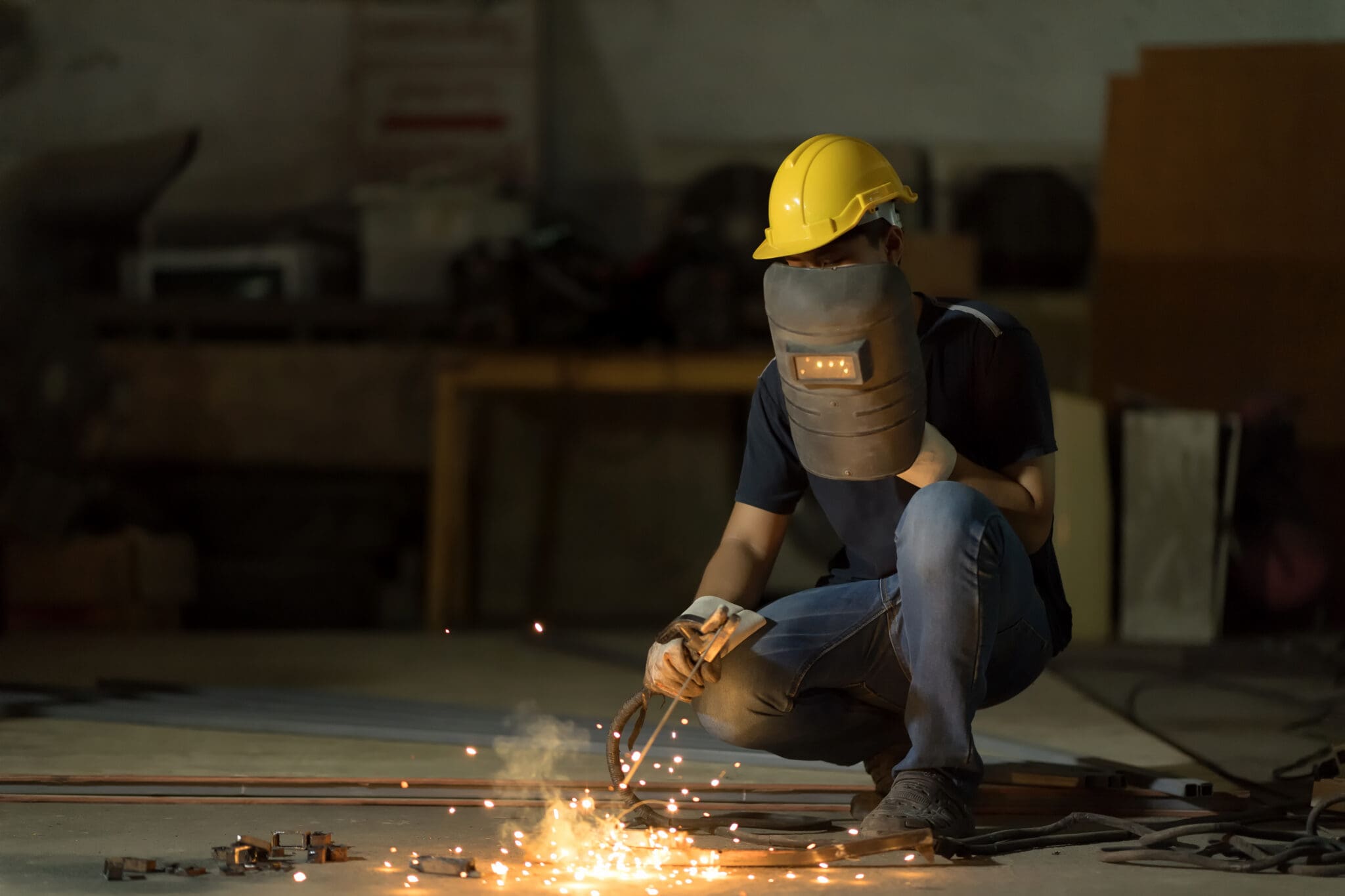
Thermal hazards are inherent in welding. The arc temperature can exceed 6,000°C, and contact with molten metal or hot components can inflict first-, second, or third-degree burns within seconds. Even brief exposure to radiant heat demands protective controls such as flame-resistant clothing and welding screens. Flammable materials near the welding area can also ignite from sparks or heat, leading to dangerous fires or explosions.
Radiation hazards from ultraviolet (UV) and infrared (IR) emissions emanating from the welding arc can cause eye injuries, commonly known as “arc eye” or photokeratitis, and skin damage akin to sunburn. The intensity of these wavelengths necessitates correctly rated eye protection and skin coverage to prevent cumulative harm.
Chemical and Mechanical Hazards
Hazardous fumes and gases present serious respiratory risks. Welding consumables often contain metals like chromium, nickel, and manganese, which, when vapourised, form fine particulates linked to lung disease and neurological effects. Shielding gases, such as argon, helium, and carbon dioxide, can displace oxygen in confined spaces, creating asphyxiation risks if not adequately ventilated.
Mechanical and ergonomic hazards arise from handling heavy equipment, gas cylinders, cables, and workpieces. Repetitive motions can lead to musculoskeletal disorders, while poor workstation design can exacerbate fatigue and increase the risk of slips, trips, and falls.
Noise Hazards
Noise is a real and significant hazard in welding, often underestimated compared to more visible risks, such as burns or fumes. Welding processes, especially arc welding, can produce noise levels exceeding 85dB, the threshold where hearing protection becomes necessary. Sources of noise can include electrical discharge (arc noise), high-pressure shielding gas flow, friction between metal surfaces, and vibration of welding equipment.
Long-term exposure to hazardous noise levels can lead to noise-induced hearing loss (NIHL) and tinnitus. It can also reduce concentration, increase fatigue, and raise the risk of accidents.
Electrical Hazards
Electrical hazards are omnipresent. Welding machines operate at voltages and currents capable of delivering fatal shocks if cables are damaged or connections become compromised. Faulty insulation, wet environments, and inappropriate earthing amplify these dangers.
A thorough hazard overview underpins all subsequent risk-control strategies. By recognising the diverse spectrum of welding hazards, employers can craft targeted measures to protect welders and surrounding personnel.
UK Legal Requirements and HSE Guidance
Overarching Legislation
Welding activities in the UK are governed by a suite of legislation and guidance from the Health and Safety Executive (HSE). Central to these requirements is the Health and Safety at Work, etc. Act 1974 (HSWA). The Act requires employers to ensure, so far as is reasonably practicable, the health, safety, and welfare of all employees and others affected by work activities. There is also the Management of Health and Safety at Work Regulations 1999 (MHSWR), which requires employers to assess and control risks and provide health surveillance.
Under HSWA and MHSWR, employees must take reasonable care for their own health and safety and that of others, cooperate with employers on safety matters, follow training and instructions, and report hazards or unsafe conditions promptly.
Specific Regulations for Welding
Under this overarching legislation, several regulations have particular relevance:
- The Provision and Use of Work Equipment Regulations (PUWER) 1998 require that welding plant and machinery are suitable for their intended use, maintained in a safe condition, and operated only by trained personnel. Employers must also provide appropriate guarding and controls to prevent hazards arising from moving parts or hot surfaces.
- The Control of Substances Hazardous to Health (COSHH) Regulations 2002 govern exposure to welding fumes and gases. Employers must assess risks, implement control measures, such as extraction ventilation, and monitor exposures. Health surveillance may be necessary for workers exposed to certain substances, including lead, hexavalent chromium, and manganese.
- The Personal Protective Equipment at Work Regulations 1992 require the provision and use of suitable personal protective equipment (PPE) where risks cannot be adequately controlled by other means. This includes helmets, gloves, and protective clothing that meet relevant British, European, and International Standards.
- The Confined Spaces Regulations 1997 apply when welding in tanks, silos, or other enclosed areas. Employers must follow strict entry procedures, conduct atmospheric testing, and provide rescue plans.
- The Electricity at Work Regulations 1989 stipulate that all electrical systems, including welding cables and distribution boards, must be maintained to prevent danger. Competent persons should carry out periodic inspections and testing.
- The Control of Noise at Work Regulations 2005 aim to protect workers from harmful noise exposure. Employers must assess risks, reduce noise exposure, ensure legal limits are not exceeded, provide hearing protection when needed, inform, instruct, and train employees, and offer health surveillance if there is a risk. Welders should use protective equipment and follow safety procedures to prevent hearing damage.
- The Manual Handling Operations Regulations 1992 require employers to avoid hazardous manual handling, assess unavoidable risks, and take steps to reduce injury. In welding environments, this is especially relevant when transporting heavy or awkward gas cylinders, which pose risks of strain, crush injuries, or falls. Safe handling procedures should include risk assessments, training in lifting techniques, and the use of mechanical aids such as cylinder trolleys.
HSE Guidance and Approved Codes of Practice
In addition to legislation, the HSE publishes sector-specific guidance and Approved Codes of Practice (ACoP). Key documents include:
ACoPs
- L5 – COSHH.
- L22 – PUWER.
- L25 – PPE.
- L101 – Confined spaces.
- L108 – Noise.
Guidance
- EIS45 – Asphyxiation hazards in welding and allied processes.
- HSR25 – Electricity at work.
- HSG139 – The safe use of compressed gases in welding, flame cutting and allied processes
- INDG297- Safety in gas welding, cutting and similar processes.
- INDG390 – Choosing a welding set? Make sure you can handle it.
- COSHH essentials for welding, cutting and allied tasks.
- HSE welding webpage – https://www.hse.gov.uk/welding/
Employers must have regard to ACoPs, as failure to do so may lead to enforcement action and potential prosecution. By aligning workplace practices with these legal frameworks and HSE publications, organisations not only comply with the law but also benefit from industry-recognised best practice.
Risk Assessment for Welding Tasks
Purpose and Legal Basis
A methodical risk assessment is the foundation of welding safety management. It enables employers to identify and evaluate hazards, determine who might be harmed and how, and decide on proportionate control measures. Under the Management of Health and Safety at Work Regulations 1999, risk assessments must be “suitable and sufficient,” regularly reviewed and updated whenever there are changes in processes, equipment, or personnel.
It is important to note that other health and safety regulations may require a risk assessment. For example, the COSHH Regulations require a risk assessment of any hazardous substances used and produced during welding processes.Steps in the Risk-Assessment Process
The risk-assessment process typically involves:
- Task analysis: Break down each welding operation into discrete steps, e.g. preparation, setup, welding, post-weld cleaning, and equipment shutdown.
- Hazard identification: Document all potential sources of harm, drawing on the overview of welding hazards.
- Risk evaluation: Consider the likelihood and severity of harm, taking into account factors such as the frequency of the task and the number of workers exposed.
- Control measures: Apply the hierarchy of hazard control, elimination, substitution, engineering controls, administrative measures, and PPE, to mitigate risks effectively.
- Recording: Maintain a written record of significant findings, control decisions, and designated responsibilities.
- Review and monitor: Evaluate the effectiveness of controls through workplace monitoring, incident analysis, and worker feedback, adjusting the assessment as necessary.
Collaborative and Continuous Improvement
In dynamic industrial environments, continuous improvement hinges not only on innovation but on the ability to anticipate and manage risk effectively. Risk assessments are more than compliance exercises – they are strategic tools that help organisations evolve safely and intelligently. When approached collaboratively, they become powerful catalysts for learning, engagement, and operational excellence.
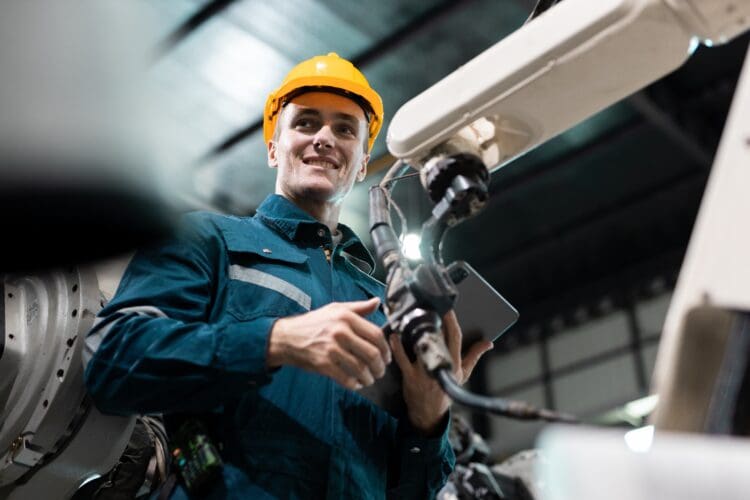
For instance, when a site introduces a new automated welding cell, conducting a thorough risk assessment becomes a cornerstone of continuous improvement. It must address hazards such as robotic motion, remote arc radiation, and maintenance interventions – not just to comply with regulations, but to proactively enhance safety and operational efficiency.
To mitigate these risks, control measures might include physical guarding, light curtains, interlocked access points, and a permit-to-work system for servicing. These safeguards are essential, but the true strength of a risk assessment lies in how it’s developed.
By involving welders, safety representatives, and maintenance staff in the process, organisations tap into frontline expertise. This ensures the assessment reflects actual working conditions and uncovers practical insights that might otherwise be missed.
Collaborative risk assessments not only improve accuracy and relevance – they also foster a sense of shared responsibility. When people contribute to the process, they’re more likely to take ownership of the outcomes, creating a culture where safety evolves through ongoing dialogue, learning, and refinement.
Essential Welding PPE
Even with robust engineering and administrative controls, PPE remains a critical barrier against welding hazards. The selection of suitable equipment must account for the specific welding processes, materials, and environments encountered.
Head and Eye Protection
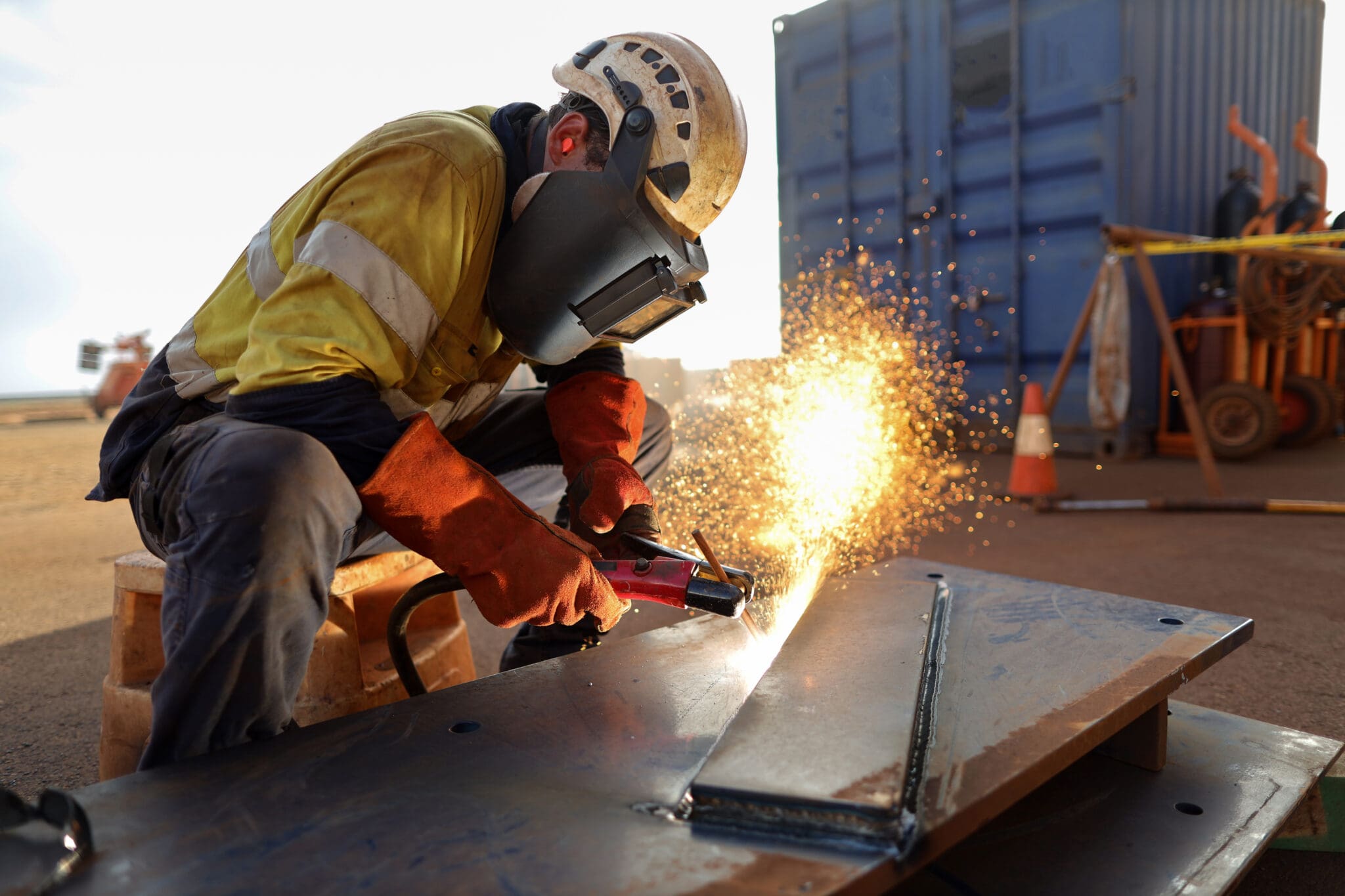
Welding helmets and eye protection are the most recognisable elements of PPE. Modern auto-darkening helmets adjust shade levels in milliseconds to protect against ultraviolet (UV) and infra-red (IR) radiation while maintaining visibility. Helmets must meet the relevant British Standard (EN 175 and EN 379) and be paired with side shields or goggles that comply with EN 166 (which will be replaced by EN ISO 16321) for impact resistance.
Body and Hand Protection
Protective clothing should consist of flame-resistant jackets or overalls made from leather or treated cotton. Trousers must cover the ankles, avoiding cuffs that could trap sparks. Sleeves should be snug at the wrist, and collars must prevent molten metal from contacting the neck. Where high spatter is anticipated, a leather apron or sleeves can provide additional shielding.
Gloves require careful selection: they must be durable enough to resist heat and abrasion while providing dexterity for handling electrodes and tools. Split-grain leather gloves with cotton lining often strike the right balance for manual arc welding, whereas MIG and TIG welding may benefit from thinner, more flexible leather.
Respiratory and Other Protection
Respiratory protective equipment (RPE) is essential when local exhaust ventilation cannot fully control exposure to fumes and gases. Options range from FFP3 tight-fitting disposable masks and reusable half-masks with a P3 filter to powered air respirators or supplied air respirators, with an APF of at least 20. RPE must be suitable for each wearer. Workers should be face-fit tested as part of a RPE management programme and also undergo a medical assessment to ensure compatibility with facial features and any health conditions.
Foot protection must include steel-toe-cap boots with midsole puncture resistance and heat-resistant soles. Metatarsal guards offer extra protection against falling objects and hot slag.
Hearing protection such as earplugs or earmuffs may be necessary in noisy environments, especially when abrasive cutting or grinding accompanies welding tasks. It should be the correct Single Number Rating (SNR) and not result in overprotection of workers, which can create a hazard and hinder communication.
Selecting the right combination of PPE involves a thorough evaluation of the welding methods, materials, and duration of exposure. Employers should provide training on correct donning, doffing, cleaning, checking, and storage of equipment to maintain its protective integrity.
Ventilation and Fume Control
Effective control of welding fumes and gases hinges on a combination of local exhaust ventilation (LEV) and general ventilation. Under COSHH, employers must prevent or reduce exposure to hazardous substances to as low as reasonably practicable.
Local Exhaust Ventilation (LEV)
Local exhaust ventilation (LEV) systems, comprising hoods, ducts, filters, and fans, are designed to capture welding fumes at the source before they disperse into the workplace. For manual welding, portable extraction arms should be positioned within 150–200 mm of the arc to ensure effective fume capture. In fixed workstations or robotic welding cells, integrated LEV hoods tailored to the workpiece geometry help maintain consistent capture velocity and airflow. In line with HSE guidance and COSHH regulations, LEV systems must be thoroughly examined and tested at least every 14 months to verify performance and protect worker health.
General and Supplementary Ventilation
General ventilation supplements LEV by exchanging air within the workspace, diluting residual contaminants. Utilising low-level air inlets and high-level extract fans promotes a flow that carries fumes away from the welder’s breathing zone. In large fabrication shops, natural ventilation, via doors, windows, and roof vents, can be effective if wind conditions are favourable, but mechanical assistance is often necessary to maintain a minimum of six air changes per hour.
For processes generating noxious gases, such as oxy-fuel cutting or certain plasma welding operations, specialist filtration units or fume extractors may be required. Filters tailored to metal particulates, oil mist, and acid gases ensure broad-spectrum removal of contaminants. Employers must maintain and replace filters according to manufacturer guidance and keep maintenance logs for audit purposes.
Interim Controls
Where LEV is impracticable, such as during on-site repairs or maintenance, employers must implement alternative controls. These may include:
- Scheduling work when fewer personnel are present
- Using low-fume consumables or flux-free welding processes
- Issuing appropriate RPE with a minimum assigned protection factor of 20.
A well-designed ventilation strategy mitigates respiratory risks, enhances operator comfort, and contributes to an overall healthier working environment.
Safe Handling of Gas Cylinders and Equipment
Compressed gas cylinders store fuels and shielding agents essential for welding, but pose significant hazards if mishandled. Leaks, rapid decompression, or mechanical damage can lead to fires, explosions, or asphyxiation scenarios. They are also extremely heavy, so they can increase the risk of manual handling injuries. It is, therefore, essential to store, transport, and handle gas cylinders and equipment safely.
Storage and Segregation
Selection and storage of cylinders must follow HSE guidance (HSG 139). Cylinders should be grouped by gas type, such as flammable, oxidising, and inert, and segregated with appropriate signage. Storage areas must be well-ventilated, secure from unauthorised access, and protected from extremes of temperature. Oxygen cylinders, in particular, must not be stored with oil or grease to prevent spontaneous ignition.
Transportation and Handling
Transport and handling require suitable trolleys or carriers. Cylinders should be restrained upright and have valve protection caps fitted when not in use. Operators must wear gloves and safety footwear to guard against impact injuries.
Regulator and hose maintenance is equally crucial. Regulators must be selected for the specific gas, with colour coding and pin-index systems preventing mix-ups. Hoses and connections should be inspected before each shift for signs of wear, cuts, or leaks. A simple soapy water check at joints can reveal the presence of escaping gas. Any defective component must be withdrawn from service immediately.
Leak Response and Fire Preparedness
Leak detection and emergency procedures must be clear and practised regularly. In the event of a leak, the area should be evacuated, gas valves closed if safe to do so, and the incident reported to the person responsible for plant safety. Fire extinguishers suitable for gas fires, such as dry powder or inert gas systems, should be readily accessible, alongside clear evacuation routes.
By combining robust storage, handling, and maintenance practices, organisations reduce the likelihood of gas-related incidents and protect both welders and the wider workforce.
Fire Prevention and Control Measures
In welding environments, sparks, spatter, and hot work present a constant ignition risk, especially when flammable materials are nearby. To protect both personnel and property, it is critical to implement robust fire prevention and protection measures.
Hot Work Permit System
A hot work permit system mandates formal authorisation before welding begins. This system records the location, date, personnel involved, and duration of the work, and confirms that fire watches, fire extinguishers, and protective screens are in place. Permits should be signed off by a responsible person, often a supervisor or safety officer, who verifies that all precautions have been taken.
Preparing the Work Area
Work area preparation involves clearing combustible materials at least ten metres from the welding site or shielding them with fire-resistant curtains. This includes paper, wood, packaging, and flammable liquids. Floors should be swept to remove dust and debris, and any openings in walls or floors must be covered to prevent sparks from travelling to adjacent areas.
Fire Watches and Extinguishers
Fire watches perform continuous monitoring during and for at least thirty minutes after welding ceases, ready to extinguish any smouldering materials. Fire watch personnel must be trained in the use of suitable fire extinguishers and have rapid communication methods, such as two-way radios, to summon additional assistance if required.
Fire extinguishing equipment must be carefully selected to match the specific hazards present. For instance, water-based extinguishers are unsuitable for metal fires, which require Class D dry powder extinguishers. For most other fire types, including electrical and flammable liquid fires, dry powder or CO₂ extinguishers are generally effective. To ensure reliability, extinguishers must be maintained in accordance with BS 5306-3:2017 standards. This includes annual servicing by a competent technician, monthly visual inspections, and clear inspection tags that confirm the date and status of the last service.
Detection and Drills
Fire detection systems, including heat and smoke detectors, can provide early warning in larger facilities. Integrating these with an alarm panel ensures rapid response by in-house or external fire services. Regular fire drills familiarise personnel with evacuation routes and muster points, minimising confusion during actual emergencies.
By embedding fire prevention and control into welding operations, employers create a safer workspace that mitigates one of the most severe consequences of welding activities.
Electrical Safety During Welding
Regulatory Requirements
Welding operations involve high currents and voltages to generate the arc, posing significant electrical risks. Even low-voltage welding machines can produce hazardous leakage currents if they are poorly maintained or improperly grounded.
All welding equipment must be installed, inspected, and maintained in accordance with the Electricity at Work Regulations 1989, which mandate that electrical systems be constructed and maintained to prevent danger to personnel and property. This includes ensuring safe design, regular testing, and prompt repair of faults to minimise the risk of electric shock, burns, or fire.
Key Electrical Safety Measures
- Regular inspection and testing by competent electrical engineers, verifying insulation resistance, earth continuity, and functional integrity of control circuits.
- Use of Residual Current Devices (RCDs) on portable welding sets to disconnect power rapidly in the event of a fault. Although RCDs do not replace correct earthing, they provide an extra layer of protection against electric shock.
- Cable management to avoid damage: welding leads should be inspected daily for fraying, cracks, or exposed conductors. Damaged cables must be replaced without delay.
- Dry and insulated workplaces: welding should not occur in standing water, and operators must wear dry gloves and boots with non-conductive soles.
- Proper earthing of the workpiece and machine frame to prevent the work environment becoming live. Dedicated earthing clamps and connections should be checked for corrosion and tightness.
Training and Awareness
In addition, welders should be trained to identify electrical hazards, recognise the signs of electric shock, and know first-aid procedures. Clear warning labels and isolation points help ensure that machines can be safely de-energised for maintenance or emergency shutdown. Through diligent electrical safety practices, organisations can prevent injury and maintain uninterrupted welding operations.
Protecting Bystanders and Nearby Workers
Radiant and Physical Hazards to Others
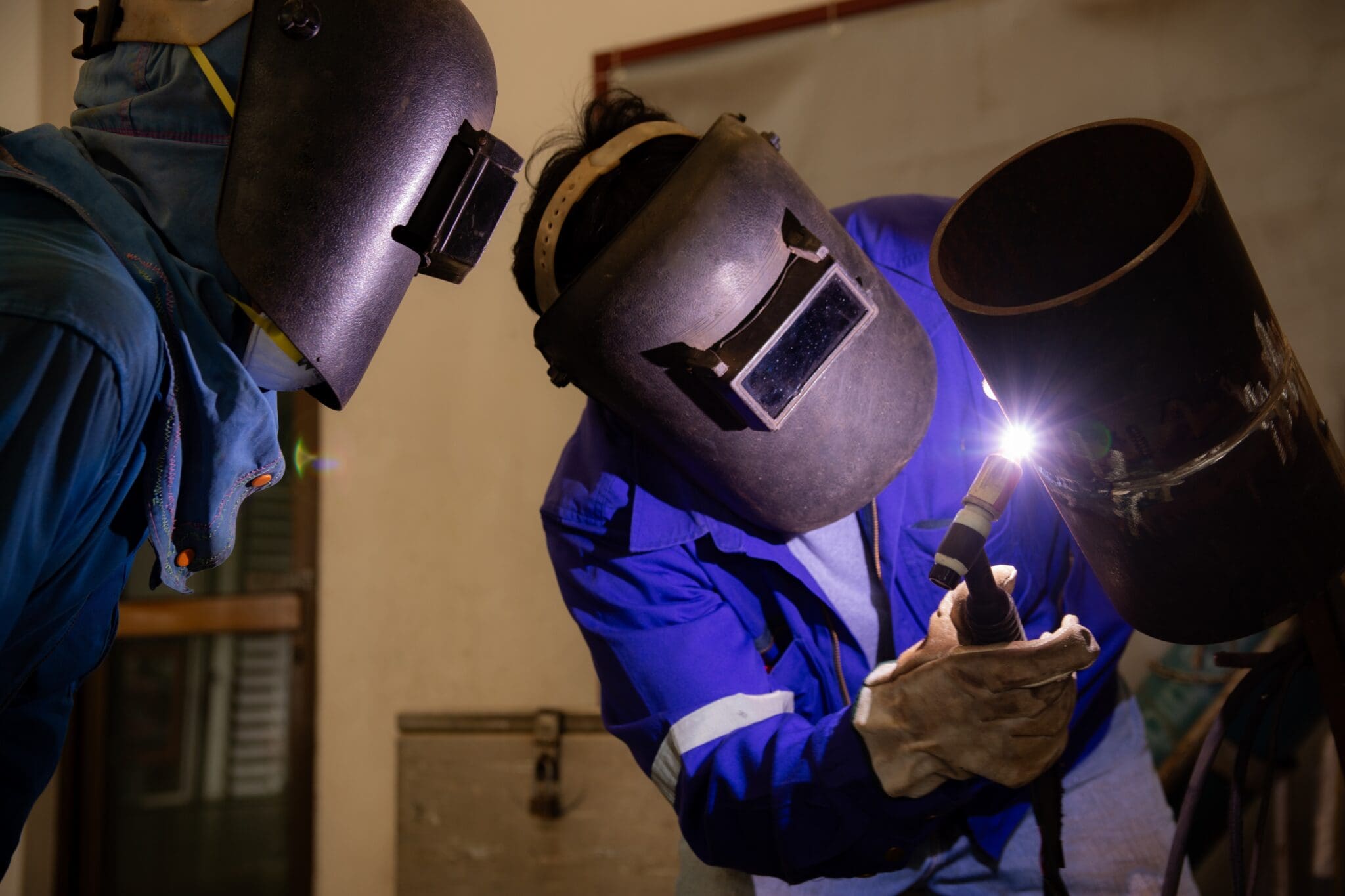
Welding hazards extend beyond the operator. Ultraviolet radiation can cause flash burns to onlookers, while sparks and spatter may injure passers-by. To create a safe perimeter, organisations must implement protective measures that consider both visibility and barrier effectiveness.
Screens, Curtains, and Exclusion Zones
Welding screens and curtains fitted with suitably rated filter material (at least Shade 10 for arc welding) absorb harmful radiation without completely obscuring light, allowing personnel to see through while remaining protected. These should be arranged to cover all angles from which the arc could be viewed.
Physical barriers such as hoardings or fencing delineate the welding zone, preventing unauthorised entry. Clear signage, displaying standard hazard symbols and wording such as “Welding in Progress: Eye Protection Required”, alerts workers and visitors to appropriate precautions.
Scheduling and Communication
Where welding occurs in high-traffic areas, temporary exclusion zones can be established using safety tape and portable stands. Marshals or fire watchers can guide pedestrians around the hazard, ensuring no one inadvertently enters the danger zone.
In busy workplaces, coordinating work schedules reduces exposure. For example, scheduling welding during quieter periods or in designated off-peak areas minimises the likelihood of bystanders encountering hazards.
Cultivating Shared Responsibility
Finally, training non-welding staff to understand basic welding hazards fosters a culture of shared responsibility. When everyone recognises the importance of protective zones and complies with signage, the risk to bystanders diminishes significantly.
Signage, Barriers, and Welding Curtains
Regulatory Standards for Signs
Effective visual controls reinforce safety measures by communicating hazards clearly and delineating safe zones. The Health and Safety (Safety Signs and Signals) Regulations 1996 require that warning signs, such as triangular symbols indicating radiation or hot surfaces, are displayed where there is a significant risk that can’t be avoided or controlled in any other way, such as through safe systems of work or engineering controls.
Types of Barriers and Their Deployment
Barriers come in various forms, e.g. portable hoardings, chain-link fencing, and free-standing screens. The chosen barrier should be robust enough to withstand accidental impacts, yet movable to accommodate workflow changes. For permanent installations, welded mesh partitions with tanged feet offer stability and longevity.
Welding Curtain Specifications
Welding curtains, made from PVC or other flame-resistant materials, provides flexible, semi-transparent protection. These curtains are often mounted on rails or hooks, allowing rapid deployment and retraction. They should overlap by at least 150 mm at the edges to eliminate gaps and be labelled with their shade rating for easy compliance checks.
Maintenance of Visual Controls
Maintenance of signage, barriers, and curtains is essential. Faded signs or torn curtains lose effectiveness; a periodic inspection schedule, aligned with other safety audits, ensures that visual controls remain functional and compliant.
Training and Competency Requirements
Establishing Competency Frameworks
Welding safety depends heavily on operator skill and awareness. The Employer’s duty extends beyond providing equipment to ensuring that workers are competent to use it safely. Under the Health and Safety at Work, etc. Act 1974, the Management of Health and Safety at Work Regulations 1999, PUWER, and other specific health and safety laws, employers must ensure that employees have the necessary training and competence.
Components of Effective Training
Competency frameworks often encompass:
- Initial training and certification, such as City & Guilds NVQ Level 3 in Welding and Fabrication or equivalent, which provides foundational knowledge of welding processes, material properties, and safety protocols.
- On-the-job mentoring, where less experienced welders work under the supervision of qualified operatives, reinforcing safe habits and techniques.
- Refresher training at regular intervals – typically every two to three years – to reinforce best practice, highlight procedural changes, and introduce new technologies.
- Specific hazard training, such as working at height, in confined spaces, or with exotic alloys that produce particularly hazardous fumes.
Tracking Training and Ensuring Compliance
Many organisations maintain training matrices that track individual qualifications, renewal dates, and proficiency levels. This ensures that only those with up-to-date skills undertake high-risk tasks, and that training budgets are focused where they are most needed.
By investing in robust training programmes, employers not only meet legal obligations but also cultivate a workforce capable of upholding the highest safety standards.
Safe Work Practices for Confined Spaces
Regulatory Framework and Permit Systems
Welding in confined spaces, such as tanks, silos, tunnels, or boilers, poses elevated risks from toxic atmospheres, oxygen depletion, and restricted escape routes. The Confined Spaces Regulations 1997 require strict controls before any worker enters such environments, and this type of work should be avoided where possible.
A permit-to-work system is fundamental. This document specifies the scope of work, authorised personnel, atmospheric testing results, and control measures in place. It must be signed by both the issuing manager and the designated entrants.
Atmospheric Monitoring and Ventilation
Atmospheric monitoring is essential for ensuring safe working conditions, particularly in confined spaces. It involves:
- Oxygen levels: Maintaining concentrations between 19.5% and 23.5%. Levels below 19.5% are considered oxygen-deficient and pose a risk of asphyxiation, while levels above 23.5% increase fire hazards.
- Flammable gases: Ensuring concentrations remain below 10% of the Lower Explosive Limit (LEL) to prevent ignition risks.
- Toxic substances: Keeping airborne concentrations within the Workplace Exposure Limits (WELs) set by the Health and Safety Executive (HSE), as outlined in the COSHH regulations.
For longer-duration tasks or work in confined spaces, continuous atmospheric monitoring is strongly recommended to detect any hazardous changes in real time.
Ventilation, both forced air and extraction, is critical to displace contaminants and maintain a safe breathing environment. Where mechanical ventilation is insufficient, entrants must use appropriate respiratory protective equipment, such as air-fed respirators, with an Assigned Protection Factor (APF) of at least 40, or cylinder breathing apparatus (BA) if oxygen levels could be depleted.
Rescue Planning and Communication
Rescue planning ensures that, in the event of an emergency, a trained rescue team can intervene without entering the confined space unprotected. Retrieval systems, harnesses and communication equipment must be tested before work commences.
Administration of the permit-to-work system, combined with rigorous atmospheric controls and rescue readiness, transforms confined-space welding from a high-risk activity into a managed operation that protects all involved.
Inspection and Maintenance of Welding Equipment
Regular inspection and maintenance of welding machinery safeguards integrity and prevents failures that could lead to injury or downtime. Under PUWER and the Electricity at Work Regulations, employers must ensure that equipment remains in a safe condition.
Operator-Level Checks
Daily checks by operators should cover:
- Physical condition of cables and leads, looking for cuts or abrasions.
- Tightness and cleanliness of connections at the power source, torch, and work clamp.
- Operation of controls, switches, and emergency stops.
Periodic Technical Servicing
Periodic maintenance by qualified technicians – typically every six months – includes:
- Testing insulation resistance and earth continuity.
- Cleaning and replacing worn contacts in switchgear.
- Servicing cooling systems and fans.
Logbooks or digital maintenance records document inspections, defects, and repairs, providing an audit trail for compliance and trend analysis. Identifying recurring faults may indicate the need for equipment replacement or process adjustments.
Consumables Management
Consumables, such as contact tips, nozzles, and electrodes, must also be stored in a clean, dry environment and replaced according to manufacturer guidance. Build-up of spatter can distort gas flow and increase fume generation, undermining both weld quality and operator safety.
A preventive maintenance approach minimises unplanned stoppages and reinforces a culture in which safety and reliability go hand in hand.
Emergency Procedures and First Aid
Despite the best preventive measures, welding incidents can still occur. Establishing clear emergency procedures and ensuring that first-aid provisions are readily available are essential components of a comprehensive safety programme.
Emergency Response Planning
Emergency response plans should cover scenarios such as:
- Major arc burns or hot-metal injuries.
- Electrical shocks or entrapment incidents.
- Fires originating from sparks or gas leaks.
- Asphyxiation due to gas displacement.
Equipment Shutdown and Evacuation
Personnel must know how to shut down welding equipment safely, isolate gas supplies, raise alarms, and coordinate with in-house or external emergency services. Evacuation routes and assembly points should be clearly signposted and practised during drills at least annually.
First-Aid Measures
First-aid kits must be stocked with burn dressings, eye-flush solutions, and sterile coverings appropriate for welding injuries. Trained first-aiders should be available during all welding operations, and their locations clearly displayed. First-aid provision should be determined by a needs assessment, as required by the Health and Safety (First-Aid) Regulations 1981.
For eye injuries, such as flash burns, immediate first aid includes rinsing with sterile saline and seeking professional medical attention within a few hours to prevent corneal damage. Burns require cooling with running water for at least ten minutes before dressings are applied.
Drills and Training
Regular first-aid training refreshers and drills keep skills sharp and ensure that response times remain swift. By preparing for emergencies, organisations can reduce the severity of injuries and instill confidence among welders and support staff.
Monitoring Health and Exposure Over Time
Health Surveillance Obligations
Long-term exposure to welding hazards can lead to chronic conditions such as occupational asthma, cancer, pneumoconiosis, hearing loss, and musculoskeletal disorders. A proactive health surveillance programme identifies early signs of ill health and guides further interventions.
Under COSHH, employers must offer health surveillance when workers are exposed to substances that may cause occupational disease. The Management of Health and Safety at Work Regulations 1999 also require health surveillance for other hazards, such as noise and vibration.
Surveillance may include lung-function testing, audiometry for hearing assessment, and periodic medical examinations focusing on neurological symptoms linked to manganese or lead exposure. The medical surveillance requirements in the Control of Lead at Work Regulations 2002 may also apply if welders are at risk of lead exposure.
Exposure and Ergonomic Monitoring
Exposure monitoring involves periodic measurement of fume concentrations in the breathing zone and assessment of ventilation performance. If measurements approach or exceed workplace exposure limits, additional controls or RPE upgrades are required. Records of monitoring results help track trends and demonstrate continuous compliance.
Ergonomic assessments identify postures and tasks that contribute to muscle strain. Implementing adjustable workstations, rotating tasks, and mechanical aids for lifting reduces the cumulative impact of welding work on the body.
Promoting Worker Wellbeing
Health promotion activities, such as smoking cessation support, also contribute to respiratory health and overall well-being. Encouraging workers to report symptoms early, without fear of reprisal, fosters a culture in which health concerns are addressed promptly. By combining surveillance, monitoring, and health promotion, employers demonstrate a genuine commitment to the long-term welfare of their workforce.
Common Welding Incidents and How to Prevent Them
Typical Incident Types
Analysing incident patterns provides valuable insights into areas requiring improvement. Common welding incidents include:
- Arc flash injuries: Often resulting from missing or improperly used eye protection. Prevention relies on strict enforcement of helmet use and regular equipment inspections.
- Burns from spatter: Typically caused by inadequate protective clothing or poor housekeeping that allows hot debris to accumulate. Addressing this involves robust PPE policies and routine workspace cleaning.
- Fume-related respiratory issues: Emerging when local extraction is insufficient or consumables are misused. Control is achieved through maintenance of LEV systems and substitution with low-fume alternatives.
- Electric shocks: Occur when cables are damaged or earthing is compromised. Preventative maintenance, RCD installation, and operator training mitigate these risks.
- Fires and explosions: Arising from unignited gas leaks or sparks contacting combustibles. A hot work permit system, careful gas cylinder management, and fire watches are the primary defences.
Reporting and Recording Incidents
Reporting and recording welding incidents is vital for maintaining a safe working environment and ensuring compliance with health and safety regulations. It helps identify underlying hazards, prevent recurrence, and improve risk assessments and control measures. Accurate records support investigations, inform training needs, and demonstrate due diligence to regulators such as the Health and Safety Executive (HSE). Prompt reporting also ensures that injured workers receive appropriate care and that lessons are learned to protect others.
Learning from Incidents
Investigations should follow a structured approach – identifying root causes, sharing lessons learned, and verifying that corrective actions are implemented. Safety bulletins, toolbox talks, and refresher training based on real incidents keep the workforce informed and vigilant.
Useful Resources and Ongoing Support
Key Publications and Standards
Maintaining welding safety demands continuous learning and access to authoritative guidance. Key resources include:
- HSE’s welding webpage and resources – https://www.hse.gov.uk/welding/
- COSHH Essentials for welding fumes, a free online tool that helps small businesses develop control strategies – https://www.hse.gov.uk/coshh/essentials/index.htm
- British, European, and International Standards such as ISO 11611 Protective clothing for use in welding and allied processes and BS EN 175 Eye and face protection during welding.
Professional and Community Networks
- Professional bodies like the Welding Institute and the British Compressed Gases Association provide technical papers, training courses, and networking opportunities.
- Local safety consortia and industry forums, where practitioners share case studies and emerging best practices.
Staying Up to Date
Employers should subscribe to HSE updates, participate in peer networks, and review annual changes to standards and regulations. By leveraging these ongoing support mechanisms, organisations can adapt to technological advances, evolving health evidence, and legislative updates – ensuring that welding remains both productive and safe for everyone involved.