In this article
Welding is a highly skilled trade, but it’s also one of the most hazardous. The combination of extreme heat, intense ultraviolet (UV) radiation, flying sparks, hot metal, toxic fumes and other hazards makes welding a job that demands uncompromising safety measures. At the heart of these measures is Personal Protective Equipment (PPE). Not only does PPE help prevent painful, life-altering injuries and ill health, but it is also a legal requirement under regulations such as the Personal Protective Equipment at Work Regulations 1992 (as amended) and the Control of Substances Hazardous to Health Regulations 2002.
This comprehensive guide explores the critical role of PPE in welding, the main hazards welders face, legal standards, essential types of protective equipment, maintenance routines, and best practices for ensuring PPE is both effective and comfortable.
Why PPE Matters in Welding
Every day, welders are exposed to hazards that can cause burns, blindness, respiratory disease, and hearing loss. While PPE should not be the first choice in protecting workers against these dangers, as employers should first look to control the risks by other means, it still serves as an essential control measure if a risk assessment deems it necessary to protect from residual risks.
The consequences of neglecting proper PPE can be catastrophic, both for individuals and for businesses facing legal and reputational damage after preventable accidents. While skilled technique and engineering controls play a significant role in reducing risk, PPE can act as a vital barrier between a welder and potentially life-altering injuries and ill health. In the UK, the legal framework places a strong emphasis on providing and using appropriate PPE to mitigate known risks.
The nature of welding means that risks are not always visible. Ultraviolet and infrared radiation from an arc can cause permanent eye injury within seconds. A single splash of molten metal or prolonged exposure to toxic fumes can have devastating health consequences. PPE is therefore not just about compliance; it is about ensuring that every worker can go home safe and healthy at the end of the day.
Key Risks Faced by Welders
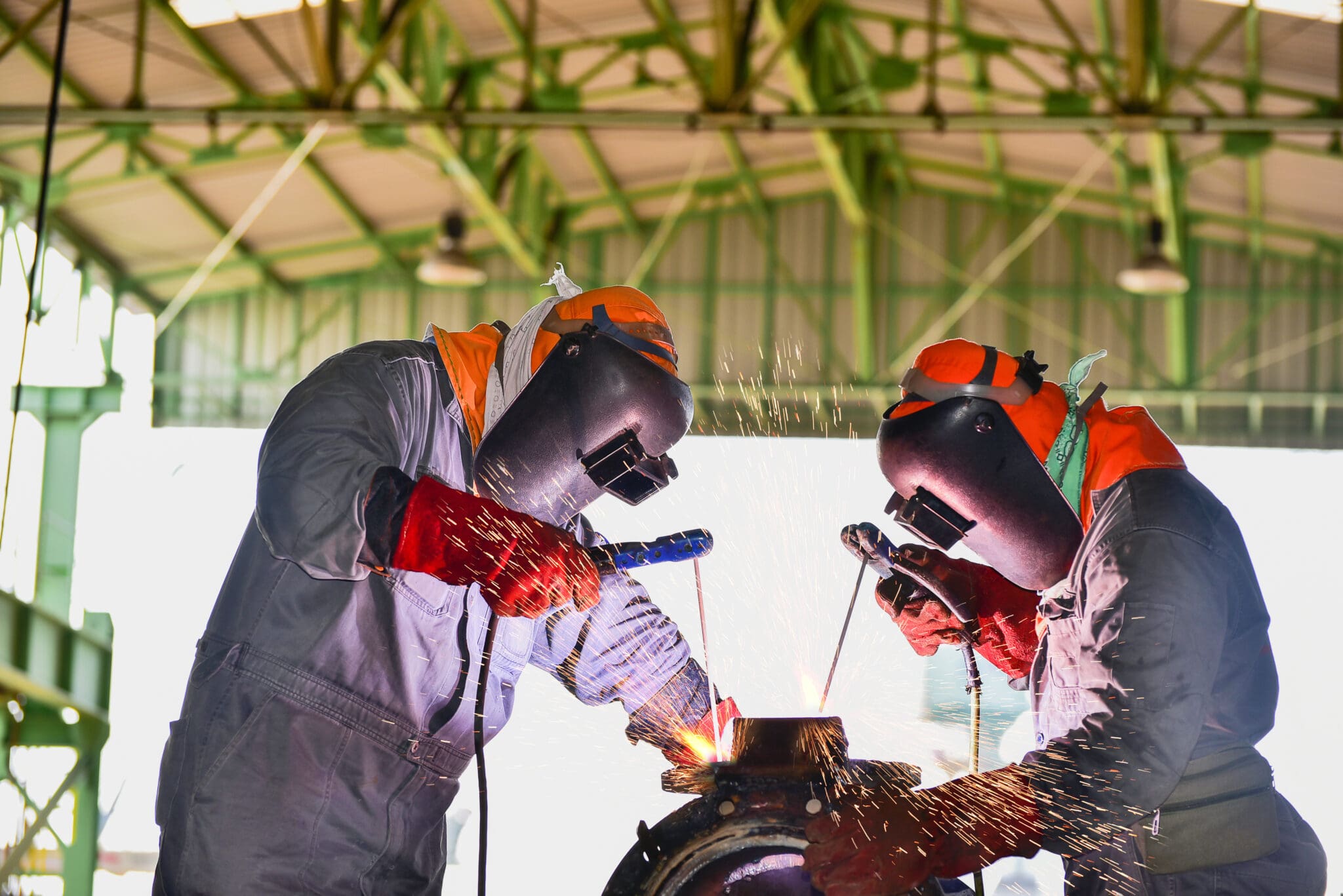
Welding exposes workers to a spectrum of hazards, both immediate and long-term. The most obvious is the intense heat and light generated by the welding arc or flame. Burns from hot metal or slag can occur in an instant, while exposure to UV light causes ‘arc eye’ or welder’s flash – a painful condition that can lead to permanent vision damage if left unprotected.
Another major risk is the inhalation of fumes and gases produced during welding. These may include metal oxide particles, ozone, carbon monoxide, and gases from fluxes and shielding gases. Prolonged exposure can cause serious respiratory illnesses, including occupational asthma, metal fume fever, and even cancer.
Physical hazards are equally prominent. Sparks, splatter, and hot slag can ignite clothing or embed in the skin, while sharp edges and heavy equipment pose risks for cuts and crush injuries. Noise levels during certain welding operations (such as air arc gouging or grinding) can reach levels high enough to cause permanent hearing loss.
Confined spaces introduce additional risks, such as oxygen depletion, increased fume concentration, and limited escape routes. Additionally, working at height or in awkward positions can increase the risk of slips, trips, and falls.
These hazards are compounded by the long-term effects of repetitive exposure. Chronic skin damage, respiratory disease, and hearing loss often go unnoticed until they are advanced and irreversible.
Overview of UK PPE Regulations
Great Britain has robust legislation governing the provision and use of PPE at work, with the Personal Protective Equipment at Work Regulations 1992 (PPER 1992) amended by the Personal Protective Equipment at Work (Amendment) Regulations 2022 (PPER 2022) being the most relevant for welders. Northern Ireland has separate laws that make similar provisions.
The PPE regulations require employers to provide suitable PPE free of charge wherever there is a risk to health and safety that cannot be adequately controlled by other means. The law also obliges employers to maintain, store, and replace PPE as necessary, and to train employees in its correct use.
Other relevant regulations include the Control of Substances Hazardous to Health (COSHH) Regulations 2002 (for welding fumes and gases and respiratory protective equipment), the Control of Noise at Work Regulations 2005 (for hearing protection), and the Provision and Use of Work Equipment Regulations 1998 (for safe use of welding equipment). The Health and Safety Executive (HSE) provides detailed guidance and enforces compliance, with substantial penalties for breaches.
Welders must be provided with PPE that matches the specific hazards they face, as identified by a risk assessment, whether that is eye and face protection, gloves, respiratory protective equipment, or flame-retardant clothing. Each item of PPE must conform to the appropriate British or European Standard and be marked accordingly.
Welding Helmets and Eye Protection
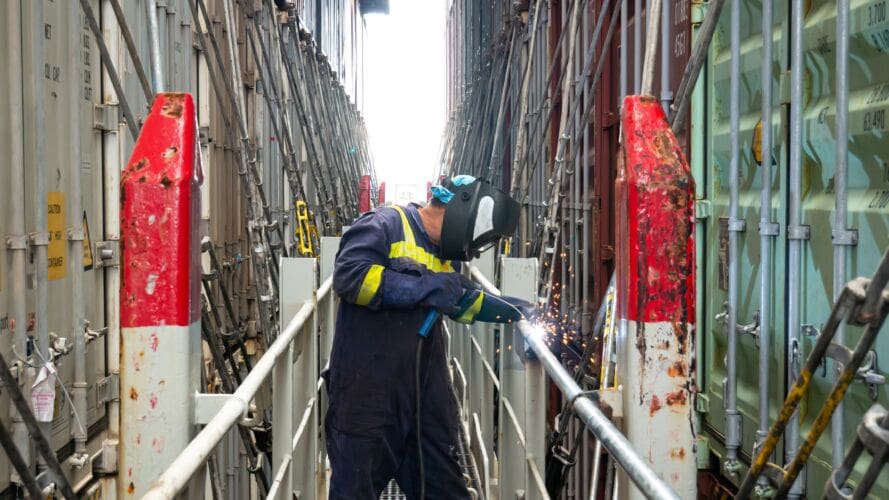
The most recognisable symbol of a welder is their helmet, which is for good reason. Welding helmets are essential for protecting against burns, UV/infrared radiation, and flying debris. The helmet must include a suitable filter lens, the shade of which is determined by the type of welding and the current being used. For example, arc welding requires a darker shade compared to oxy-fuel welding.
Modern welding helmets often feature auto-darkening filters that adjust in milliseconds when an arc is struck, providing both convenience and continuous protection. Some helmets include side windows, allowing for greater peripheral vision without compromising safety.
Eye protection is not limited to the helmet. In grinding or chipping operations, safety goggles or glasses with side shields should be used in addition to the welding helmet. All eye protection must comply with EN 166, the European Standard for personal eye protection, which will be replaced by EN ISO 16321 later this year.
Failure to use appropriate eye protection can result in ‘arc eye’, cataracts, burns, and even permanent blindness. Welders should also be aware of the risk of secondary injuries – sparks and fragments can ricochet under the helmet if safety glasses are not worn underneath.
Protective Clothing: Jackets, Trousers and Aprons
Clothing forms a vital barrier against burns, sparks, and molten metal splatter. Standard workwear is rarely sufficient for welding tasks. Instead, welders must wear jackets, trousers, and aprons made from flame-resistant materials such as leather or treated cotton. Synthetic fabrics should be avoided as they can melt onto the skin, causing severe injuries.
Jackets should have cuffs and collars to prevent sparks from entering. Trousers should be worn over the tops of boots, not tucked in, to prevent hot metal from becoming trapped. Aprons provide an additional layer of protection for the torso and upper legs, especially in high-heat applications.
In some cases, full-body coveralls are recommended for enhanced protection. The clothing should be comfortable but close-fitting enough to reduce snagging. All fastenings should be non-conductive and resistant to heat.
High-visibility features may also be necessary in certain environments, such as construction sites, where welders work in close proximity to moving vehicles or plant equipment.
Gloves and Hand Protection
Hands are particularly vulnerable during welding. Gloves must provide a balance between dexterity, comfort, and protection from heat, flames, electrical shock, and mechanical hazards. Different welding processes require different types of gloves.
For example, MIG and stick welding typically require heavy-duty, heat-resistant leather gauntlets with long cuffs. Whereas, TIG welding often uses thinner, softer gloves that allow for greater finger control while still offering sufficient protection from radiant heat.
Gloves should be free from holes or worn areas and must comply with standards such as EN 12477 (gloves for welders). Welders should avoid using gloves that have become wet or contaminated, as these may conduct electricity or transmit heat more readily.
Frequent inspection and replacement are essential. Gloves that become stiff, cracked, or burned can compromise safety and increase the risk of injury.

Footwear and Safety Boots
When assessing risks, it is easy to overlook appropriate footwear; however, it plays a crucial role in welding safety. Welders must wear safety boots that protect against impact, compression, punctures, and, critically, hot metal splashes. Boots should be made from leather or other heat-resistant materials, with steel or composite toecaps.
A key design feature is a metatarsal guard, which protects the upper foot from falling objects and molten metal. Lace-up boots should have covered eyelets or be equipped with quick-release fastenings to prevent snagging or trapping hot material. Wellington-style boots may be an option in environments where liquids or heavy contamination are present.
Slip-resistant soles are important, as they can prevent falls, especially when welding in areas with oily or wet surfaces. Footwear must conform to the relevant standards (EN ISO 20345 for safety footwear).
Respiratory Protection: Fume Extraction and RPE
One of the most serious hazards in welding is the invisible risk of hazardous fumes and gases. Short-term exposure can trigger acute health issues, such as metal fume fever, while long-term exposure increases the risk of chronic illnesses, including asthma, lung disease, and certain cancers.
If exposure cannot be avoided or reduced by other means, engineering controls, such as local exhaust ventilation (LEV), are required to capture fumes at source. However, in many scenarios, especially in confined spaces or where LEV is inadequate, Respiratory Protective Equipment (RPE) is necessary.
The type of RPE depends on the materials being welded, the duration of work, and the environment. Some examples include disposable filtering facepieces (FFP3), half-masks with particulate filters (P3), or powered air-purifying respirators. Some advanced welding helmets integrate powered air systems that provide continuous filtered airflow.
Employers must conduct a risk assessment to determine the correct RPE and ensure that they are the correct EN standard, e.g., BS EN 149 for filtering half masks to protect against particles. They must also ensure it fits properly by checking RPE wearers are clean-shaven and face-fit tested.
Hearing Protection in Noisy Environments
Noise is a common by-product of welding, particularly when associated with grinding, gouging, or cutting. Prolonged exposure to high noise levels can cause irreversible hearing damage. The Control of Noise at Work Regulations 2005 set out clear requirements for employers to assess noise levels, reduce the risks through engineering controls, and provide hearing protection where necessary.
Earplugs or earmuffs should be selected based on the noise environment and the need to maintain communication. Some welding helmets are compatible with integrated ear defenders, allowing welders to protect their hearing without compromising other PPE.
It is important to balance protection with the ability to hear warnings or alarms. Over-protection can lead to isolation, increasing other risks on-site. Regular hearing checks are recommended for anyone exposed to high noise levels as part of their routine work.
PPE for Welding in Confined Spaces
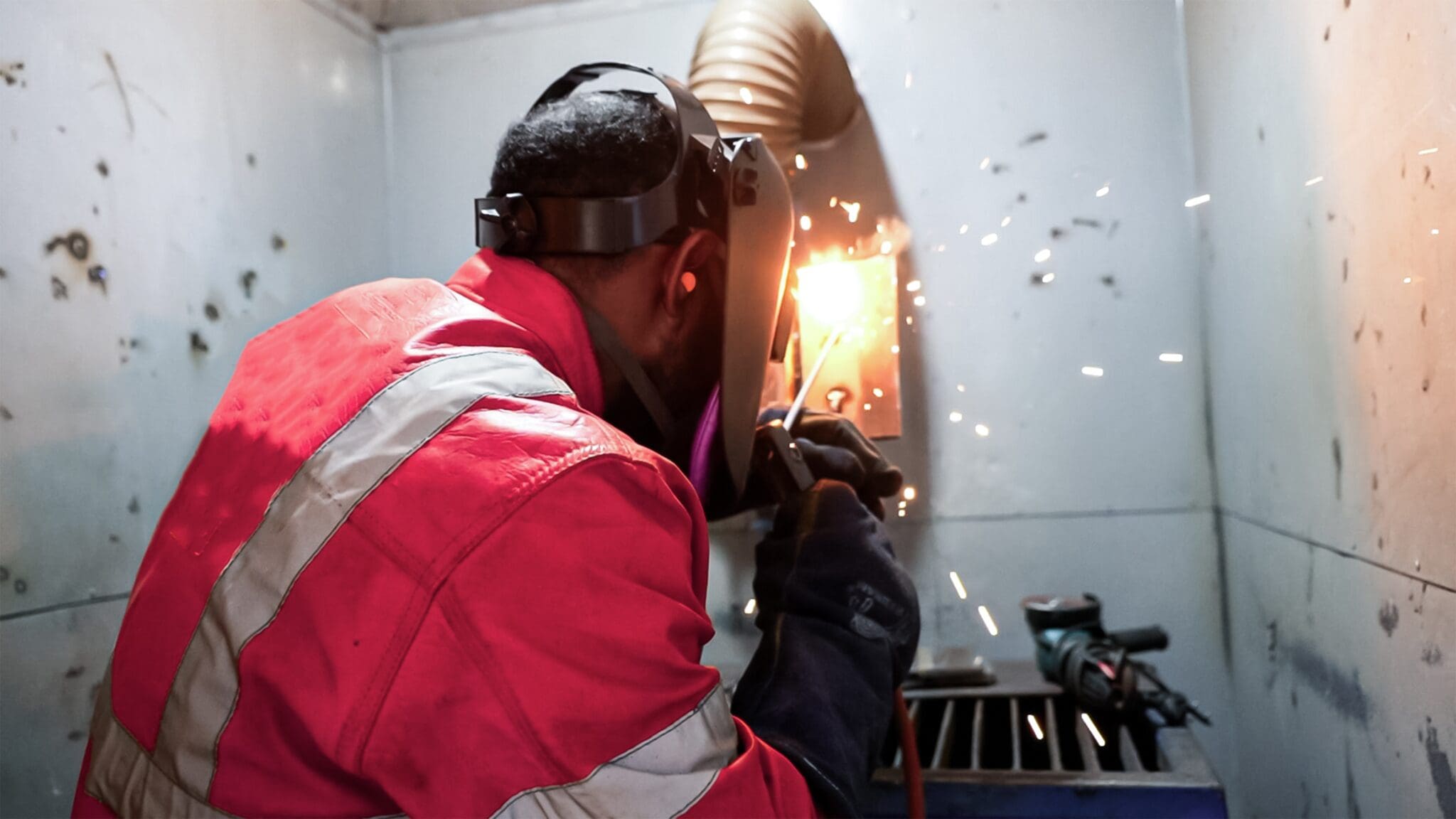
Welding in confined or enclosed spaces, such as tanks, vessels, or ducts, magnifies risks and demands special precautions. The concentration of fumes can rise rapidly, creating an immediate threat to respiratory health. Oxygen levels may be depleted, increasing the risk of asphyxiation.
In these environments, PPE must be combined with strict controls, including atmospheric testing, continuous ventilation, and robust emergency procedures. While PPE and RPE are the last resort, as employers should ensure that a confined space is safe to work in without the need for them, the risk assessment may identify that it is necessary. The HSE’s WL2 document recommends air-fed RPE with an Assigned Protection Factor (APF) of at least 40, or cylinder breathing apparatus (BA) if oxygen levels could be depleted.
Confined space entry is subject to the Confined Spaces Regulations 1997 and should only be undertaken by trained personnel with appropriate permits and rescue arrangements in place. Communication devices and escape harnesses may also be considered as part of the PPE ensemble.
Standards and Markings to Look For
Not all PPE is created equal. In the UK, it is essential that all items of PPE for welding comply with relevant British (BS), International (ISO), or European (EN) standards. Markings on the equipment should include the CE mark (or UKCA or UKNI mark post-Brexit), the standard it conforms to, and other information such as size and expiry date.
Key standards include:
- EN 175: Eye and face protection for welding.
- EN 166: General requirements for eye protection (will be replaced by EN ISO 16321).
- EN 12477: Gloves for welders.
- EN ISO 13688: General requirements for protective clothing.
- EN ISO 11611/11612: Protective clothing for welding.
- EN ISO 20345: Safety footwear.
- EN 149/EN 143: Respiratory protective devices.
- EN 352: Hearing protectors
Buyers should check product certification and request documentation where necessary. The absence of markings or documentation is a red flag.
Proper Fit and Comfort Considerations
PPE can only offer full protection if it fits properly, is compatible with other PPE, and is worn as intended. Ill-fitting helmets, gloves, or clothing can leave critical areas exposed, reduce dexterity, and lead to discomfort that discourages use. PPE should be available in a range of sizes and adjustable where appropriate.
User comfort is more than a luxury; it is essential for prolonged wear. Features such as padded headbands, adjustable straps, breathable materials, and ergonomic designs improve both safety and productivity. Employers should seek feedback from welders to ensure that equipment is both effective and wearable over long shifts.
For respiratory protection, a proper face fit test is vital. Facial hair, scars, or glasses can interfere with the seal, reducing effectiveness.
PPE Maintenance and Replacement Schedules
Regular inspection, cleaning, and maintenance of PPE are essential, and the frequency should be based on risk assessment. Damaged or degraded equipment provides a false sense of security and may fail at a critical moment. Employers should establish clear inspection routines – daily, weekly, and monthly checks depending on the equipment.
Helmets should be checked for cracks, lens clarity, and the function of auto-darkening systems. Clothing should be free of burns, tears, and heavy contamination. Gloves and boots should be replaced at the first sign of wear that could compromise protection. RPE filters should be regularly replaced, which will depend on the type of filter, usage conditions, and environment.
Most PPE has a recommended service life. Manufacturers’ guidance must be followed regarding replacement intervals, even if the equipment appears serviceable.
Training Workers on PPE Use
Supplying PPE is not enough. Workers must know how to use it properly and safely, so employers must ensure they have sufficient information, instruction, and training on PPE use.
Training should include the reasons for PPE, how to wear and adjust each item, limitations, and what to do if PPE fails. Employees should also be informed of the arrangements for storage, cleaning, maintenance, and inspection. Practical demonstrations are far more effective than written instructions alone.
Training should be refreshed regularly and when new equipment or processes are introduced. Records of training should be kept as evidence of compliance.
Storage and Cleaning Best Practice
PPE should be stored in a clean, dry environment protected from damage, contamination, and direct sunlight. Designated storage areas or lockers should be provided for each worker’s equipment. Shared PPE should be avoided where possible.
Cleaning methods should follow manufacturer guidance. Many items, such as helmets and gloves, can be wiped with mild detergent, while clothing may require specialist laundering to maintain flame resistance. Respiratory equipment, in particular, must be dismantled and disinfected regularly to prevent the growth of harmful bacteria.
Integrating PPE into Risk Assessments
PPE selection and use should always be part of a broader risk assessment process. The hierarchy of hazard controls requires that hazards be eliminated or reduced where possible and, if that is impractical, controlled through engineering or administrative means before relying on PPE. However, in welding, PPE and RPE are typically necessary as a final safeguard.
Risk assessments should consider the type of welding, work environment, duration, and any additional hazards such as confined spaces or working at height. The outcomes must inform PPE choice and arrangements for training, maintenance, and emergency procedures.
Common Mistakes and How to Avoid Them
Despite widespread awareness, common mistakes persist in the selection and use of welding PPE. These include:
- Wearing inappropriate or non-compliant PPE (such as cotton gloves or synthetic fabrics).
- Using damaged or poorly maintained equipment.
- Failing to replace PPE at the end of its service life.
- Not wearing PPE consistently, especially during short or ‘quick’ tasks.
- Poor fit, leading to exposure of skin or gaps in protection.
- Overlooking the need for combined protection (e.g., not wearing safety glasses under a welding helmet).
Avoiding these mistakes requires a culture of safety, regular audits, and open communication between welders and supervisors.
Resources and Supplier Guidance in the UK
There are many resources available for welders and employers seeking guidance on PPE selection and use. The Health and Safety Executive (HSE) provides detailed advice and approved codes of practice for welding safety and PPE. Trade associations such as the British Safety Industry Federation (BSIF) and the Welding Institute also publish up-to-date guidance.
Reputable suppliers in the UK offer products that meet relevant standards and provide support with selection, fitting, and training. Employers should work only with suppliers who provide clear certification and after-sales support.
Welders and employers can also access online directories, product comparison sites, and training resources. The HSE’s website remains the definitive source for legal requirements and best practice in welding PPE.
Conclusion
Welding is a rewarding but inherently hazardous occupation. The correct use of PPE, combined with proper training, regular maintenance, and a commitment to safety culture, ensures that welders can carry out their vital work with minimal risk to their health and well-being. In the UK, where regulations are clear and resources are abundant, there is no excuse for compromise. By investing in high-quality PPE and making it a core part of every welding operation, employers and workers alike uphold the standards of a safe and professional industry