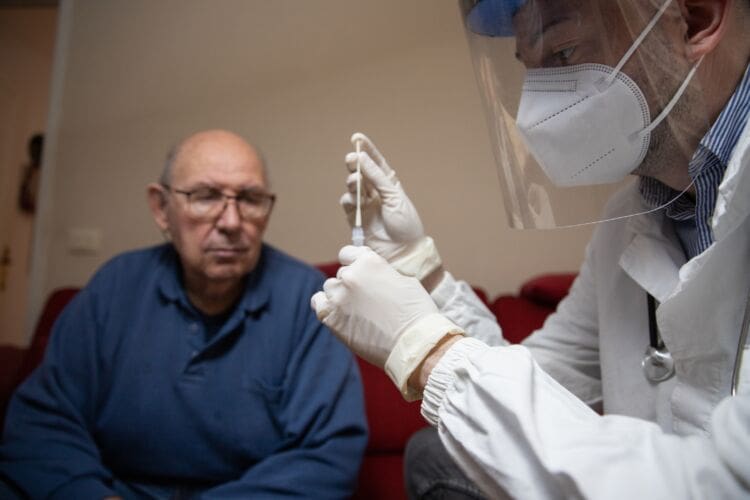
In this article
Infections can spread quickly in care homes and can cause serious harm to residents.
Many people living in care have frailty, long-term conditions, wounds or medical devices, which means even a common infection can lead to hospital admission or worse. Shared spaces, close personal care and frequent contact with staff and equipment all increase the risk of spread.
Infection control in care homes is part of safe, respectful care, keeping residents healthy, reducing staff sickness and reassuring families. It’s also key for managers, as without it, they can’t satisfy audits and inspections.
Most outbreaks begin in the everyday moments. A busy morning leads to rushed hand hygiene. A glove comes off and another goes on without handwashing. A commode gets wiped, but not with the right product or contact time. A staff member feels unwell yet worries about letting the team down, so they come to work anyway.
This guide is written for UK care home managers, nurses, carers, domestic teams and visiting professionals who want a practical, everyday approach to maintaining excellent infection control in care homes.
For two core reference points when shaping policy, use the Health and Social Care Act 2008: code of practice on the prevention and control of infections and the National infection prevention and control manual for England.
Infection prevention and control in care homes
Infection prevention and control (IPC) is a system. It covers how you assess risk, place people, clean environments, handle equipment, manage staff illness and respond to symptoms.
The aim is straightforward: break the routes infections take to move from one person to another.
Care homes face some specific challenges.
- Close personal care is unavoidable. Toileting, continence support, bathing and dressing involve frequent hand contact and a higher risk of exposure to body fluids.
- Shared living spaces increase cross-contact through high-touch surfaces such as handrails, call bells, lift buttons, wheelchairs and dining chairs.
- Residents may not be able to follow cough etiquette or remain in their rooms when unwell due to dementia or mobility needs.
- Winter pressure and antimicrobial resistance increase the impact of infections that good routines could prevent.
This is why care homes should keep two layers of control in place.
- Standard precautions are treated as non-negotiable, so routine care stays safe even when the home is busy.
- When a specific risk appears, the team adds transmission-based precautions such as isolation, cohorting, enhanced PPE and enhanced cleaning.
In UK practice, this stepped approach is set out in national IPC guidance, with an emphasis on clear placement decisions and documented risk assessments when isolation or cohorting is used.
To make IPC work consistently from day to day, define ownership.
- Managers resource and monitor.
- Nurses and seniors coach and escalate.
- Carers take precautions at the point of care.
- Domestic teams control environmental risk through consistent cleaning.
- Kitchen teams work to prevent foodborne illness.
- Visiting professionals follow the home’s rules, not their own habits.
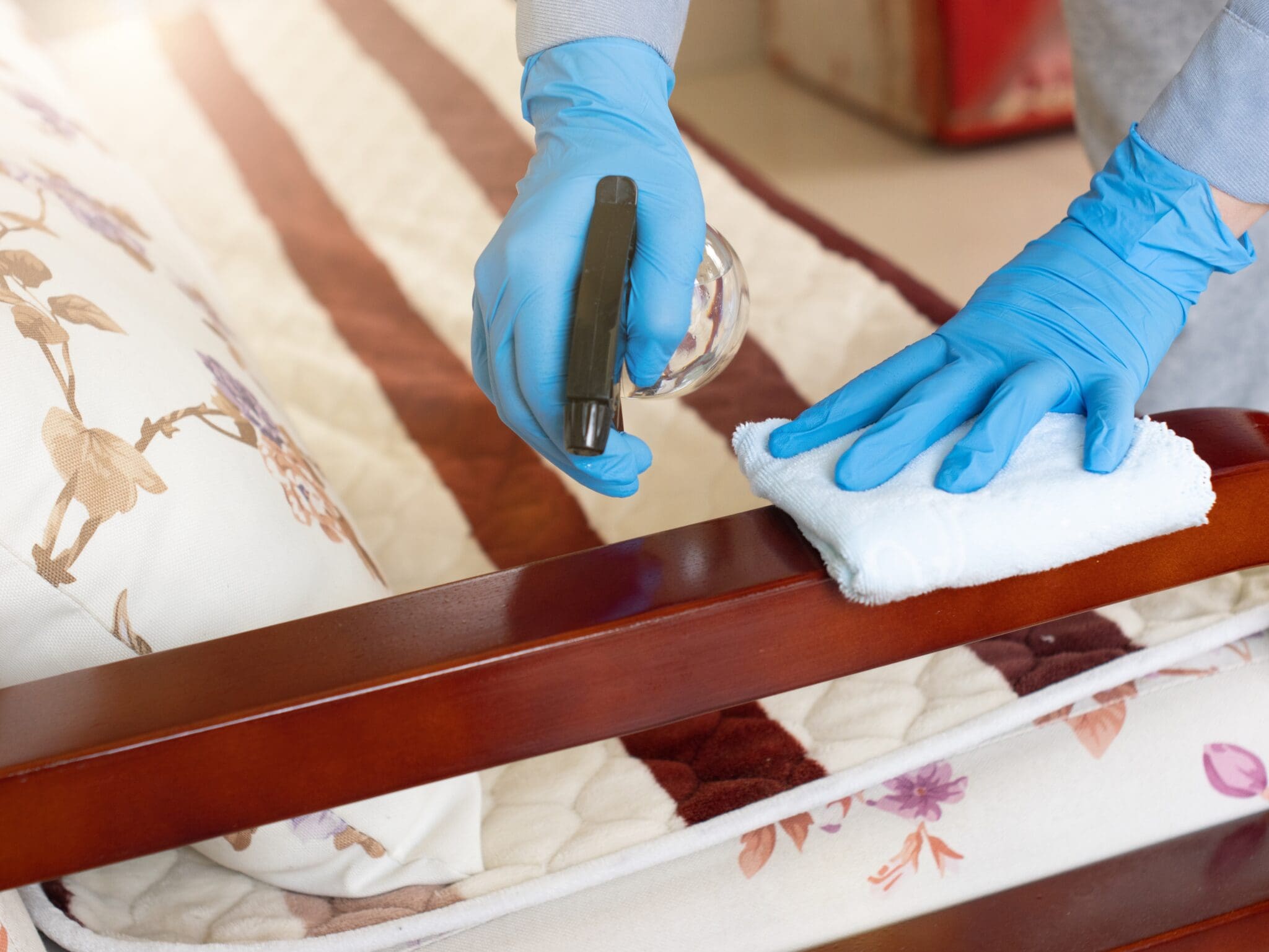
Standard precautions checklist for staff
Standard precautions are the “always” rules. Staff shouldn’t wait until an outbreak is declared to follow them. Instead, they should assume infection risk is present in any setting where people need personal care. They should create predictable routines that reduce the spread of infection from hands, equipment, linen, waste and surfaces.
Use the checklist below as a shift tool. Keep it short enough that people will use it, yet specific enough that it changes behaviour.
Standard precautions checklist (use every shift)
- Hand hygiene – clean hands before and after glove use, and after touching high-touch surfaces.
- Respiratory hygiene – promote the use of tissues, throwing used tissues away in bins and hand hygiene. Encourage staff to wear masks when risk is higher.
- PPE – use gloves and aprons for likely contact with body fluids, non-intact skin, continence care and cleaning. Change between residents and tasks.
- Equipment safety – clean shared items (hoists, commodes, BP cuffs, thermometers) between residents with the correct product and contact time.
- Environmental hygiene – clean high-touch points at least daily and more often during outbreaks. Clean spills immediately using the correct kit.
- Laundry handling – bag used linen at the point of use. Do not shake it, as this can spread contaminants into the air. Keep used and clean linen separate.
- Waste and sharps – segregate waste streams correctly. Dispose of sharps at the point of use; never re-sheath them. Replace bins when they reach the fill line.
- Food safety – maintain separation of raw and ready-to-eat food. Record critical temperatures. Ensure unwell staff do not enter food preparation areas.
- Escalation – report supply gaps early, document symptoms promptly and follow outbreak triggers without delay.
To keep the checklist alive, it’s a good idea to run a two-minute IPC huddle at the start of each shift. Pick one item to focus on that day and rotate it the next day. Consistency tends to build faster than long training sessions.
Key hand hygiene moments
Hand hygiene is the single most effective routine for reducing infection spread in care environments. It matters because hands move between residents, equipment and surfaces throughout the day, picking up and transferring microbes from one place to the next.
Many UK services use the World Health Organization’s “5 moments” as a shared language for training and auditing. Display the WHO 5 moments for hand hygiene poster in staff areas, then translate each moment into care home examples.
5 moments for hand hygiene
| When to clean your hands | Example |
| Before touching a resident | Helping with movement, eating or personal care |
| Before a clean task | Wound care, giving medicines or using equipment |
| After contact with body fluids | Continence care, waste handling, cleaning spills |
| After touching a resident | Any hands-on care or support |
| After touching the environment | Bed rails, walking aids, shared equipment |
Choose between soap and water and alcohol hand rub based on the situation. Use soap and water when hands are visibly dirty, after toileting tasks, and during vomiting or diarrhoea outbreaks. This matters because some infections can continue to spread after symptoms stop, so thorough handwashing helps reduce ongoing risk. Use alcohol hand rub when your hands are visibly clean and you need to decontaminate quickly between routine tasks.
Staff skin should also be protected, because frequent hand washing can dry it out. Provide moisturiser, encourage early reporting of irritation or dermatitis, and avoid jewellery and false nails in direct care roles. Skin that is damaged or sore makes consistent hand hygiene harder to maintain.
PPE use in care homes – a quick guide
PPE reduces risk when staff choose it correctly, change it at the right time and remove it safely. However, it can also cause infection to spread when staff rely on it instead of hand hygiene or wear it between care tasks with different residents.
Start with a quick question: “What am I protecting and from what?” Most care tasks require protection against body fluids. If a resident has a respiratory illness, you may also need to protect your mouth, nose and eyes.
Quick PPE guide
- Gloves – wear for contact with bodily fluids, mucous membranes, non-intact skin and cleaning chemicals. Change between residents and tasks. Never clean gloves with gel and continue using them.
- Aprons – wear for personal care, continence care and cleaning. Change between residents. If you expect heavy contamination or splashing, use a long-sleeved gown if your policy and risk assessment recommend it.
- Masks and eye protection – use a fluid-resistant surgical mask when in close proximity to a person with respiratory symptoms, especially during outbreaks. Add eye protection if you expect splashes or if guidance recommends it. If you carry out tasks with higher aerosol risk, align decisions with national IPC guidance and local advice on when respiratory protective equipment (RPE) is needed.
Removing PPE is often the point where staff contaminate themselves. To lower risk, follow a simple sequence:
Remove gloves → remove apron → clean hands → remove eye protection (if worn) → remove mask → clean hands again.
Also, keep PPE stations stocked at predictable points: unit entrances, treatment areas and isolation zones. When staff can’t find PPE quickly, they tend to improvise – and that’s when standards slip.
Address common mistakes such as wearing gloves for everything, touching phones and door handles, pulling masks under the chin, and reusing aprons between residents. Repeating these corrections helps build safer habits.
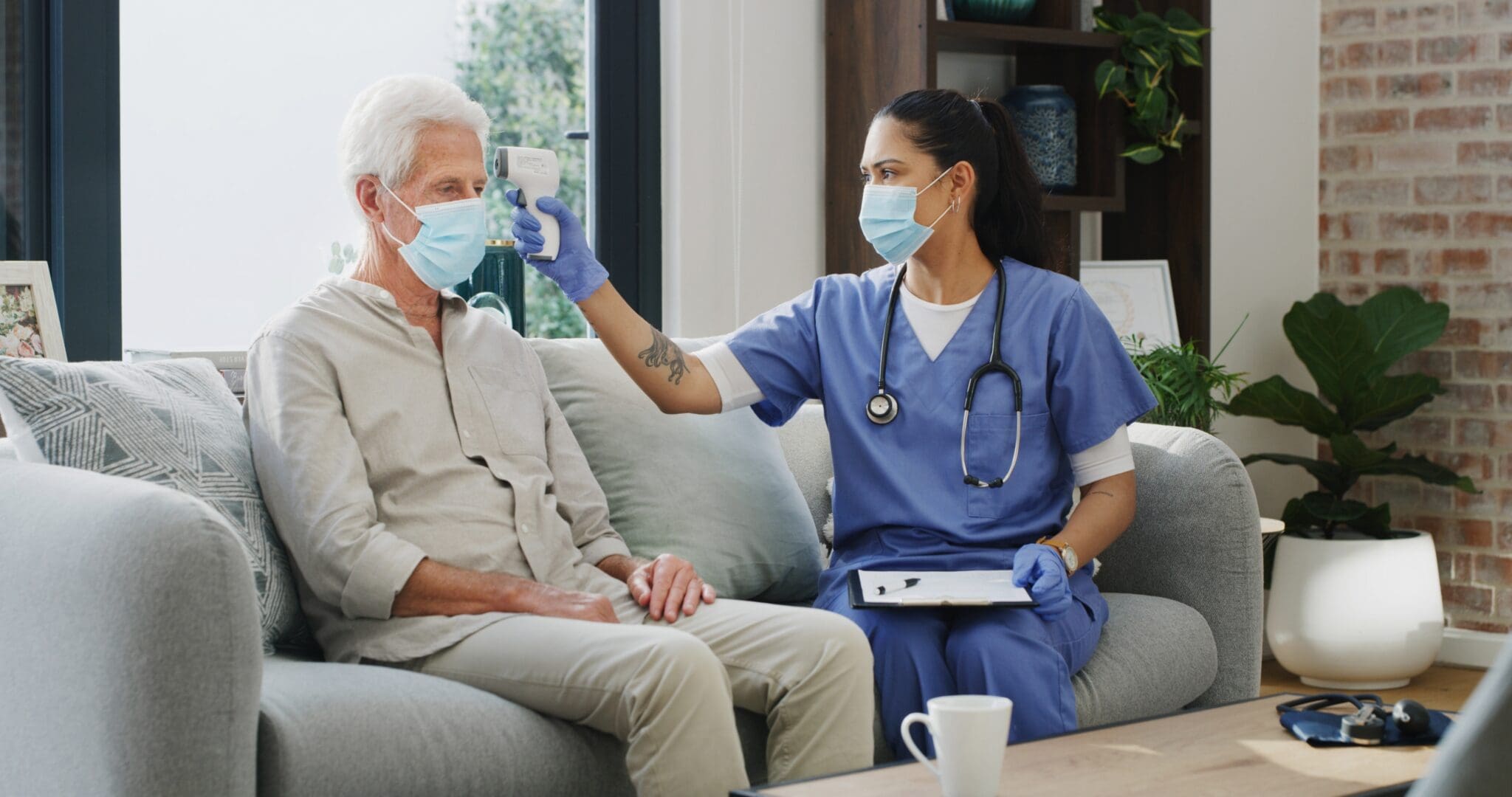
Cleaning and disinfection schedules
Cleaning reduces infection risk because many organisms spread through contaminated surfaces and shared equipment. A clear routine helps staff know what to clean, how to clean it and how often.
Cleaning and disinfection are not the same. Cleaning removes dirt and organic material. Disinfection uses a chemical to kill or inactivate microbes. If a surface is visibly dirty, it should be cleaned first, then disinfected if required.
Build cleaning schedules around risk. Focus on:
- High-risk areas such as toilets, bathrooms, sluices, treatment areas and isolation rooms
- High-touch points such as door handles, handrails, call bells, lift buttons and dining chairs
- General areas such as corridors, lounges and offices
Set minimum cleaning frequencies for each area, then increase them during outbreaks.
Staff also need clear instructions on products. Make sure they know:
- Which product to use for routine cleaning
- Which product to use for body fluid spills
- Which product to use during outbreaks
- How long each product needs to stay on a surface to work properly
Keep this information visible where staff work. Use colour-coded equipment to separate areas such as toilets and kitchens, and make sure mops and cloths are cleaned and dried after use.
Record cleaning in a way that reflects what actually happens. Tick sheets are useful when staff complete them at the time and a supervisor checks them regularly. A short weekly check of high-touch points and shared equipment can highlight gaps early.
Laundry handling and linen segregation
Laundry can spread infection if it’s handled too much, shaken or mixed with clean items. Shaking linen can release contaminants into the air, and repeated handling increases the chance of transferring them to hands, clothing and nearby surfaces.
A safe system keeps linen moving in one direction: used → bagged → transported → washed and dried → clean storage.
Always follow these key rules:
- Handle used linen as little as possible and never shake it.
- Bag linen at the point of use, ideally in the resident’s room.
- Wear gloves and an apron for used linen handling, then wash your hands.
- Keep used linen away from clean linen at all times.
Segregation needs to work in practice. Many homes use simple categories such as routine used linen, foul linen (contaminated with faeces or vomit), and infected linen from residents with a known or suspected infection. Your policy should define the correct bags and labelling for each, and staff should see clear, practical examples during training.
Linen should be handled in a way that prevents contamination. Bag it at the point of use using the correct bag, and avoid carrying unbagged items or placing them on surfaces. Store clean linen in a clean, dry area away from waste.
If laundry is outsourced, the same applies before collection and after return. Keep clean linen off the floor and away from splash areas. Rotate stock so older items are used first. Clear uniform rules also help reduce the risk of infection being carried between rooms or into the community.
Waste disposal and sharps safety
Most homes manage several waste streams, including domestic waste, hygiene or offensive waste, infectious clinical waste and sharps. Staff should be trained to recognise each type and dispose of items correctly, based on what they use in practice, such as dressings, incontinence products, wipes, gloves, syringes and lancets.
Sharps must be handled and disposed of safely at all times. This includes:
- Keeping sharps bins close to where they are used
- Disposing of sharps immediately after use
- Not re-sheathing needles
- Closing and replacing bins before they are full
- Making sure staff can access bins easily when needed
Where residents use sharps independently, such as with insulin or blood glucose testing, care plans should set out safe arrangements for storage, use and disposal. Staff should check that these arrangements are followed and remain safe.
If a sharps injury occurs, staff should act straight away: clean the wound, cover it and report the incident without delay. The incident should be recorded and reviewed so the cause is understood and the same issue doesn’t happen again.
Further guidance: Handling sharps in adult social care, CQC
Managing norovirus outbreaks in care homes
Norovirus spreads easily, causes sudden vomiting and diarrhoea and can disrupt a home quickly. A clear response helps contain it, protect residents and return to normal safely.
Early recognition
Start with early recognition. Treat vomiting and diarrhoea as a potential outbreak trigger. When you become aware of the first suspected case, isolate the resident if possible, use dedicated toileting equipment, start an illness log, and alert the manager or nurse in charge.
Reduce spread
Act early, limiting movement between areas, cohorting staff where possible and increasing cleaning of high-touch surfaces.
Pause communal dining and group activities in affected areas if needed, and make sure spills are cleaned immediately using the correct products and PPE.
Staff illness
Keep staff off work if they are unwell. Anyone with symptoms should stay away and not handle food until at least 48 hours after symptoms have stopped. This helps prevent ongoing spread, as people can still be infectious after they feel better.
Monitoring
Monitor residents closely. Watch for signs of dehydration, increased falls and general signs of deterioration. Escalate to a GP or urgent care if needed, and keep clear records of symptoms, actions taken and decisions made.
Closing the outbreak
Close the outbreak only when symptoms have stopped across the home and it’s safe to return to normal routines. Review what happened and update your approach if needed.
Further guidance: Norovirus: What to do if you catch it and helping to stop the spread
Respiratory infections – isolation and cohorting
Respiratory infections can spread quickly in care homes and can cause serious harm in older adults. Early action helps reduce transmission and protect residents.
Look for patterns early. Several new coughs, fevers, sore throats, shortness of breath, or a rise in confusion or reduced appetite can signal that there may be an outbreak. Encourage staff to report symptoms promptly so action can be taken without delay.
Use a stepped approach to reduce spread:
- Single-room isolation for symptomatic residents where possible
- Cohorting symptomatic residents together if you cannot isolate them individually
- Zoning staff and equipment to reduce crossover between symptomatic and well areas
Record placement decisions and share them clearly at handover so everyone follows the same approach.
Use PPE based on risk. For close contact, this will often include masks, with eye protection where there’s risk of splashing or droplets. Support this with practical measures such as improving ventilation, opening windows where safe and reducing crowding in shared spaces.
Adjust communal routines where needed. This may include staggering mealtimes, reducing group activities in affected areas and increasing one-to-one support. The aim is to limit spread while maintaining the residents’ normal routine and social contact as much as possible.
Further guidance: Management of acute respiratory infection outbreaks in care homes guidance, GOV.UK
Visitor rules during outbreaks
Visits matter because they help residents stay connected to the people who know them best. This supports emotional well-being and helps maintain a sense of identity and routine. During an outbreak, care home teams should aim to keep that connection wherever possible, while still making every effort to reduce the risk of infection.
Set clear visiting arrangements based on the level of risk. Many homes use three levels – normal, enhanced precautions and restricted – so staff and families understand what to expect. Whatever approach you use, keep it consistent and easy to explain across signage, phone calls and written updates.
Safe visiting routine
- Clear messaging not to visit if unwell
- Hand hygiene on arrival, and before and after the visit
- Use of masks or other PPE where needed
- Direct-to-room visiting where advised, with limited use of shared spaces
- Shorter visits or fewer visitors at one time when risk is higher, while maintaining access for essential or end-of-life visits
For gastroenteritis outbreaks, include a clear rule that visitors should stay away until at least 48 hours after symptoms have stopped. People can still spread infection after they feel better.
Record the approach you are taking. Keep a simple log of outbreak status, visiting arrangements and any exceptions, including how risk is being managed. This shows that decisions are consistent, proportionate and centred on residents’ needs.
Further guidance: Supporting safer visiting in care homes during infectious illness outbreaks, GOV.UK
Catheter care and UTI prevention
Catheter care relies on consistent, everyday routines. When those routines slip, problems can develop quickly, including infection, discomfort and avoidable hospital admissions.
The most effective way to reduce risk is to keep asking a simple question: Does this person still need a catheter? Review this regularly, record the reason it’s still in place and escalate for removal when it’s no longer required. The longer a catheter stays in place, the higher the risk of infection.
For day-to-day care, focus on the basics:
- Keep the drainage system closed and avoid unnecessary disconnections.
- Keep the bag below bladder level and off the floor.
- Prevent kinks, ensure urine flows freely and secure the catheter to reduce pulling.
- Support gentle daily hygiene with soap and water, avoiding routine antiseptics unless advised.
Encourage fluids where appropriate and monitor bowel health, as constipation can affect drainage and comfort.
UTIs don’t always present in obvious ways. In older adults, signs may include new confusion, reduced appetite, agitation, falls or general decline. Record changes clearly so clinicians can make accurate assessments.
When a urine sample is needed, take it from the correct sampling port, label it promptly and record symptoms alongside the result. This supports appropriate treatment and avoids unnecessary use of antibiotics.
Further guidance: Adult social care: information for providers, CQC
Wound care and signs of infection
Wounds are common in care homes. They include pressure ulcers, leg ulcers, surgical wounds and skin tears.
Infections are particularly harmful for patients with wounds, as they increase pain, delay healing and raise the risk of needing hospital care. They also increase antimicrobial use and can contribute to the spread of resistant organisms if staff handle dressings inconsistently.
Good wound care depends on consistent technique. Focus on simple, repeatable steps:
- Prepare equipment before starting so the procedure is not interrupted.
- Clean hands before and after, and use an aseptic non-touch technique where possible.
- Avoid touching the side of the dressing that touches the wound.
- Dispose of used dressings immediately and clean hands after removing gloves.
- Clean and store wound care equipment properly.
Staff also need to recognise early signs of infection.
Local signs include increased redness, heat, swelling, pain, odour or a sudden increase in fluid.
General signs include fever or low temperature, fast breathing, rapid heart rate, low blood pressure, and new confusion or sudden decline. In older adults, changes can be subtle.
Prevention reduces problems. Regular pressure care, managing moisture, supporting nutrition and hydration, and using pressure-relieving equipment all help protect skin. Consistent care and early escalation make a noticeable difference to outcomes.
Food hygiene in care home kitchens
Food hygiene is part of infection control because residents are more likely to become seriously unwell from foodborne illness. A safe kitchen depends on clear routines that staff follow every day, not just general awareness.
Focus on how food is handled from delivery through to serving. That includes:
- Washing hands before preparing food and after handling raw ingredients, waste or cleaning tasks
- Keeping raw and ready-to-eat foods separate during storage and preparation to prevent cross-contamination
- Checking and recording fridge and freezer temperatures daily, and taking action if they fall outside safe ranges
- Cooking food thoroughly and following safe cooling and reheating practices if food is prepared in advance
- Cleaning and sanitising food-contact surfaces and equipment at set times, not just when they look dirty
Allergen control needs to be built into daily routines. Keep an up-to-date allergy record for each resident, check ingredients every time and avoid cross-contact by using separate utensils and cleaning thoroughly between tasks. This applies beyond the kitchen, including snack rounds and drinks service.
During outbreaks, tighten controls. Keep unwell staff away from food handling, increase cleaning of dining areas and shared equipment, and adjust how meals are served where needed (for example, food might be served directly to rooms in affected areas).
Further guidance: Safer food, better business supplement for residential care homes, Food Standards Agency
Staff sickness policy and exclusions
Staff illness is a common route for infections to spread in care homes. Clear, practical rules help prevent this and make it easier for staff to do the right thing.
Set simple expectations that apply to everyone, including bank and agency staff. People are more likely to follow them when they are easy to understand and consistently applied.
For vomiting and diarrhoea, staff should stay away from work until at least 48 hours after symptoms have completely stopped. For respiratory illness, set clear triggers for staying off, such as fever or significant new symptoms, and use a consistent approach to decisions about returning to work.
Make reporting straightforward.
- Use a single reporting route.
- Encourage early reporting.
- Avoid making people feel pressured to work while unwell.
A short return-to-work check can confirm that symptoms have resolved and help identify any wider pattern.
Plan ahead for periods of pressure. For example:
- Maintain contingency rotas.
- Brief agency staff on your expectations.
- Support staff to receive vaccinations where appropriate.
These steps make it easier to manage absences without increasing risk to residents.
IPC audits and CQC evidence
Inspectors look for evidence that infection control is part of day-to-day practice. Just because you have policies written down doesn’t prove your teams follow them. They will check what staff do, what you record, and how you respond when something is not working.
Make audits focused and practical. Check a small number of areas regularly:
- Hand hygiene across different shifts and staff roles
- PPE use, including correct selection, changing between residents and safe removal
- Cleaning of high-touch surfaces and shared equipment
- Laundry and waste handling, including sharps disposal
- Staff training, including agency induction and updates
- Outbreak readiness, such as stock levels, signage and clear plans
Use audits to improve practice. For example, it’s helpful to share results in plain language, agree on one or two actions and check again within a short timeframe. This shows that issues are identified and addressed.
Keep evidence organised so it’s easy to share. This should include:
- Current infection control policies that reflect national practice
- Named responsibility for infection control and clear oversight
- Training records and staff competency checks
- Recent audit results and what changed as a result
- Cleaning schedules and product instructions, including contact times
- Records of outbreaks and what was learned from them
Final thoughts
Infection control in care homes comes down to what happens in everyday moments. The small decisions – cleaning hands, using the right PPE, isolating early, reporting symptoms – are what prevent infections from spreading.
Strong systems help, but consistency is what makes them work. When staff follow the same routines across shifts, speak up early and act on small concerns, risks are reduced before they escalate.
If you want to strengthen IPC in your facility, it’s often best to start small. Pick one area to improve, check what actually happens in practice and make one clear change. Then repeat that process. Over time, that approach builds a safer, more reliable system for everyone.
For a more detailed framework on how to apply additional precautions during outbreaks, you can refer to NHS England’s National Infection Prevention and Control Manual – transmission-based precautions, which sets out how to adjust care based on how infections spread.