In this article
In food settings, norovirus can turn a normal service week into a full operational headache. It spreads fast and keeps spreading even after someone feels better, creating a perfect storm: close teamwork, shared touchpoints, time pressure and lots of ready-to-eat food handling.
One sick team member, one poorly cleaned toilet, or one person deciding to finish their shift when unwell instead of going home can lead to customers getting ill, staff shortages, wasted stock and reputational damage that takes months to rebuild.
However, norovirus responds well to simple, disciplined controls – clear exclusion rules, reliable handwashing, the right cleaning products and a plan for vomit incidents that staff can follow even in high-pressure, high-stress moments. When teams do those basics well, they cut outbreaks sharply, and they build solid due diligence evidence if anyone challenges what happened later.
This guide focuses on practical, UK-relevant steps for cafes, takeaways, restaurants and catering teams. It explains how norovirus behaves in food settings, which foods and situations cause risk, and the procedures that can stop it from spreading during busy service.
Norovirus in food settings explained
Norovirus is a highly infectious virus that causes vomiting and diarrhoea. People often call it the “winter vomiting bug”, but that’s a little misleading, as it doesn’t just strike in winter.
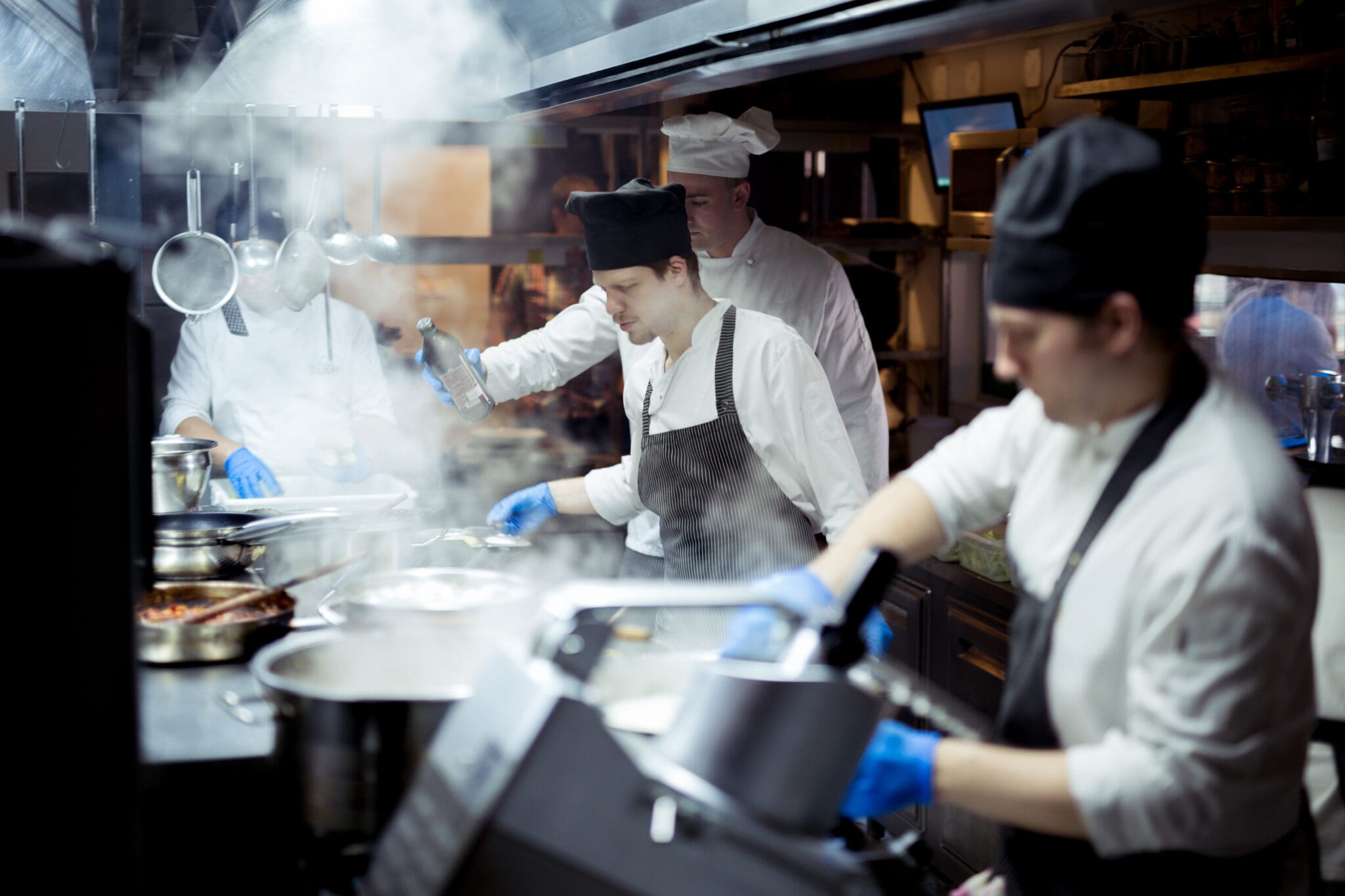
The virus is a big concern for food businesses, as it spreads in ways kitchens naturally encourage: shared equipment, shared sinks, shared toilets and lots of hand contact with ready-to-eat foods.
How does norovirus spread?
Norovirus spreads through three main routes:
- Person to person, especially through unwashed hands after toilet use or vomiting episodes
- Surfaces and touchpoints, such as door handles, taps, fridge handles, card machines and shared cloths
- Food contamination, usually when someone with symptoms (or recently recovered) handles ready-to-eat food
Most outbreaks start with people, not the food itself. The virus gets onto hands, then onto surfaces and food, then back onto hands again. Once that cycle starts, it can keep going.
What does this look like in a real kitchen?
Norovirus usually spreads because of small, everyday gaps:
- Someone feels unwell but finishes their shift or comes back to work too soon
- Handwashing slips under pressure, or sanitiser gets used instead of soap and water
- Vomit gets cleaned up quickly, but not properly disinfected
- Teams clean what they can see, but miss taps, handles, buttons and shared touchpoints
Where does norovirus actually come from?
People as a source:
- Staff working while ill with vomiting or diarrhoea
- Staff returning less than 48 hours after symptoms stop
- Staff who have been caring for someone who is unwell at home
That last one is easy to miss. Someone can feel completely fine, yet bring the virus in on their hands, clothes, phone or keys.
Environment as a source:
- Toilets – flush handles, taps, door handles, cubicle locks, soap dispensers
- Shared touchpoints – fridge handles, microwave buttons, kettles, card machines, POS tablets
- Cleaning equipment – cloths and mops that move contamination between areas
- Staff areas – lockers, phones, kettles and shared surfaces
Once it’s in the building, norovirus can hang around on surfaces and keep circulating.
A common pattern is that the kitchen gets a thorough clean, but the staff toilet or break area doesn’t. That’s enough to keep the outbreak going.
Why it seems difficult to get rid of
Norovirus also has two features that make it especially disruptive:
- It takes a very small amount to infect someone.
- It can survive on surfaces long enough to keep bouncing around the building if there’s no thorough disinfection process.
Handling norovirus outbreaks can be frustrating and a seemingly never-ending battle. Teams clean, yet cases keep cropping up. Usually, it’s not because people aren’t trying. It’s because something small keeps getting missed – someone returns too soon, a key touchpoint isn’t disinfected, or handwashing slips during a busy service.
What actually stops it from spreading
Control comes down to breaking the cycle between hands, surfaces and food.
That means:
- Proper handwashing with soap and water
- Cleaning and disinfecting the right surfaces, not just visible mess
- Clear, consistent staff exclusion rules
When those basics are done properly, outbreaks are much easier to bring under control.
Norovirus symptoms and incubation period
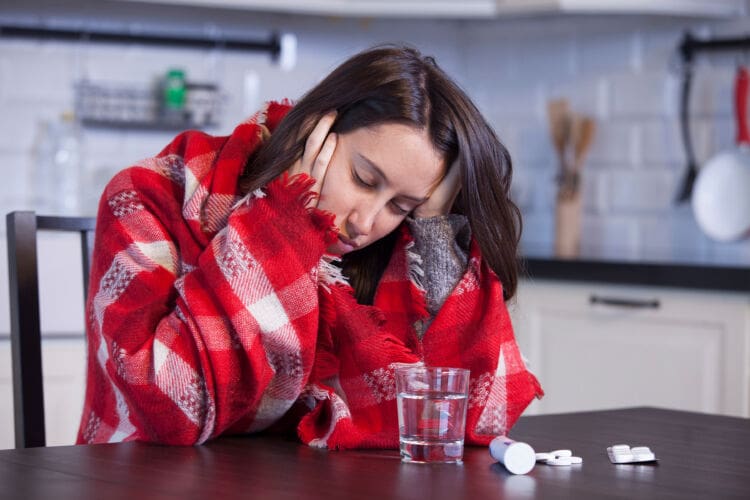
Norovirus symptoms usually start suddenly. Staff often describe feeling fine, then within an hour, they feel nauseous and unwell.
Typical symptoms include:
- Sudden nausea
- Vomiting (often forceful)
- Watery diarrhoea
- Stomach cramps
- Sometimes fever, aches and fatigue
Incubation is commonly around 12–48 hours. In other words, someone often becomes ill 1–2 days after exposure.
The illness itself is usually short, lasting around 2–3 days. Even so, people often feel drained for a bit longer. It’s also important to remember that the virus can still spread after symptoms stop, which is why staff should stay off work for at least 48 hours after they are completely well.
In food settings, the timing of symptoms can give you useful clues. If team members fall ill a day or two apart, norovirus is more likely. If several people become unwell within a few hours of eating the same food, a toxin-related cause is more likely. Timing will not confirm the cause, but it can help you decide how to respond.
High-risk foods linked to norovirus
Norovirus doesn’t “prefer” certain foods in the way that some bacteria does, but high-risk foods are handled after cooking, or they never get cooked at all. That makes them perfect vehicles for virus transfer from hands.
High-risk foods in food settings include:
- Ready-to-eat foods that get lots of hand contact, such as sandwiches, wraps, salads and garnishes
- Foods served cold, such as deli items, cakes and dessert pots
- Ice and drinks handling, especially if staff scoop ice by hand or touch the ice chute
- Buffets and self-serve areas, where customers share utensils and touchpoints
- Shellfish, particularly oysters, because shellfish can sometimes carry norovirus from contaminated waters (this is more of a supply-chain risk, but it matters for menu planning)
If your menu relies heavily on ready-to-eat assembly, you need to treat handwashing, glove use and exclusion rules as critical controls.
You also need to check whether your processes create hand contact you could reduce. For example, using utensils instead of bare-hand garnish handling can reduce risk, but staff still need proper handwashing because utensils don’t protect against poor hygiene upstream.
When food handlers must stop work
Managers should treat vomiting and diarrhoea as an automatic stop-work trigger for food handling. Staff should not work with or around open food if they have these symptoms.
This applies even if symptoms seem mild or have only just started.
The “must stop” list includes:
- Any vomiting, even once, unless a clinician confirms a non-infectious cause
- Any diarrhoea, especially watery or repeated episodes
- Combined nausea, cramps, fever and diarrhoea, even if mild
Managers also need to act if staff show early signs. Norovirus often starts with nausea and “feeling off”. If someone says, “I feel like I might be sick”, take it seriously. Sending them home early can prevent a bigger staff shortage later.
If someone becomes unwell during a shift:
- Remove them from food areas immediately.
- Send them home safely.
- Identify what tasks they performed in the last few hours, especially ready-to-eat handling
- Increase cleaning of touchpoints and toilets.
- Consider discarding exposed ready-to-eat food where there is contamination risk, especially if vomiting occurred on site or if the person handled food while symptomatic.
These measures may feel harsh, but they protect customers and the business. One avoided outbreak saves far more money than one team member’s lost shift.
The 48-hour rule for returning to work
The 48-hour rule matters because norovirus can still spread after symptoms stop. People often feel better, then they return too soon and restart the cycle.
UKHSA advises people not to return to work or school until 48 hours after symptoms have stopped, and also to avoid preparing food for others until then.
For food businesses, apply the rule like this:
- Staff with vomiting and/or diarrhoea stay off work until symptoms stop.
- Then they stay off for a further 48 hours before returning to work around open food.
Managers should not create exceptions. That undermines hygiene culture and increases outbreak risk.
What to do if someone in your household is ill?
Household illness creates a tricky situation. A staff member may feel fine, but norovirus spreads easily between members of the same household, including adults and children. That staff member can bring the virus into work through touchpoints like phones, car keys, door handles and clothing.
There’s no need to automatically exclude all household contacts, but you do need stronger controls and clear reporting to tackle this issue.
If someone in a worker’s household has norovirus symptoms:
- Ask the worker to inform their manager immediately.
- Reinforce strict handwashing with soap and water at work.
- Increase awareness around touching the face, phones and shared surfaces.
- Consider temporarily moving them away from high-risk tasks such as ready-to-eat assembly if staffing allows.
- Remind them not to bring shared household items into food areas, such as reusable water bottles, keys, phones or lunchboxes.
If the worker develops any symptoms, exclude them immediately and apply the 48-hour rule.
This approach protects the business without creating fear-driven underreporting. Staff report earlier when they trust managers to respond fairly.
Handwashing vs hand sanitiser
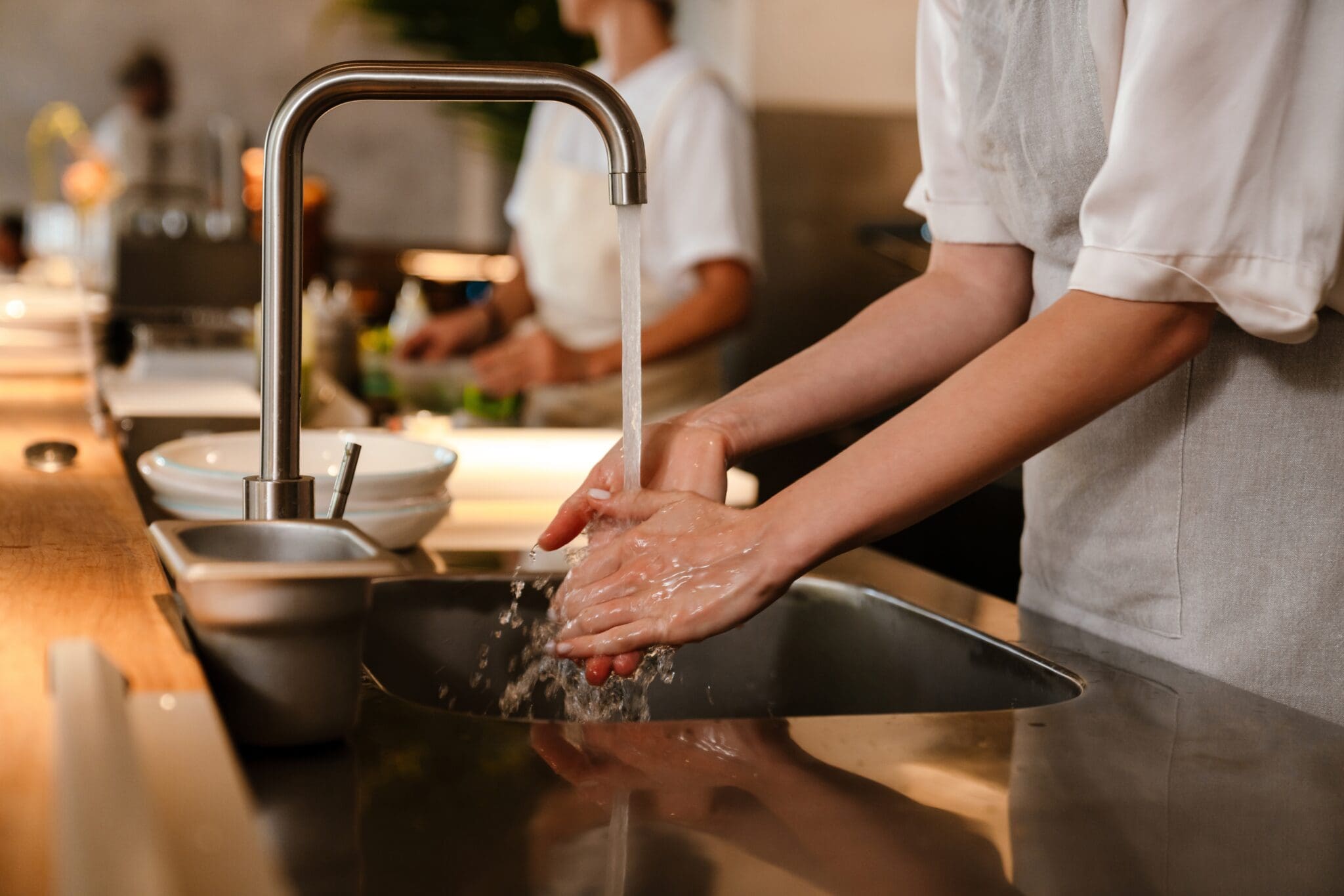
In norovirus control, soap-and-water handwashing beats hand sanitiser. Alcohol gels can help for some germs, but norovirus spreads effectively through contamination that hand sanitiser doesn’t reliably remove, especially when hands are soiled or contaminated with bodily fluids.
Food businesses should treat soap and water as the primary control. Practical handwashing rules that reduce norovirus spread:
- Wash hands with soap and water after every toilet visit.
- Wash hands after cleaning, handling waste or touching materials used to clean up vomit.
- Wash hands before handling ready-to-eat food.
- Wash hands after removing gloves.
- Wash hands after touching phones, cash, delivery bags or shared devices.
Hand sanitiser can support hand hygiene when hands look clean and staff cannot reach a sink immediately. However, it shouldn’t replace proper handwashing, especially after toilet use or when staff have handled anything that’s contaminated.
The NHS has an easy handwashing method in its guide to washing your hands that you can use as a baseline resource for staff training.
Cleaning products that kill norovirus
Many businesses clean regularly, even while norovirus keeps spreading. That’s because cleaning and disinfecting are not the same thing. A general detergent removes dirt. A disinfectant kills germs. To stop norovirus, you need both steps: clean first, then disinfect with a product that works against norovirus.
In practice, kitchens often use chlorine-releasing disinfectants (bleach-based) for norovirus control. Some settings use other virucidal products, but staff must follow the manufacturer’s instructions and ensure the product is effective against non-enveloped viruses like norovirus.
A practical selection checklist:
- Choose a disinfectant that states it is effective against norovirus or non-enveloped viruses.
- Use the correct dilution and contact time.
- Use it on cleaned surfaces, not greasy or visibly dirty surfaces.
- Avoid mixing chemicals, especially mixing bleach with acids, because this can create dangerous fumes.
Make sure staff:
- Dilute products exactly as instructed and never guess concentrations.
- Use them in well-ventilated areas to reduce exposure to fumes.
- Avoid mixing with other chemicals, especially acids or descalers.
- Use appropriate protection where needed, such as gloves or aprons.
- Store products safely and clearly labelled.
Quick sprays, perfumed surface wipes and “antibacterial” products may not inactivate norovirus unless they specifically state virucidal effectiveness. If a product does not claim effectiveness against viruses, don’t rely on it for norovirus outbreaks.
Disinfecting toilets and touchpoints
Toilets are central to norovirus spread in food businesses. Staff can do brilliant kitchen cleaning, but if the toilet remains contaminated, the outbreak will continue. That is why a norovirus response plan must include toilet disinfection and touchpoint control.
Key toilet touchpoints to disinfect include:
- Flush handles or buttons
- Tap handles
- Door handles and push plates
- Cubicle locks
- Soap dispensers
- Paper towel dispensers
- Toilet seat and lid
- Light switches
- Baby changing surfaces
Outside the toilet, the most important touchpoints often include:
- Fridge and freezer handles
- Microwave buttons
- Kettle handles and hot water taps
- Card machines and POS tablets
- Shared pens and clipboards
- Bin lids and pedal bins
- Stair rails and door handles in staff areas
Add a “touchpoint round” to your cleaning schedule during heightened risk periods. Instead of one end-of-day clean, run short touchpoint cleans throughout the day. This works well because it fits the rhythm of service and reduces build-up.
Here’s a simple routine that many businesses can sustain:
- Clean and disinfect toilets at least every 2–3 hours during service in outbreak risk periods.
- Clean and disinfect high-touch surfaces at least every 1–2 hours.
- Increase frequency if staff report illness or if a vomit incident occurs.
Keep it realistic. A plan that staff cannot follow will fail. Aim for a short, focused touchpoint list that someone can complete in 10 minutes.
How to handle vomit incidents safely
Vomit incidents require a calm, controlled response. They also need to be handled quickly, because vomiting can contaminate nearby surfaces fast.
The trouble is that staff often panic, grab a mop and spread contamination, making things worse.
Create a simple vomit clean-up procedure and train staff to follow it. Keep a small “vomit kit” ready so staff don’t end up improvising. It may include:
- Disposable gloves and disposable aprons
- Disposable cloths or paper towels
- A scoop and scraper or disposable absorbent granules
- Waste bags that seal
- A disinfectant that’s effective against norovirus
- Signage or barriers to restrict access during clean-up
Here’s a step-by-step method that works in food settings:
- Isolate the area. Keep customers and staff away. Close off the space if possible.
- Protect yourself. Put on gloves and an apron. If your risk assessment supports it, consider eye protection or a mask, especially if there is splash risk.
- Remove solids safely using disposable towels or absorbent granules. Scoop solids into a bag without splashing.
- Wash the area with detergent and water to remove visible contamination.
- Disinfect second. Apply a disinfectant that is effective against norovirus and leave it for the correct contact time.
- Dispose safely, double bagging waste if needed. Remove PPE carefully. Seal waste and dispose of it according to your waste procedure.
- Wash hands thoroughly using soap and water. Do not rely on sanitiser.
- Review nearby risks. Disinfect nearby touchpoints and consider whether any exposed food or utensils need discarding.
After a vomit incident in or near food areas, managers should consider a cautious disposal approach for exposed ready-to-eat items. You cannot reliably “wash off” risk from open foods.
HACCP controls to prevent outbreaks
Norovirus is not controlled through cooking or storage. It is controlled through people, hygiene and routine.
In practical terms, this comes down to a small number of controls:
- Staff do not work when they are unwell
- Handwashing is done properly and consistently
- Ready-to-eat food is handled with care
- High-touch areas and toilets are cleaned and disinfected properly
- Vomit incidents are handled quickly and safely
If these are followed every day, outbreaks are much less likely. If they slip, the risk reaches food very quickly.
You do not need a complicated system. What matters is that these controls are clear, understood, and applied the same way across the team.
If you use the Food Standards Agency’s Safer food, better business (SFBB) pack, these controls should sit within your existing procedures rather than as something separate.
Norovirus kitchen checklist template
A checklist only helps if staff can actually use it during a shift, so keep it short, clear and action-focused.
This checklist focuses on what staff actually need to do during a shift. It can be used as a daily routine and stepped up when there is a suspected case or outbreak.
Daily norovirus control checklist (normal operations)
People and reporting:
- Staff know they must report vomiting or diarrhoea immediately.
- Manager applies exclusion rules consistently.
- Staff understand the 48-hour return rule after symptoms stop.
Hand hygiene
- Handwash sinks stay clear and stocked with soap and paper towels.
- Staff wash hands with soap and water after toilet use and before ready-to-eat handling.
- Staff do not use hand sanitiser as a substitute for handwashing.
Ready-to-eat handling
- Staff reduce bare-hand contact with ready-to-eat foods.
- Utensils and tongs remain clean and task-appropriate.
- Ice handling uses a clean scoop, not hands or cups.
Cleaning and disinfection
- Toilets are cleaned and disinfected at scheduled times.
- Touchpoints are cleaned and disinfected at scheduled times.
- The team uses a disinfectant that is effective against norovirus and follows contact time rules.
Incident readiness
- Vomit kit is stocked and accessible.
- Staff know the vomit clean-up procedure.
Heightened risk checklist (suspected case or outbreak)
Immediate actions
- Symptomatic staff are sent home immediately.
- Manager identifies last tasks performed by the sick staff member.
- Manager increases toilet and touchpoint disinfection frequency.
Environment reset
- Toilets are disinfected, including all touchpoints.
- Staff room touchpoints are disinfected.
- Kitchen touchpoints are disinfected, including fridge handles and POS devices.
Food risk control
- Business discards exposed ready-to-eat items if there is contamination risk.
- The team reviews high hand-contact foods and adjusts processes to reduce handling.
Communication and records
- Manager records sickness reports, exclusion dates and return dates.
- Manager logs cleaning rounds and vomit incidents.
- Team reinforces handwashing and exclusion messages at briefings.
We suggest turning this template into a simple one-page sheet with tick boxes for times and initials. Staff will find it easier to complete, and it gives you instant evidence of what you did if you need to justify decisions.

Summing up
Norovirus is rarely about one big failure. It spreads through small gaps – a missed handwash, a rushed clean, someone coming back to work too soon. The patterns are predictable, which means they’re also preventable. Once you understand how it moves from person to person, surfact to surfact, and food to food, the controls start to make sense.
What matters most is consistency. Clear rules, followed the same way every day, will do more than any detailed plan. If staff know when to stay off, how to wash their hands properly and what to clean and when, you remove most of the risk. Keep it simple, keep it visible, and make it part of how your team works day to day.
Further guidance:
- Norovirus: What to do if you catch it and helping to stop the spread, UK Health Security Agency
- Norovirus: managing outbreaks in acute and community health and social care settings, GOV.UK
- Norovirus (vomiting bug), NHS
- Fitness to work, Food Standards Agency
- Safe use of chlorine-based disinfectant chemicals guidance, NHS Employers Safer food, better business (SFBB)