
In this article
Stomas are created when part of the bowel or urinary system needs to be diverted to the surface of the abdomen. This can happen after surgery for conditions such as bowel cancer, inflammatory bowel disease, diverticulitis, bladder problems or injury. For some people, the stoma is temporary. For others, it’s permanent.
For carers, stoma care often becomes part of everyday support quite quickly. It can feel unfamiliar at first, especially if different staff are involved or routines are still settling after surgery. Small differences in how care is done can lead to leaks, sore skin or discomfort, so consistency matters more than complexity.
This guide is written for UK carers, care home staff, home care workers and family members who support someone with a colostomy, ileostomy or urostomy.
It focuses on the practical side of care – what to check, what tends to go wrong, and how to keep things stable day to day. The aim is to make the routine clear and predictable, so problems are picked up early and the person being supported stays comfortable and confident.
Stoma care basics for carers
Stoma care needs to be consistent. Small changes in routine can lead to leaks, sore skin or discomfort, especially when several people are involved. The aim is to keep things simple:
- Keep the skin clean, dry and protected
- Make sure the appliance is secure and comfortable
- Notice changes early
- Support privacy and personal preferences
- Record clearly so care stays consistent across shifts
A stoma does not have the same sensitivity as normal skin, but the skin around it does. When someone reports pain, it’s often linked to sore skin, a poor seal or pressure from the appliance.
A quick check each time helps prevent problems:
- Check that the bag is secure and not pulling.
- Look for leaks, odour or lifting edges.
- Ask about comfort, including itching, burning or cramps.
- Empty the bag before it becomes heavy.
In the early weeks, routines may still be settling. A short note of what works – preferred products, timing and small adjustments – helps avoid repeated trial and error.
Colostomy, ileostomy, urostomy – what’s the difference?
Different types of stoma produce different kinds of output. This affects how they are managed day to day, and what to watch for.
Colostomy
A colostomy brings part of the large bowel (colon) to the abdominal surface. Output is often thicker and more formed, especially if the stoma is on the left side.
Some people use closed bags that are changed when full. Others use drainable bags. Output can still vary with diet, illness and medication, but fluid loss is usually less of a concern than with an ileostomy.
Ileostomy
An ileostomy brings the small bowel (ileum) to the surface. Output is looser and often more frequent, and can become very watery.
Because the colon is bypassed, less fluid is absorbed. This means dehydration can develop quickly, especially if output increases. Signs to watch for include very high output, dark urine, dizziness, thirst and reduced urination.
If output becomes unusually high or watery, or the person shows signs of dehydration, this needs prompt medical advice.
Urostomy
A urostomy diverts urine away from the bladder, usually through a piece of bowel used to form a channel. Output is urine and is continuous.
Because a piece of bowel is used, mucus in the urine is normal. Bags are emptied regularly and are often connected to a larger drainage system overnight.
Each type of stoma can be temporary or permanent. The size and shape of the stoma can also change over time, especially as swelling settles after surgery, so regular measuring and correct fitting remain important.
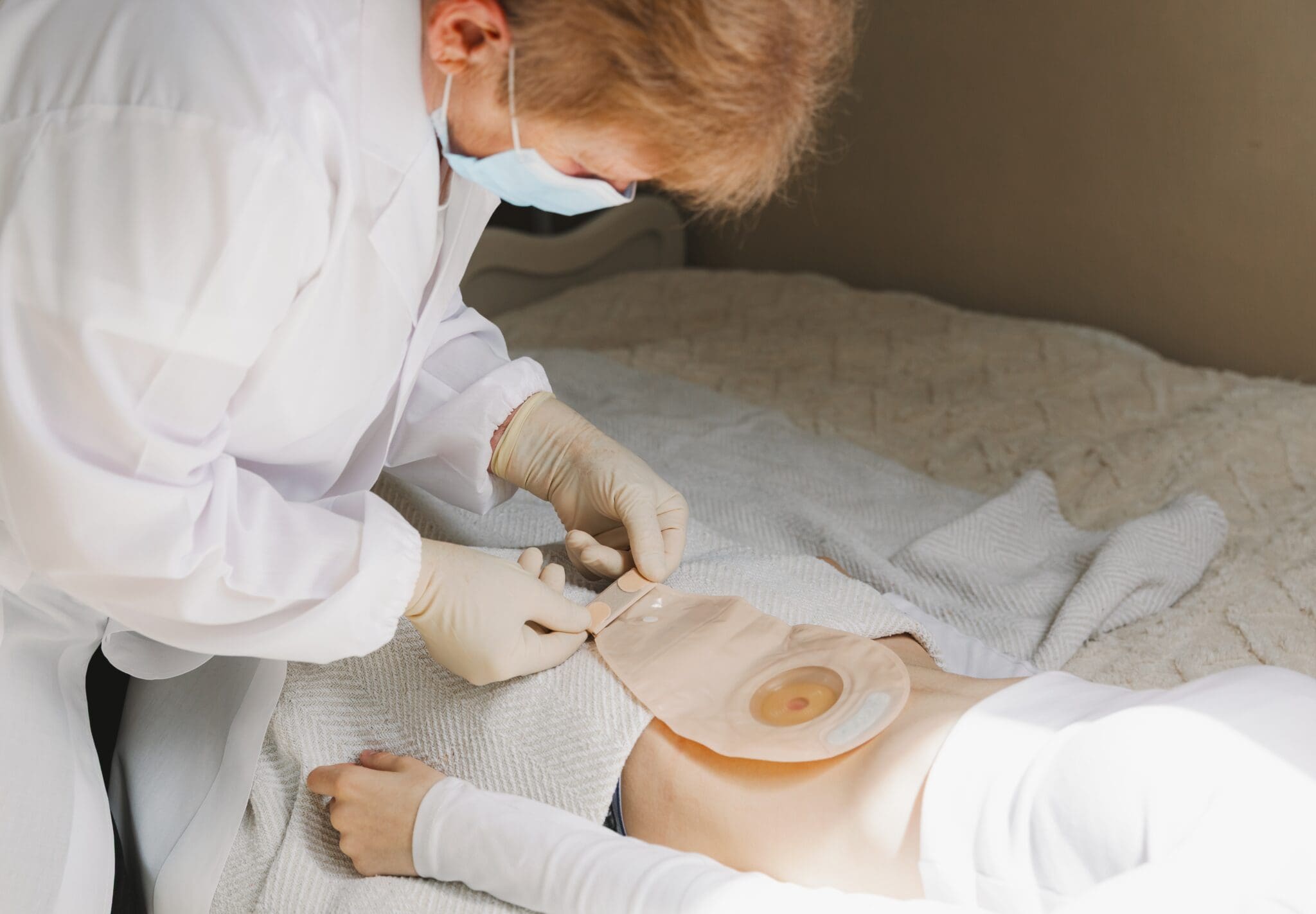
How to change a stoma bag
Bags should be changed in a calm, planned way. Rushing can lead to skin damage during removal and poor adhesion if the skin is damp. If possible, choose a time when the stoma is less active. Early morning often works, but this varies.
Before you start, make sure the room is warm and private. Cold can increase stoma activity and make the person tense. If they can manage any part of the process, support them to do so. This helps maintain independence and dignity.
Step-by-step bag change routine
- Prepare everything first – lay out the new pouch and baseplate, scissors (if needed), disposal bag, wipes or warm water and soft cloths, drying materials, stoma measuring guide, barrier ring or paste if used, and any skin protection products. If you use an adhesive remover spray or wipes, keep them ready too.
- Hand hygiene and gloves as needed – stoma output is bodily waste, so gloves are usually sensible.
- Empty the bag first if drainable – a lighter bag is easier and cleaner to remove.
- Remove the old pouch slowly – support the skin with one hand while gently peeling the adhesive with the other. An adhesive remover can reduce skin trauma. Peel low and slow rather than pulling outward.
- Clean the skin – warm water and soft cloths are often good choices. If you use wipes, avoid anything oily or moisturising, as this may affect adhesion.
- Dry the skin fully – adhesives only work with dry skin. Pat dry rather than rub.
- Check the skin and stoma – look for redness, weeping, broken skin or ulcers. Signs of leakage include sore patches, uneven irritation or areas where the adhesive has lifted. Check stoma colour and swelling.
- Apply any protective products – use barrier film, powder, rings or paste only as needed and as per the care plan. Too many products can reduce adhesion.
- Apply the new baseplate and pouch – centre it carefully around the stoma. Press gently around the baseplate to secure. Warm hands help activate the adhesive.
- Dispose and wash hands – seal used items in a disposal bag as per local policy.
If leaks keep happening, don’t assume that you’ve used a bad batch of bags. It’s usually a fitting, skin contour or change frequency issue.
Measuring and cutting the stoma baseplate
The way you measure and cut the baseplate helps prevent output from sitting on the skin, which can cause irritation, soreness and then poor adhesion. Importantly, it plays a role in leak prevention. A well-cut baseplate protects the skin and makes the whole routine easier.
In the first weeks after surgery, the stoma often changes size as swelling reduces, affecting fit. In long-term care, weight changes, hernias or changes in abdominal shape can also affect fit. That means someone who “always used a 35 mm opening” might suddenly need 32 mm.
How to measure and cut safely
- Use the measuring guide that comes with appliances where possible.
- Measure the widest part of the stoma, because stomas are not always perfectly round.
- Cut the opening so it sits close to the stoma without rubbing. Aim for a small, neat gap rather than a wide margin.
- Smooth any sharp edges after cutting so they don’t dig into the skin.
- If the person uses a mouldable baseplate, follow the product instructions for shaping rather than cutting.
Don’t guess the baseplate opening size. If the skin becomes sore or leaks occur, measure again.
If you support someone with poor dexterity, tremor or impaired vision, pre-cut baseplates can reduce stress, but only if the size is stable. Otherwise, pre-cut can create a gap that leads to leakage.
Preventing sore skin around the stoma
The skin around the stoma should look similar to the rest of the abdomen. If it becomes red, sore or broken, it’s usually a sign that something is not working properly.
The most common cause is leakage. Even small amounts of output on the skin can cause irritation quickly, and once the skin is damaged, it becomes harder for the bag to stick, which can lead to further leaks.
Sore skin and leakage are often linked to practical issues with fit or routine. For example, the size or shape of the stoma can change over time, so a baseplate that once fit well may no longer seal properly. Weight changes, creases or swelling around the stoma can also affect how the appliance sits on the skin.
Taking time with the basics makes a noticeable difference:
- Change the bag before it becomes loose or leaks.
- Clean the skin with warm water only, avoiding soaps or wipes that may irritate.
- Make sure the skin is completely dry before applying a new bag.
- Check the opening size regularly so it fits closely around the stoma.
- Remove the adhesive gently to avoid damaging the skin.
If the skin is already sore, the priority is to keep output away from it. This usually means improving the seal and, in some cases, adjusting the type of product used.
If the skin does not improve, or if the cause is unclear, a stoma nurse should be involved to review the fit and routine.
Common causes of leaks and odour
Leaks are upsetting for the person and stressful for carers. They can also cause dehydration risk if output is high and this goes unnoticed for a long time, particularly with an ileostomy.
Stay calm and consider that the leak is telling you something important about fit, timing or technique.
Common causes of leaks
- The baseplate opening is too large.
- The skin is damp when the baseplate is applied.
- Output is undermining the seal because the bag is left on too long.
- The abdomen has creases, folds or a parastomal hernia affecting fit.
- The stoma sits below skin level or is flush, needing convexity.
- The bag is too heavy because it’s not emptied often enough.
- The person is sweating, has a fever or the weather is hot, reducing adhesion.
- The person has diarrhoea or high output, overwhelming the usual routine.
Common causes of odour
- A small leak has started under the baseplate.
- The filter is saturated or blocked.
- The pouch is overdue for a change.
- For urostomies, mucus build-up in the pouch or tubing.
- For urostomies, a night drainage system needs changing or cleaning as advised.
Troubleshooting
- Check for signs of leakage on the baseplate or on the skin around the stoma (redness, soreness, visible leak pattern).
- Re-measure the stoma and check cut size.
- Review timing. Are changes happening before failure?
- Consider whether the person’s body shape has changed.
- Consider accessories such as rings, paste or convex appliances, but do not add everything at once.
- Escalate for a stoma nurse review if leaks persist.
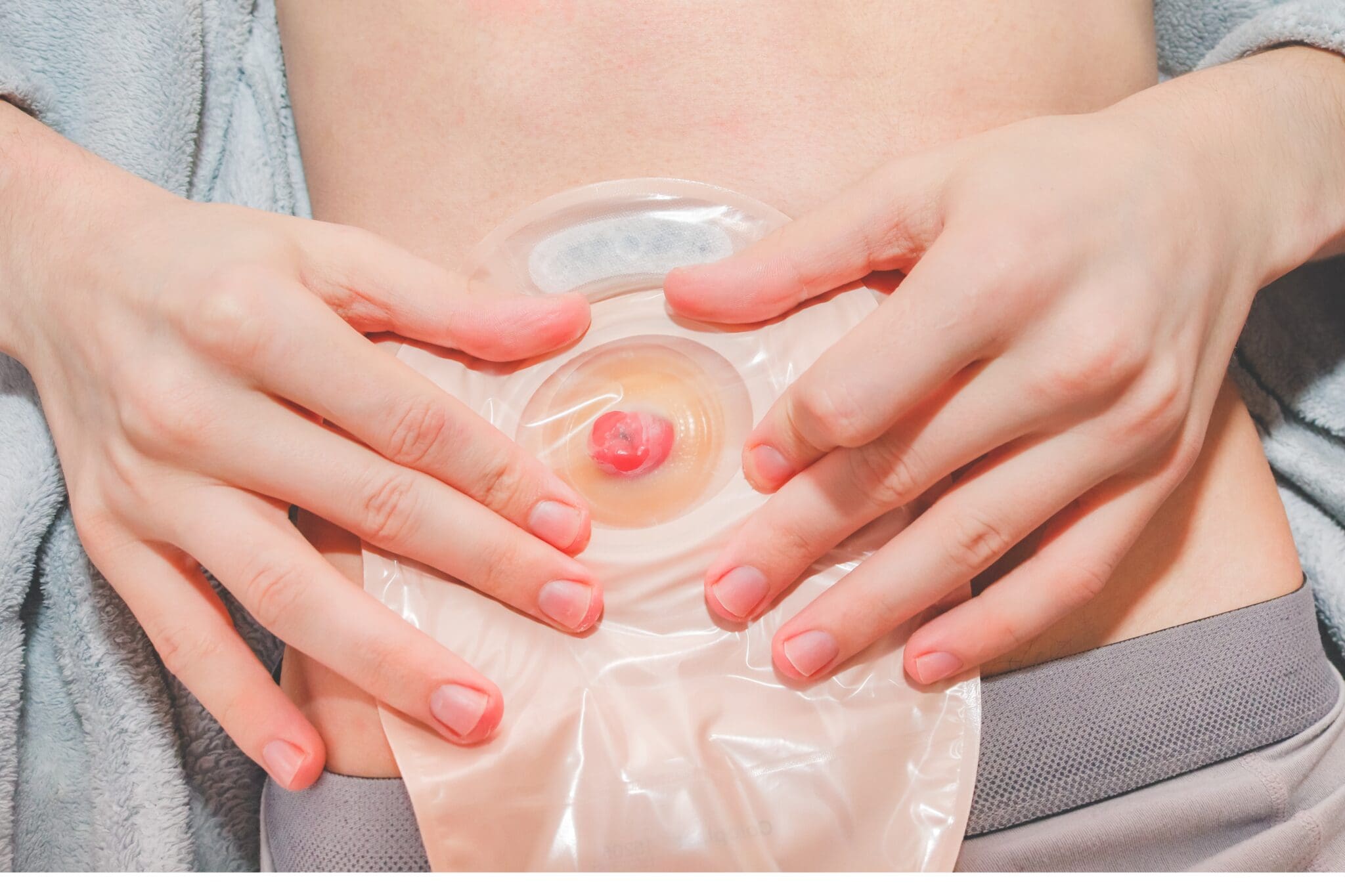
What a healthy stoma looks like
Knowing what “normal” looks like helps carers notice changes early.
A healthy stoma is usually:
- Pink to red, similar to the inside of the mouth.
- Moist and slightly shiny.
- Warm, not cold.
- Slightly raised above the skin, though some stomas sit flush.
- It may bleed a little if rubbed because the tissue is delicate.
In the first weeks after surgery, the stoma may be more swollen and can change size as this settles. Even longer term, it can vary slightly through the day, especially with movement, coughing or abdominal muscle use.
It’s not normal for a stoma to turn very dark, dusky, purple, brown or black, or suddenly become very swollen or painful. Those signs suggest there’s a need for urgent clinical advice.
Signs of stoma infection or necrosis
Infection around the stoma is usually about the skin and the surrounding area, not the stoma itself. It can start small and become very uncomfortable. Necrosis is different. It relates to blood supply and is urgent.
Possible signs of infection or skin complications
- Increasing redness spreading beyond the baseplate area
- Warmth, swelling or tenderness around the stoma
- Weeping, pus or a foul smell from the skin
- New pain that is not explained by adhesive removal
- Fever or the person generally feeling unwell
- A sore area that is getting worse despite improved fit
Signs of a serious stoma problem
- The stoma becomes very dark, dusky, purple, brown or black
- The stoma becomes cold to the touch or looks dry and lifeless
- Sudden severe pain, especially with a change in stoma colour
- No output with abdominal swelling, cramps, nausea or vomiting
- Rapid swelling of the stoma or significant bleeding
Suspected necrosis or bowel obstruction is urgent, so you shouldn’t wait for the next scheduled review to address it. Contact the stoma nurse urgently if available, or seek urgent medical advice via NHS services. In care settings, follow local escalation pathways.
It can help to take a photo (with consent) for clinical review, especially if colour change is a concern. Record the time and what changed. Clear information speeds up safe decisions.
Ileostomy dehydration warning signs
With an ileostomy, fluid and salt are lost through the stoma. If output becomes high or more watery, the body may not be absorbing enough fluid, which increases the risk of dehydration.
High output is usually described as a sustained increase in volume – for example, more than about 1500 ml in 24 hours.
Warning signs carers should look for
- Very watery output or a clear increase in volume
- The pouch filling more often than usual
- Dry mouth, lips or tongue
- Increased thirst
- Dark, strong-smelling urine or passing less urine than usual
- Dizziness or feeling lightheaded, especially when standing
- Tiredness or headache
- Muscle cramps
These symptoms often appear alongside changes in stoma output, so both need to be considered together.
Practical actions that often help early on
- Pay attention to changes in output volume and consistency.
- Follow any fluid guidance given by the clinical team.
- Use oral rehydration solutions if these have been recommended, as they help the body absorb fluid and salt more effectively than water alone.
- Be cautious with large amounts of drinks like water, tea or juice, as these can increase output rather than improve hydration.
If output remains high or symptoms of dehydration develop, seek advice from a stoma nurse or GP.
Urostomy night drainage setup
Night drainage allows urine to flow into a larger bag overnight, so the pouch doesn’t need to be emptied.
The setup needs to allow a steady flow and a secure connection. Small issues with tubing or connectors are a common cause of leaks.
Safe night drainage setup routine
- Wash your hands and prepare the equipment.
- Connect the drainage tube to the pouch using the correct adaptor or connector.
- Make sure the connection is pushed or clipped firmly into place.
- Position the night bag below the level of the stoma so urine can drain properly.
- Check that the tubing is not kinked and can move freely if the person turns.
- Once connected, check that urine is flowing into the night bag.
Morning routine
- Wash your hands before disconnecting.
- Disconnect the tubing from the pouch.
- Empty the night bag into the toilet.
- Rinse the bag and tubing with hot water.
- Dry the connections and cover or protect the connector end before storing.
Night drainage systems should be cleaned and changed regularly, based on clinical advice. Waiting until there is a strong smell or a problem with flow increases the risk of infection and leakage.
Diet and fluids with a stoma
Most people with a stoma can return to their usual diet. Food is largely digested before it reaches the colon, so a stoma does not usually mean strict dietary restrictions.
What matters more is how the body responds after surgery and over time. Eating well supports recovery, strength and normal stoma function.
After surgery, food is often reintroduced gradually. Many people move from fluids to a light diet, then back to normal eating as their recovery allows.
A balanced diet is still the aim:
- Carbohydrate foods such as bread, rice and pasta help provide energy and can improve the consistency of loose output.
- Fruit and vegetables remain important, though some people find certain types harder to tolerate.
- Protein foods support healing and recovery.
- Dairy foods provide protein and calcium.
Some people notice that certain foods affect their stoma output. This varies. If a food seems to cause a problem, it can help to try it again at another time before deciding to avoid it completely. Keeping a simple record can make patterns easier to spot.
Fluids are also important. Drinking enough helps maintain output and prevent problems such as constipation. If fibre intake increases, fluid intake usually needs to increase as well.
Changes in output are not always caused by food. Illness, antibiotics, stress and changes in routine can all affect how the stoma behaves. If output changes suddenly or does not settle, the care routine may need reviewing.
Managing constipation or diarrhoea with a stoma
Stoma output varies from person to person. What matters is the typical pattern for that individual. A change from that baseline is often the first sign that something needs attention.
Constipation
Constipation can still occur, particularly with a colostomy. It may show as reduced or difficult output, bloating, discomfort or increased wind.
Common causes include low fluid intake, reduced mobility and some medicines, especially certain painkillers.
Simple support often helps.
- Encourage adequate fluid intake.
- Support movement or mobility where possible.
- Review medicines if constipation persists.
- Introduce fibre gradually if advised.
If there is ongoing discomfort, swelling or no output, this needs clinical review.
Diarrhoea or very watery output
Watery output can increase the risk of leakage and skin irritation. With an ileostomy, it can also lead to dehydration more quickly.
Changes are often linked to infection, antibiotics, stress or recent dietary changes. Output may become more frequent, looser, or harder to manage with the usual routine.
Practical support focuses on reducing risk:
- Empty the pouch more often to prevent leaks.
- Check the seal and adjust if the skin is exposed.
- Monitor output and note any sudden changes.
- Follow any fluid or rehydration advice already in place.
Escalate quickly if the output remains very watery, increases significantly, or the person seems unwell.
When to treat as urgent
A sudden reduction or pause in output, combined with cramps, nausea, vomiting or abdominal swelling, may indicate a blockage. This needs prompt medical attention.
When to contact a stoma nurse
Stoma nurses support people with practical issues such as fit, skin care and changes in stoma function. Getting advice early can stop small problems from becoming harder to manage.
Contact a stoma nurse if:
- Leaks occur repeatedly, even after checking cut size and technique.
- Skin is sore, broken, weepy, bleeding or painful.
- The stoma changes shape, size or protrusion noticeably.
- The stoma looks very swollen, very pale or unusually dark.
- There is persistent pain around the stoma or under the baseplate.
- Output changes sharply and does not settle, especially high ileostomy output.
- There are signs of infection around the stoma site.
- The person develops a parastomal hernia or new bulging that affects fit.
- Confidence is low, and the person is avoiding activities due to fear of leaks.
In urgent situations, do not wait for advice from the stoma team. If the stoma becomes very dark or black, if output stops with severe pain or vomiting, or if there are signs of severe dehydration, seek urgent medical advice using NHS services and local escalation routes.
Recording stoma care in care plans
Good documentation makes stoma care safer across shifts. It also protects dignity by reducing repeated questioning and unnecessary trial and error. In regulated settings, clear notes show that staff are monitoring risks such as skin damage and dehydration and responding early.
Focus on recording what is relevant. Avoid writing vague phrases like “stoma care done” as they don’t clearly communicate key information, like whether the skin was healthy, whether there were leaks or whether output has changed.
What to include in the care plan (wording prompts)
- Stoma type and location – “Has an ileostomy on right abdomen” or “Has a urostomy with continuous drainage.”
- Appliance type – “Uses two-piece system with convex baseplate” or “Uses drainable pouch with filter.”
- Change routine – “Change baseplate every X days or sooner if leaking/itching” and “Empty pouch when one-third to half full.”
- Measuring guidance – “Measure stoma monthly or if leaks occur, cut opening close to current size.”
- Skin care – “Clean with warm water only, dry fully, apply barrier film if redness is present. Avoid oily wipes.”
- Accessories – “Uses barrier ring due to skin fold at 6 o’clock. Apply ring before baseplate.”
- Comfort and dignity preferences – “Prefers privacy and to be talked through each step. Likes supplies to be prepared first.”
- Hydration plan (especially ileostomy) – “Encourage regular drinks, monitor for high output, record signs of dehydration.”
- Urostomy night drainage routine – “Connect to night drainage at bedtime, keep bag below bed, change tubing and bag as advised.”
- Red flags and escalation – “Escalate same day for repeated leaks or sore skin, urgent escalation for dark stoma colour, no output with pain, or dehydration signs.”
What to record in daily notes
- Bag care – whether the bag was changed or emptied, and the time
- Skin condition – e.g., intact, pink, red, weepy, broken or bleeding
- Leaks or odour – any signs of leakage and what was done
- Output – consistency and changes (e.g., formed, loose, watery, high volume, mucus in urostomy, blood present)
- Comfort – any pain, itching, burning, cramps or nausea
- Hydration – signs such as thirst, dizziness, reduced urine or tiredness
- Escalation – who was contacted and any advice given
If your service uses templates, a short tick-and-comment tool can improve consistency. For example:
- “Skin – intact/red/weeping”
- “Leak – yes/no”
- “Output – normal/high/watery”
- “Comfort – comfortable/itch/pain/cramps”
- “Action taken – change/extra ring/escalated”

Final thoughts
Stoma care becomes routine faster than most people expect. What feels unfamiliar at first usually settles into a simple, repeatable process.
It’s very important to notice when something changes and make helpful adjustments as soon as possible. A small check or a quick review of the routine is often enough to get things back on track.
Consistency, attention to detail and clear communication between carers make the biggest difference. The rest follows from that.