
In this article
Dehydration can start quietly – a slightly dry mouth, a stronger smell to the urine, a bit more tiredness than normal. Yet in older adults it can progress fast and then snowball into bigger problems: worse confusion, higher falls risk, constipation, urinary tract infections (UTIs), kidney strain, pressure area concerns, and avoidable hospital admissions. Older people also often have a reduced sense of thirst, and some restrict drinks because they worry about continence or needing the toilet at night.
This guide is for UK carers, care home staff, home care workers and family members. It focuses on spotting early signs, understanding the common causes (especially in dementia and swallowing difficulties), using practical hydration support tactics that people actually accept, documenting safely, and knowing when to escalate to the GP, NHS 111 or 999.
What is Dehydration in Older Adults?
Dehydration happens when the body loses more fluid than it takes in. For older adults, that can mean they simply do not drink enough (low intake dehydration), they lose extra fluid (fever, vomiting, diarrhoea, sweating in hot weather), or both. The problem is that people often don’t feel thirsty until they’re already dehydrated, and older adults are already at higher risk of dehydration.
In day-to-day care, dehydration often looks like a ‘cluster’ rather than one dramatic symptom. You might see subtle physical changes (darker urine, dizziness, constipation) mixed with changes in mood, attention and mobility (more confusion, more unsteadiness, more help needed).
A helpful way to think about it is this: hydration is a safety issue you can influence. You cannot force someone to drink, but you can make drinking easier, more appealing and more consistent. When you do that early, you often prevent a small problem from turning into a crisis.
For some background that families often find reassuring, you can share the plain-language NHS dehydration information with them.
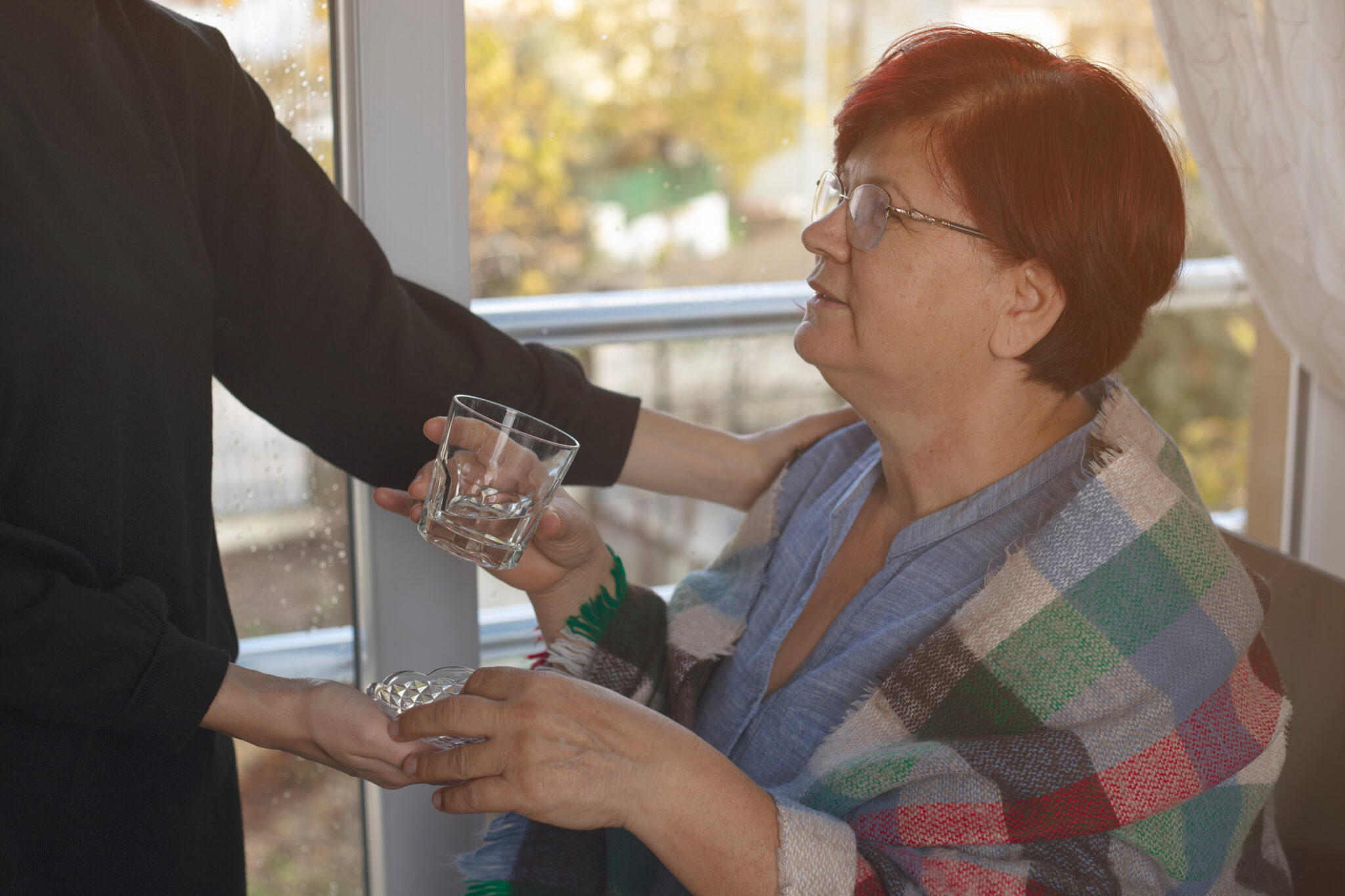
Early Signs of Dehydration Checklist
When dehydration starts, the person may still look ‘mostly fine’. That is why a checklist helps, especially if you compare what you see to their usual baseline.
The NHS lists common dehydration symptoms such as thirst, dark yellow, strong-smelling urine, passing urine less often, dizziness, tiredness and dry mouth. Use the list below as a practical checklist.
Physical signs and symptoms
- Darker urine than usual, or urine that smells stronger.
- Passing urine less often, or smaller amounts than normal.
- Dry mouth, dry lips, dry tongue, or complaints that food ‘sticks’.
- Headache, fatigue or seeming unusually sleepy.
- Dizziness or lightheadedness, especially when standing up.
- Constipation, harder stools or straining.
- Muscle cramps or general weakness.
- Reduced appetite, especially during illness or warm weather.
Behaviour and function clues (often the earliest in older adults)
- New confusion, disorientation or ‘not themselves’.
- Increased agitation, restlessness or calling out more than usual.
- Slower walking, more ‘wobble’ or needing extra help to stand.
- Falls or near-misses, especially on the way to the toilet.
- New urinary incontinence, or a sudden change in pad use.
- Less engagement, less conversation or sleeping more than usual.
How to use the checklist well
- Look for patterns, not one sign in isolation.
- Compare to the person’s baseline (their normal urine colour, normal alertness, normal toileting routine).
- Pay attention after trigger events: a hot day, a fever, vomiting/diarrhoea, reduced food intake, or a medication change.
If you work in a care setting, build hydration checks into routine moments (medication rounds, meals, activity sessions, toileting). That way, the checklist becomes a habit rather than an extra job.
Confusion and Delirium from Dehydration
Confusion in an older person always matters. Dehydration can contribute to delirium, which is a sudden change in attention, awareness and thinking that develops over hours or days.
Carers often describe delirium as:
- “They’re not making sense.”
- “They seem switched off.”
- “They’re far sleepier than usual.”
- “They’re seeing or hearing things.”
- “They’re suddenly very agitated.”
Dehydration can push the brain into that stressed state because the body has less circulating fluid, blood pressure can drop (especially when standing), and electrolytes can shift. Frailty and dementia reduce the brain’s ‘reserve’, so smaller physical changes can cause bigger mental changes.
Clues that dehydration may be playing a role
- Confusion appears after hot weather, fever, diarrhoea, vomiting or very low intake.
- Confusion appears alongside dark urine or much less urine output.
- Confusion comes with dizziness on standing.
- The person improves a bit after rest and supported drinking.
However, delirium has many causes. In older adults, clinical tools encourage teams to consider other causes rather than assuming ‘it must be a UTI’. The UK decision tool for suspected UTI in over-65s explicitly prompts staff to rule out other causes and includes poor hydration and constipation as possibilities.
When confusion becomes urgent
The NHS advises urgent help (urgent GP appointment or NHS 111) if the person is confused and disorientated alongside suspected dehydration. Even if you start hydration support straight away, treat new confusion as a reason to escalate.
Dehydration vs UTI: How to Tell
This mix-up causes huge stress for families and care teams. Dehydration can make urine darker and stronger-smelling. That often triggers ‘possible UTI’ worries. Meanwhile, UTIs can also cause delirium in older adults, so people understandably worry.
The key is to separate urine appearance from true urinary symptoms.
Dehydration symptoms that looks like a UTI
When someone drinks less, urine becomes more concentrated. It often turns darker and smells stronger. That does not automatically mean infection.
A decision aid for over-65s notes clearly that dark or foul-smelling urine alone does not mean infection, and may be a sign of dehydration (Scottish Antimicrobial Prescribing Group).
Why dipsticks often mislead in older adults
Many older adults, especially those in care homes, have bacteria in the urine without infection (asymptomatic bacteriuria). This can make dipsticks positive even when there is no UTI. The UK over-65 diagnostic decision tool explains that dipsticks become less reliable with age and that antibiotics do not help asymptomatic bacteriuria and may cause harm.
What points more strongly towards a UTI?
Look for new urinary symptoms, especially if the person can report them:
- New pain or burning when passing urine.
- New urgency or frequency that is clearly different from baseline.
- New suprapubic pain (lower tummy discomfort).
- Visible blood in the urine.
- Fever or rigours (shivering).
Confusion can happen with infection, but guidance highlights the need to consider other causes if delirium occurs without clear urinary symptoms.

A practical ‘do this now’ approach for carers
If someone has dark urine or stronger smell plus a change in behaviour:
- Start hydration support immediately (small sips, little and often).
- Check for constipation, pain, missed meals, medication changes, or a hot environment.
- Seek clinical advice if the person has fever, new urinary symptoms, or a clear deterioration.
For extra guidance that families can easily understand, you can point them to NHS advice on dehydration symptoms and when to get help.
Dry Mouth and Skin: What’s reliable?
Carers often rely on the signs of dry mouth and dry skin because they are easy to see. These signs can help, but they can also mislead if you treat them as ‘proof’ on their own.
Dry mouth
A dry mouth can happen for many reasons that do not equal dehydration:
- Mouth breathing (especially during sleep).
- Oxygen therapy.
- Dentures and oral discomfort.
- Medications (many common medicines can dry the mouth).
- Poor oral care.
Even so, dry mouth becomes more meaningful when it shows up with other dehydration clues. The NHS includes dry mouth, lips and tongue among common dehydration symptoms.
What to do when you notice a dry mouth
- Offer a drink in a calm way, then re-offer later if refused.
- Offer moist foods (yoghurt, custard, soup) if that suits the person.
- Provide good mouth care (gentle brushing, moisturising gel if used in the care plan).
- Check if medication changes could be contributing.
Skin checks
People often mention skin ‘turgor’ (pinching skin to see if it tents). In older adults, this often fails because skin naturally loses elasticity with age. A slow return does not reliably confirm dehydration, and a normal return does not rule it out.
More reliable day-to-day clues
- Urine colour and frequency.
- Dizziness on standing.
- Changes in alertness and function.
- Recent triggers (illness, heat, low intake).
In practice, you get the best results when you treat dry mouth and skin as ‘supporting clues’ that push you to check the full picture, rather than as a test that decides everything.
Low Urine Output and Dark Urine
Urine is one of the most practical hydration indicators in everyday care because it reflects both intake and how concentrated the body is making the urine.
The NHS advises aiming for pee that is a clear pale yellow colour, and lists dark yellow, strong-smelling pee and peeing less often as symptoms of dehydration.
What ‘low urine output’ can look like in real life
- Fewer toilet trips than usual.
- Smaller volumes each time.
- A pad staying dry longer than expected.
- Very concentrated urine with a strong smell.
How to avoid common mistakes
Do not over-interpret smell alone. Diet, vitamins and some medicines can change urine smell. Concentration also changes smell, and dehydration often explains that without infection.
Keep context in mind. Low urine output can also happen with:
- Urinary retention.
- Catheter blockage.
- Kidney problems.
- Poor access to the toilet.
- Fear of toileting.
A simple three-step check carers can use
- Ask and observe: How many times today? Is that normal for them?
- Look: Colour and amount, without jumping straight to ‘UTI’.
- Act and review: Offer structured fluids for a few hours and document whether output and alertness improve.
If urine output drops sharply and the person looks unwell, escalate for clinical review.
Dizziness, Falls and Dehydration Link
Dehydration increases falls risk, and it does it through more than one pathway:
- Lower blood pressure, especially on standing, can cause dizziness and ‘black spots’.
- Fatigue and slower reactions reduce balance and safe walking.
- Delirium and confusion can lead to unsafe movement and poor judgement.
- Toileting urgency can increase risky rushing, especially if someone has restricted drinks then suddenly tries to ‘catch up’.
The NHS lists dizziness or lightheadedness as a dehydration symptom and advises urgent help if dizziness on standing does not go away. The Royal College of Nursing also highlights dehydration as a contributor to falls risk in older adults.
Practical prevention that works
- Offer drinks earlier in the day, not just in the evening.
- Create predictable toilet opportunities so the person does not fear accidents.
- Make sure walking routes stay clear and well-lit, especially at night.
- Encourage the person to stand up slowly, pause, then walk.
- Review diuretic timing with the GP or pharmacist if toileting rushes trigger falls.
If someone has repeated dizziness on standing, treat it as an assessment issue, not just ‘one of those things’.
Dehydration Risk Factors in Dementia
Dementia increases dehydration risk in very practical ways. Someone may:
- Forget to drink.
- Not recognise a cup or a glass.
- Lose the ability to communicate thirst.
- Get distracted mid-drink.
- Avoid drinking due to toileting confusion or embarrassment.
- Develop swallowing problems that make drinks frightening.
The Alzheimer’s Society explains how dementia can create problems with drinking and staying hydrated and offers practical support ideas. You can share Drinking, hydration and dementia with families who feel stuck.
Dementia-specific warning signs carers often notice first
- Increased agitation in the afternoon or evening.
- More wandering or pacing (which increases fluid loss) without increased drinking.
- More resistance to personal care.
- ‘Not settling’ at night, sometimes linked to dehydration and discomfort.
- Drinking only when prompted socially (and not at other times).
Dementia-specific support strategies that tend to work
- Use familiar cups, mugs and routines (the ‘same mug’ effect is real).
- Offer drinks as part of a social moment (“Shall we have a cup of tea together?”).
- Offer drinks with strong sensory cues (colourful cups, flavoured drinks, preferred temperature).
- Use foods that contribute fluid if the person avoids cups (soups, jelly, yoghurt).
The NHS also suggests high water-content foods such as soup, ice cream, jelly and fruit like melon as ways to help someone you care for stay hydrated.
Causes of Dehydration in Care Homes
Dehydration in care homes usually comes from a mix of barriers rather than one single cause. When you identify the barriers, you can fix the system.
Common causes
- Reduced thirst sensation with age.
- Drinks not within reach, especially for people with poor mobility.
- People needing help to drink but not receiving it consistently.
- Continence worries driving intentional restriction.
- Swallowing difficulties making drinks feel unsafe or unpleasant.
- Illness (fever, vomiting, diarrhoea).
- Warm rooms and hot weather.
- Medicines that increase urine output, including diuretics (nhs.uk).
- Cognitive impairment and forgetting to drink.
- Staffing pressure causing rushed drink rounds.
Warm weather makes risks rise quickly
UK Health Security Agency guidance stresses that hot weather can arrive suddenly and affect higher-risk groups rapidly. It lists people over 65, people with dementia, kidney disease and mobility problems, and people on certain medicines as being among those at higher risk.
That means care homes need a ‘heat routine’ ready before the first hot spell:
- Extra drink rounds (and better documentation of intake).
- Cooler communal spaces and shaded areas.
- More checking for dizziness, confusion and low urine output.
- Review of medicines that increase dehydration risk (as part of clinical review).
The UKHSA hot weather guidance is a useful resource for managers, as it can support policy and staff briefings.
How Much Should Older Adults Drink?
People often want one number, but fluid needs vary with body size, diet, activity, room temperature, illness, and long-term conditions. Still, a clear baseline helps carers plan.
The NHS states that the government’s Eatwell Guide recommends aiming for 6 to 8 cups or glasses of fluid a day for most people, and that you may need more in hot environments, during illness or with activity. The NHS also suggests using urine colour as a practical guide, aiming for clear pale yellow urine.
What counts as ‘fluid’?
The NHS notes that water, lower-fat milk and sugar-free drinks, including tea and coffee, all count. Many foods also provide water (soups, fruit, yoghurt, porridge).
When you should not push fluids without checking
Some people have fluid restrictions because of heart failure, kidney disease or other clinical issues. If the person has a documented restriction, follow it and ask the GP or specialist team for advice if intake drops or dehydration signs appear.
A practical target that carers can use
Rather than obsessing over a perfect litre count, focus on:
- Regular drinks through the day.
- A urine colour that stays closer to pale yellow.
- Stable alertness and function.
- A plan that fits continence needs.
For families, NHS water, drinks and hydration guidance is easy to read and helps settle ‘what counts’ debates.
Hydration Support Strategies for Carers
Hydration support works best when it becomes easy, predictable and pleasant. Most people resist nagging, but many accept a steady routine that feels normal and respectful.
Start by asking: Why might they not be drinking?
- They cannot reach the drink.
- They cannot grip the cup.
- They cannot see it clearly.
- They forget it is there.
- They fear toileting or accidents.
- They dislike the taste.
- They feel nauseous.
- They fear choking.
- They need help and do not like asking.
Then match strategies to the barrier.
Build drinks into routines (so no one has to ‘remember’)
Offer drinks at moments that already happen:
- On waking.
- With medication.
- At each meal.
- Mid-morning and mid-afternoon.
- After toileting (not only before).
- After activity or a walk.
- Before bed, if it does not increase night-time distress.
Routine reduces resistance because the offer feels normal, not personal or pressuring.
Offer little and often
A huge mug can put people off, especially if they feel sick, tire easily or have swallowing difficulties. The NHS suggests starting with small sips if someone feels sick or has been sick, then gradually drinking more.
Practical examples:
- Use a smaller cup and refill more often.
- Offer ‘two sips now’ and return in 10 minutes.
- Offer a drink during TV adverts or after each chapter/page.
Make drinks appealing and familiar
People drink more when the drink fits their preferences.
Try:
- Tea, coffee, malted drinks or warm milk.
- Squash (well diluted) or flavoured water if they dislike plain water.
- Cold drinks with ice in warm weather.
- Milkshakes or smoothies if appropriate (and safe for swallowing).
In care homes, add a drinks preference list to the care plan. That saves time and helps new staff support intake quickly.
Use food to ‘sneak in’ fluid
Hydrating foods often reduce resistance because they feel like normal eating:
- Soup and stews.
- Jelly, ice lollies, ice cream (consider diabetes management and choking risk).
- Fruit such as melon, oranges, grapes, berries.
- Yoghurt, custard and porridge.
Reduce continence-related barriers
Many older adults restrict drinks because they fear accidents or night-time toileting.
Address that fear directly and kindly:
- Offer more fluids earlier in the day.
- Use a predictable toileting plan.
- Make the toilet route safe, clear and well-lit.
- Review continence products and skin care (discomfort can drive avoidance).
- Consider clothing that is easy to remove quickly.
Improve access and independence
Small equipment changes can transform intake:
- Two-handled cups.
- Lidded cups to reduce spills.
- High-contrast cups for visual impairment.
- Drinks placed within reach on the dominant side.
- A consistent ‘drink spot’ (same table, same place).
Use social cues
Many people drink more when you drink with them:
- Sit down for a cup of tea together.
- Offer drinks during activities or conversation.
- Use friendly prompts (“Let’s have a few sips together”) rather than repeated commands.
The NHS even suggests making drinking ‘a social thing’ as part of helping someone you care for.
Plan for hot weather and illness
UKHSA guidance encourages adapting care plans and actively managing heat risk for higher-risk people.
During hot weather or illness:
- Increase drink offers, even if the person does not ask.
- Offer cooler drinks more often.
- Monitor urine output and alertness more frequently.
- Escalate earlier if intake drops and symptoms appear.
Thickened Fluids and Hydration Tips
Swallowing difficulties change everything. Many people with dysphagia drink less because drinking feels risky, tiring or unpleasant. Sometimes a speech and language therapist recommends thickened fluids to reduce aspiration risk. However, thickened drinks can reduce intake if the person dislikes the texture or finds them less thirst-quenching. That is why you need a plan that balances safety and realistic hydration.
The Royal College of Speech and Language Therapists (RCSLT) emphasises patient-centred, evidence-based decision-making around thickened fluids. In practice, do not treat thickener as a ‘set and forget’ solution. Keep monitoring intake and dehydration signs, and request review if refusal becomes common.
Practical tips carers can use immediately
- Follow the prescribed thickness exactly. Over-thickening can make drinks harder to swallow and more unpleasant.
- Use the correct preparation method. Different thickeners behave differently, especially in hot drinks.
- Offer smaller amounts more often. Thickened fluids can feel heavy and filling.
- Vary temperature and flavour. Many people accept cold thickened drinks better than warm.
- Use fluid-rich foods within the plan. Soups, yoghurts and smooth desserts can support hydration if the diet plan allows them.
- Protect comfort with oral care. A sore mouth reduces drinking.
- Treat refusal as information. Document what they refused and what they accepted, then request a review rather than repeatedly ‘trying the same thing’.
If you want a reputable explainer to share with staff or families, the RCSLT thickened fluids guidance can help set expectations and support safer conversations.
Recording Fluid Intake and Output
Hydration support works best when you pair it with sensible documentation. Good records protect the person, help the team spot patterns, and strengthen escalation decisions.
What to record (enough to be useful, not so much it becomes impossible)
- What you offered (type of drink, estimated volume).
- What they took (all, half, a few sips, refused).
- Time and context (with meds, after toileting, during an activity).
- Reasons for refusal (sleeping, nausea, dislikes taste, fear of toileting, too thick).
- Urine observations (frequency, continence changes, catheter output if relevant).
- Symptoms (dizziness, headache, constipation, confusion).
- Actions taken (extra drink rounds, preferred drink offered, GP called).
How to make charts more accurate
Fluid charts fail when staff estimate later or guess wildly.
A few small changes help:
- Use standard cup sizes and write volumes on cups/jugs.
- Keep a small measuring jug for pourable drinks.
- Agree what ‘half’ means (e.g. half the cup, not half the shift).
- Record refusals as data, not as a blame point.
- Review charts at handover and flag downward trends early.
- Link numbers to action: “Under X by 3pm means extra offers and senior informed”.
Document output without being intrusive
For most people, simple notes work:
- “Passed urine twice this morning, pale yellow.”
- “Pad changed twice since lunch, urine darker than usual.”
For higher-risk people (recent illness, diuretics, swallowing issues, kidney problems), increase detail. If urine output drops sharply or the person looks unwell, escalate.
Add a short narrative
Numbers help, but a short narrative explains what happened:
- “Refused drinks after lunch, room very warm, slept most of afternoon.”
- “Accepted tea well socially, refused plain water, improved with squash.”
That kind of note helps the next carer continue what works rather than starting from scratch.

When to Call GP, 111 or 999
Carers often hesitate because they do not want to overreact. Yet dehydration can escalate quickly in frail older adults, especially with dementia, swallowing difficulty or illness. Clear thresholds help you act confidently.
The NHS advises urgent help (urgent GP appointment or NHS 111) if the person is unusually tired or drowsy, confused and disorientated, dizzy when standing and it does not go away, has dark yellow pee or is peeing less than normal, or is breathing quickly or has a fast heart rate.
Call the GP (same day if possible) when:
- You suspect mild to moderate dehydration that does not improve with supported drinking.
- The person has ongoing vomiting or diarrhoea, especially if frail.
- Constipation causes pain, distress or reduced intake.
- You suspect medication side effects (e.g. diuretics causing excessive fluid loss).
- Swallowing problems reduce drinking and you need clinical review.
- The person shows a new functional decline without a clear reason.
Contact NHS 111 urgently when:
- Confusion or disorientation appears or worsens with dehydration signs.
- Dizziness on standing persists.
- The person passes very little urine and you cannot improve intake.
- The person becomes very drowsy, hard to rouse, or you feel seriously worried.
- Breathing rate or heart rate seems unusually fast with dehydration symptoms.
If helpful, families can use NHS 111 online as a first step, although many carers prefer calling when the situation feels complex.
Call 999 when:
- The person collapses, becomes unresponsive or you cannot wake them.
- You suspect stroke symptoms, chest pain or severe breathing difficulty.
- You suspect heatstroke during hot weather (severe confusion, collapse, very hot skin).
- The person deteriorates rapidly and you fear severe dehydration or shock.
If you feel uncertain, safety-net early. It is safer to ask for advice than to wait and hope.
Conclusion
Dehydration in older adults rarely arrives with a dramatic announcement. More often, it creeps in through small changes: darker urine, fewer toilet trips, tiredness, a dry mouth, dizziness, constipation, eating less, or a sudden fog of confusion. Because older people often have a reduced sense of thirst, you cannot rely on them asking for drinks.
The reassuring part is that carers can make a real difference. When you watch for patterns, support drinking little and often, use familiar drinks and routines, take continence and swallowing concerns seriously, and document consistently, you reduce the risk of falls, delirium, constipation, UTIs and avoidable admissions. And when you combine those steps with clear escalation thresholds for the GP, NHS 111 or 999, you protect the person and you protect yourself as a carer too.