In this article
Safe cooling is one of those kitchen skills that appears simple until it goes wrong. A tray of curry sits on the side ‘just for a bit’. A stock pot stays warm for hours because it feels too hot to move. A rice batch gets cooked early, then cools slowly during a rush. None of these moments feel dramatic. However, they sit right in the sweet spot for bacterial growth. As a result, slow cooling becomes a common cause of food poisoning, wasted stock, customer complaints, and difficult inspection conversations.
In UK food businesses, cooling is not just a ‘quality’ step. It is a safety control that must work day after day, across busy services, staff changes, and equipment breakdowns. Therefore, the goal is to create a repeatable method that moves food through the temperature danger zone quickly, protects food from contamination while it cools, and leaves a clear paper trail for HACCP (Hazard Analysis and Critical Control Points) and due diligence. If you make cooling easy to do correctly, your team will do it correctly.
This guide explains practical, UK-relevant methods for cooling cooked food in catering, restaurants, cafés, care settings, schools and production kitchens. It covers portioning, shallow trays, blast chilling, ice baths, ventilation and sensible fridge loading. It also shows how to probe temperatures properly, how to set clear cooling targets, when to discard food, and how to record checks in a way that supports inspections and internal audits. For broader food safety management frameworks, you can refer to the Food Standards Agency business guidance and the Safer food, better business toolkit, which many UK businesses use as a simple HACCP-based system.
How to Cool Cooked Food Safely
Cooling safely is about controlling three things at the same time:
- Time: You want to reduce the time food spends warm.
- Temperature: You want to get food down to chilled storage temperature fast.
- Protection: You want to prevent cross-contamination while food cools.
A practical UK kitchen rule is: keep hot food hot, keep cold food cold, and keep the ‘in-between’ stage short and controlled. Cooling sits in that in-between stage, so you need a planned method rather than a hopeful one.
A repeatable safe cooling process usually looks like this:
- Plan before you cook
Decide where the food will cool, which containers you will use, and which fridge space you need. If you do not plan, food will end up cooling wherever there is a spare surface. - Reduce volume and depth quickly
Portion food into shallow trays, smaller containers or smaller batches. The shallower the food, the faster it loses heat. - Increase heat loss
Use blast chillers where available. If you do not have one, use ice baths, cooling wands or controlled airflow. Stirring also helps, especially for liquids. - Protect the food from contamination
Cool in clean, designated areas away from raw prep. Use clean utensils. Cover food once it stops steaming heavily and once it reaches a safer temperature, so you avoid trapping heat too early. - Move food into refrigeration at the right moment
Do not put huge hot pots straight into the fridge. Instead, cool in controlled steps, then chill. This prevents slow cooling and protects the temperature of other chilled foods. - Probe and record
Use a cleaned probe to check temperatures at the thickest point. Record what matters and act if cooling is too slow. - Label and store
Date label food once chilled, store it correctly, and separate raw and ready-to-eat foods.
If you build this process into your workflow, cooling becomes a routine rather than a scramble. As a result, you reduce risk and you often improve quality too, because fast cooling protects texture, colour and flavour.
For UK-facing guidance on managing food safety through practical controls, the Food Standards Agency guidance hub provides a useful reference point.
Safe Cooling Times and Temperatures
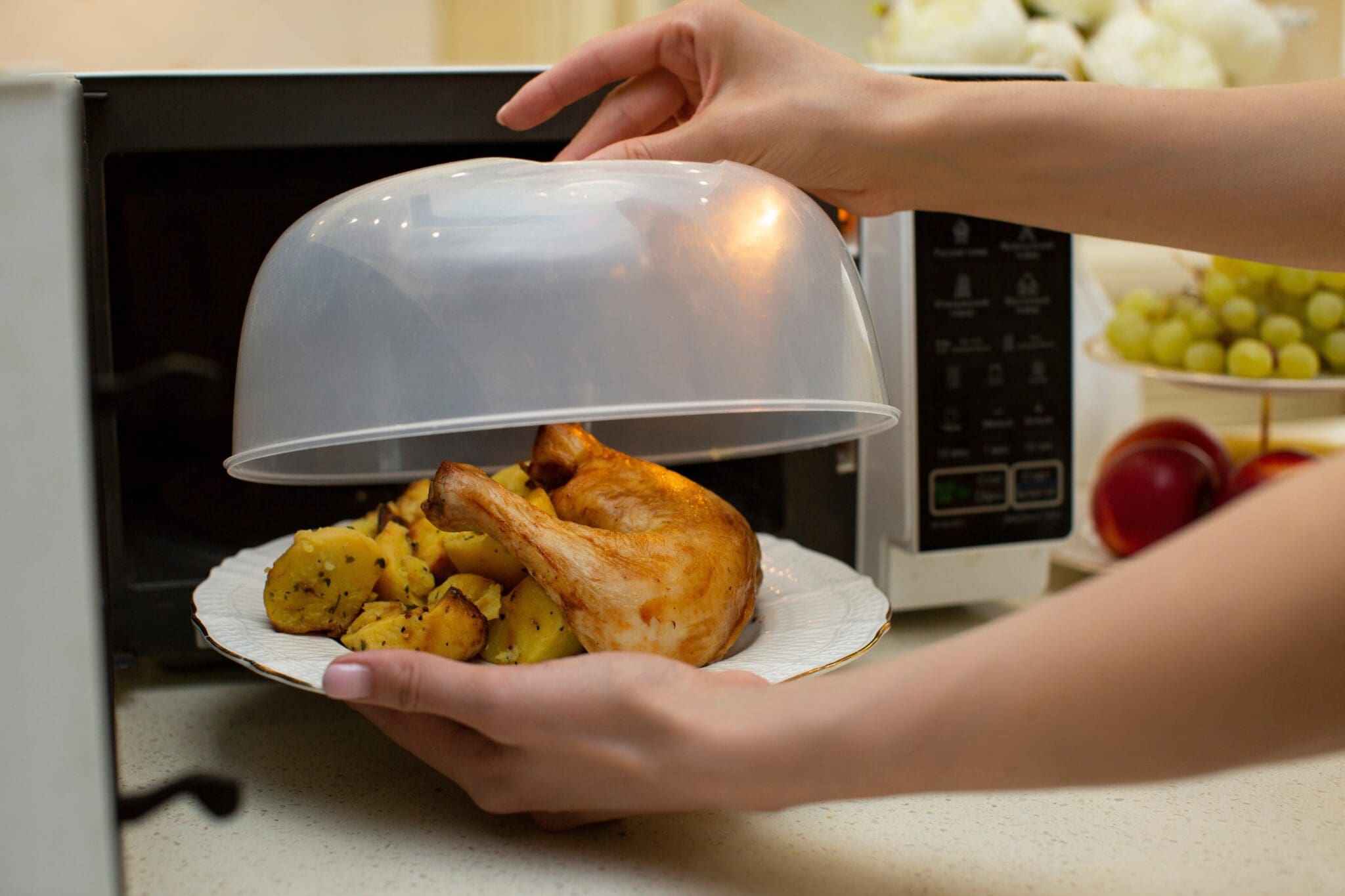
Cooling targets need to be clear enough that staff can follow them during a busy shift. Different kitchens use slightly different numbers, yet the principle stays the same: cool hot food through the danger zone quickly, then refrigerate promptly.
Many HACCP systems use a two-stage approach:
- Cool from hot to warm quickly (so bacteria do not multiply fast).
- Then cool from warm to chilled promptly (so growth slows right down).
In practical terms, many kitchens aim for targets like:
- From 60°C to 20°C within 2 hours
- From 20°C to 5°C within a further 4 hours
Some sites simplify further, especially small kitchens, by using a ‘cool as fast as possible and refrigerate once safe’ rule with time limits, supported by blast chilling, shallow trays and probe checks.
The exact critical limits you choose should reflect your operation, menu risk and equipment. For example, a care setting feeding vulnerable residents should set stricter operational buffers than a low-risk café. Moreover, if you batch cook high-risk foods like rice, poultry or thick sauces, you should treat cooling as a critical control point.
Cooling targets should also include a decision rule for failure. For example:
- If food does not reach the target temperature within the target time, you discard it or you take a corrective action that your HACCP plan allows (such as reprocessing, if appropriate and safe).
You can support your targets with reputable guidance such as the Food Standards Agency Safer food, better business resources and the UK government overview of food safety responsibilities. These resources help you frame cooling within a wider food safety management system.
Two-Stage Cooling Method Explained
The two-stage cooling method works because it tackles the highest-risk period first. Bacteria multiply fastest when food stays warm. Therefore, the first stage aims to get food down from cooking temperatures into a safer mid-range quickly. Then, the second stage completes the journey down to chilled storage temperature.
Stage 1: Hot to warm – reduce risk fast
This stage focuses on speed. You can achieve it through:
- Shallow trays: Less depth means faster heat loss.
- Portioning: Smaller containers cool faster.
- Air movement: Controlled airflow speeds cooling.
- Stirring: Distributes heat evenly in liquids.
- Blast chilling: The most consistent option if you have it.
A simple operational rule for Stage 1 is: do not let food sit in deep containers while it slowly stops steaming. Instead, get it into shallow, cooling-friendly containers right away.
Stage 2: Warm to chilled – finish cooling safely
Once food reaches the warm range, it becomes easier to finish cooling in chilled storage or a blast chiller. However, you still need to protect the food and the fridge:
- Cover food once it has cooled enough that covering will not trap significant heat.
- Use designated fridge shelves for cooling food, so you protect ready-to-eat items.
- Avoid stacking hot containers tightly, because airflow matters.
- Probe the thickest part again to confirm it reaches chilled targets.
The two-stage method also supports clear record-keeping. You can record two time-temperature points, which makes it easier to show control during inspections. As a result, you strengthen due diligence and you reduce arguments about how long it was out.
For a HACCP framework that supports this staged approach without making paperwork complicated, the FSA Safer food, better business diary system offers a practical structure.
Cooling Hot Food in the Fridge Rules
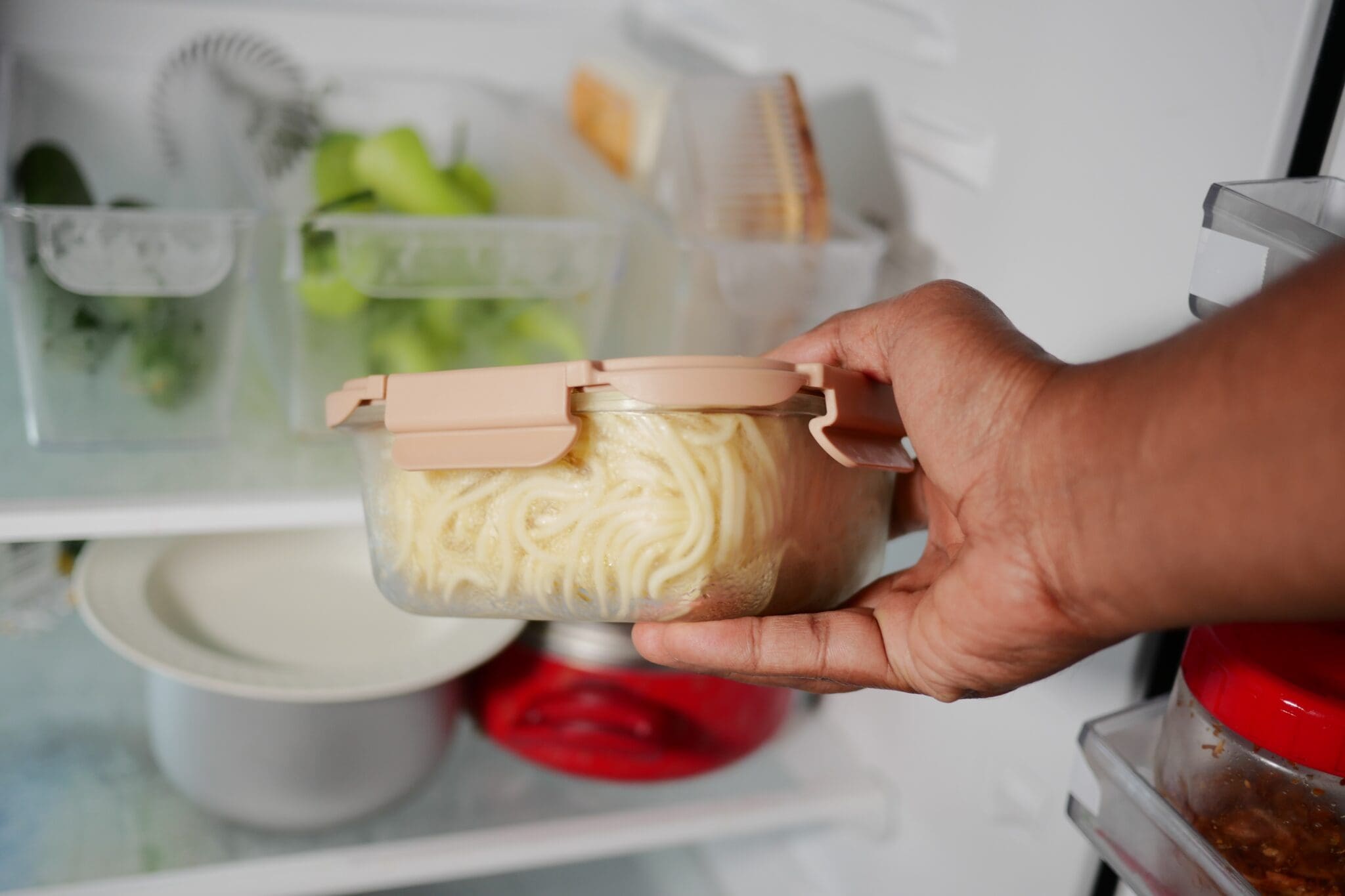
Putting hot food straight into a fridge is one of the most common cooling mistakes. People do it for a good reason: they want food out of the danger zone. However, a fridge does not cool large hot items quickly. Instead, it often cools them slowly while warming the whole cabinet. Consequently, you can put other foods at risk, and you can still end up with slow cooling.
A sensible ‘cooling hot food in the fridge’ rule is:
- Do not place large volumes of very hot food directly into refrigeration.
- Use rapid cooling methods first, then chill once the food has reduced in temperature and volume.
That said, some situations allow careful fridge cooling:
- Small portions in shallow containers.
- Food that has already cooled significantly using an external method.
- Blast chillers or dedicated rapid-cool units designed for hot loads.
If you must use a standard fridge to complete cooling, use these practical controls:
- Use shallow trays so the food depth stays low.
- Leave space around containers so cold air can circulate.
- Use a designated cooling shelf below ready-to-eat foods to prevent drips and contamination.
- Do not overload the fridge because overloaded cabinets struggle to recover temperature.
- Close the door quickly and avoid repeated opening.
- Monitor the fridge temperature during cooling periods, because a big hot load can push it out of range.
- Cover at the right time: cover once steam reduces and the food cools enough, so you avoid trapping heat early.
If your operation cools food daily, consider dedicating a fridge for cooling and storage of cooled foods. Even better, invest in a blast chiller if volume and risk justify it, because it makes control easier and more consistent.
For practical chilling expectations, the Food Standards Agency guidance on chilling provides a helpful reference.
Blast Chiller Cooling Guidelines
Blast chillers are one of the simplest ways to turn cooling from a ‘best effort’ activity into a controlled process. They move cold air quickly across food surfaces and remove heat rapidly, which shortens time in the danger zone. Moreover, they help protect quality, especially for sauces, cooked meats, desserts and prepared components.
To use a blast chiller safely and effectively:
- Pre-chill the unit if your model requires it.
- Use shallow pans rather than deep pots. A blast chiller works best when surface area is high.
- Avoid overloading. Follow manufacturer guidance for maximum load and spacing.
- Leave gaps between trays for airflow.
- Stir liquids halfway through if your process allows, to remove hot spots.
- Use the right cycle. Chill cycles for cooling, freeze cycles for rapid freezing.
- Probe verify. Even with blast chilling, confirm core temperatures at the thickest point.
- Label immediately after chilling with date and time, then move to storage.
Blast chilling should fit into your HACCP plan as a monitored step. In practice, a simple approach is:
- Record batch start temperature and time.
- Record batch end temperature and time.
- Record corrective action if the unit fails or the batch does not reach target.
Blast chillers also need maintenance and cleaning. Dirty fans and blocked vents reduce performance, which can cause slow cooling without anyone noticing. Therefore, include blast chiller checks in your cleaning schedule and daily opening routine.
If you want a general UK food business framework to slot blast chilling into, the FSA Safer food, better business system supports simple monitoring and corrective actions.
Shallow Tray and Portioning Techniques
Shallow trays and portioning are the workhorses of safe cooling. They do not require specialist equipment. Yet they do require discipline and space.
The physics is simple: heat leaves food through the surface. So, you want a large surface area and a small depth. As a result, a deep pot of chilli may stay warm for hours, while the same chilli in shallow trays can cool quickly.
Practical portioning techniques that speed up cooling:
- Split batches early
As soon as cooking finishes, divide the food into multiple containers. Do not leave it in one large vessel while you ‘get around to it’. - Use shallow gastronorm pans
Choose pans that keep depth low. Aim for a depth that allows heat to escape quickly. - Avoid stacking during initial cooling
Stacked trays trap heat and slow cooling. Instead, space trays out until they cool, then stack in storage. - Use smaller containers for thick foods
Thick sauces and stews insulate themselves. Smaller containers help. - Use clean, food-grade containers with lids ready
This helps you cover food as soon as it reaches a safe cooling stage. - Label trays while cooling
Add a simple cooling start time label. This reduces guesswork later.
A good shallow tray method also reduces waste. Because food cools faster, you can chill it sooner, extend quality, and reduce the risk of late discard decisions.
To keep the technique consistent across staff, write a simple ‘cooling standard’ and post it where cooling happens. For example:
“All cooked sauces must be portioned into shallow trays within 15 minutes of cooking ending”.
Simple rules often beat long explanations, especially during service.
Ice Bath Cooling Step-by-Step
Ice baths are a practical option for smaller operations that do not have blast chillers. They work by pulling heat out quickly through the container walls, especially if you stir the food. However, they need careful handling to avoid contamination and water ingress.
Here is a safe ice bath method you can train easily:
- Choose the right container
Put food in a clean, sealed or lidded container suitable for cooling. If you cannot seal it, keep the waterline below the lip to avoid splash contamination. - Prepare the ice bath
Use a clean sink or large tub. Fill with cold water and plenty of ice. The goal is very cold water, not just cool water. - Place the container in the bath
Set the container in the bath so water contacts the sides. Ensure it sits stable. - Stir the food inside the container
Stirring moves hot food from the centre to the edges where cooling happens. It also prevents hot spots. - Refresh ice as it melts
Ice baths lose power as the water warms. Add ice or drain some warm water and replace it. - Probe the food
Clean the probe, then check temperature at the thickest point. Record time and temperature. - Cover and move to refrigeration
Once the food has cooled sufficiently and steam reduces, cover it and move it into chilled storage to finish cooling and hold safely.
Key hygiene controls for ice baths:
- Use clean ice and clean bath water.
- Keep raw food away from the cooling area.
- Prevent splash water entering the food.
- Clean and sanitise the sink or tub after use.
Ice baths work especially well for soups, sauces and stock that would otherwise cool slowly. They also suit smaller volumes that fit into containers with good surface contact.
Cooling Soups, Sauces and Stock Safely
Liquids create unique cooling challenges. They hold heat well, and they often sit in large volumes. Therefore, soups, sauces and stock need active cooling methods rather than passive waiting.
The safest approach combines three techniques:
- Reduce volume and depth
- Increase movement
- Use rapid heat transfer methods
Practical steps for soups, sauces and stock:
- Decant into shallow trays or smaller containers – Do this early. A large pot cools slowly, even if it stops steaming on top.
- Stir frequently – Stirring breaks up thermal layers and speeds cooling. It also helps you avoid a hot centre.
- Use cooling paddles or wands – Where available, cooling paddles reduce temperature quickly in thick liquids. They work best when you follow manufacturer hygiene guidance.
- Use ice baths – Set containers in an ice bath and stir. This works well for medium batch sizes.
- Use blast chilling – If you have a blast chiller, use shallow pans and space them out.
- Avoid topping up – Do not add hot sauce into a cooling container. This resets cooling time and makes temperature control messy.
- Cover at the right time – Covering too early traps heat and slows cooling. However, leaving food uncovered too long increases contamination risk. A practical compromise is to loosely cover once steam reduces, then seal once chilled.
Probing liquids:
- Stir before probing so you do not measure a cool edge.
- Probe the centre depth, not the surface.
- Wait for a stable reading.
Stock and sauces often become the base for multiple dishes. Consequently, controlling cooling here protects a wide range of menu items.
For broader UK food safety management principles that support these controls, the FSA business guidance offers practical advice.
Cooling Rice and Pasta Safely
Rice and pasta look low risk to many people because they feel ‘dry’ and simple. In reality, cooked rice in particular needs careful cooling and storage. When rice cools slowly, certain bacteria can grow and produce toxins that reheating may not destroy. Therefore, rice cooling requires strict time and temperature control.
Practical rules for cooling rice safely:
- Cook close to service where possible – If you can cook rice in smaller batches, you reduce the need for long cooling and storage.
- Spread rice out immediately – Tip rice onto shallow trays and spread it thinly. This increases surface area and speeds cooling.
- Avoid deep containers – Deep tubs trap heat and create warm centres.
- Use clean utensils and trays – Keep the cooling area separate from raw prep.
- Cool fast, then chill – Once rice cools rapidly, move it into refrigeration in covered containers.
- Label clearly – Add prep and chill times. Use ‘First In, First Out’ (FIFO) and do not keep rice for longer than your system allows.
Pasta cooling risks are generally lower than rice, yet pasta can still support bacterial growth if it sits warm and moist.
Use the same principles:
- Drain well, spread out, cool quickly, and chill promptly.
- Avoid leaving pasta in warm water or in covered deep containers during cooling.
If you use rice and pasta in large volumes, consider changing the process:
- Use blast chilling for large batches.
- Use portioned packs for fast cooling.
- Reduce batch size and increase frequency.
These changes often reduce waste too. Moreover, they improve texture, which helps quality as well as safety.
For practical food safety systems, the FSA Safer food, better business guidance helps you embed cooling rules into HACCP-style controls.
Cooling Cooked Meat and Poultry Safely
Cooked meat and poultry present high risk because they support bacterial growth well, and because contamination can happen easily during handling. Therefore, cooling needs both speed and strict hygiene.
Key principles:
- Cool in small portions and shallow trays.
- Protect from drips and contact with raw foods.
- Minimise handling and keep utensils clean.
- Use dedicated cooling shelves where possible.
Cooling roasted joints, whole birds, or large trays of meat:
- Portion early – Slice or portion into smaller pieces once it is safe to handle. Smaller pieces cool faster than whole joints.
- Use clean trays and separate batches – Avoid piling meat in deep heaps. Spread out pieces in shallow layers.
- Avoid cross-contamination – Keep cooled meats away from raw prep areas and away from raw meat storage.
- Probe thick pieces – Check the thickest part, especially for poultry and rolled meats.
- Cover at the right time – Cover once steam reduces, then move to chilled storage.
Cooling gravy and meat juices also matters, because they often sit warm in pans. Treat them like sauces and cool rapidly.
A practical poultry rule is: do not leave cooked poultry sitting warm during breakdown. Plan the workflow so staff can portion and cool promptly. Moreover, ensure the cooling area stays clean and organised so food does not sit waiting for space.
In care settings and other high-risk environments, tighten the process further. Vulnerable people face higher risk from foodborne illness, so conservative cooling rules protect residents and reduce incident risk. For general food safety guidance, the NHS food safety advice offers a useful public health perspective, while business controls sit under the FSA guidance for food businesses.
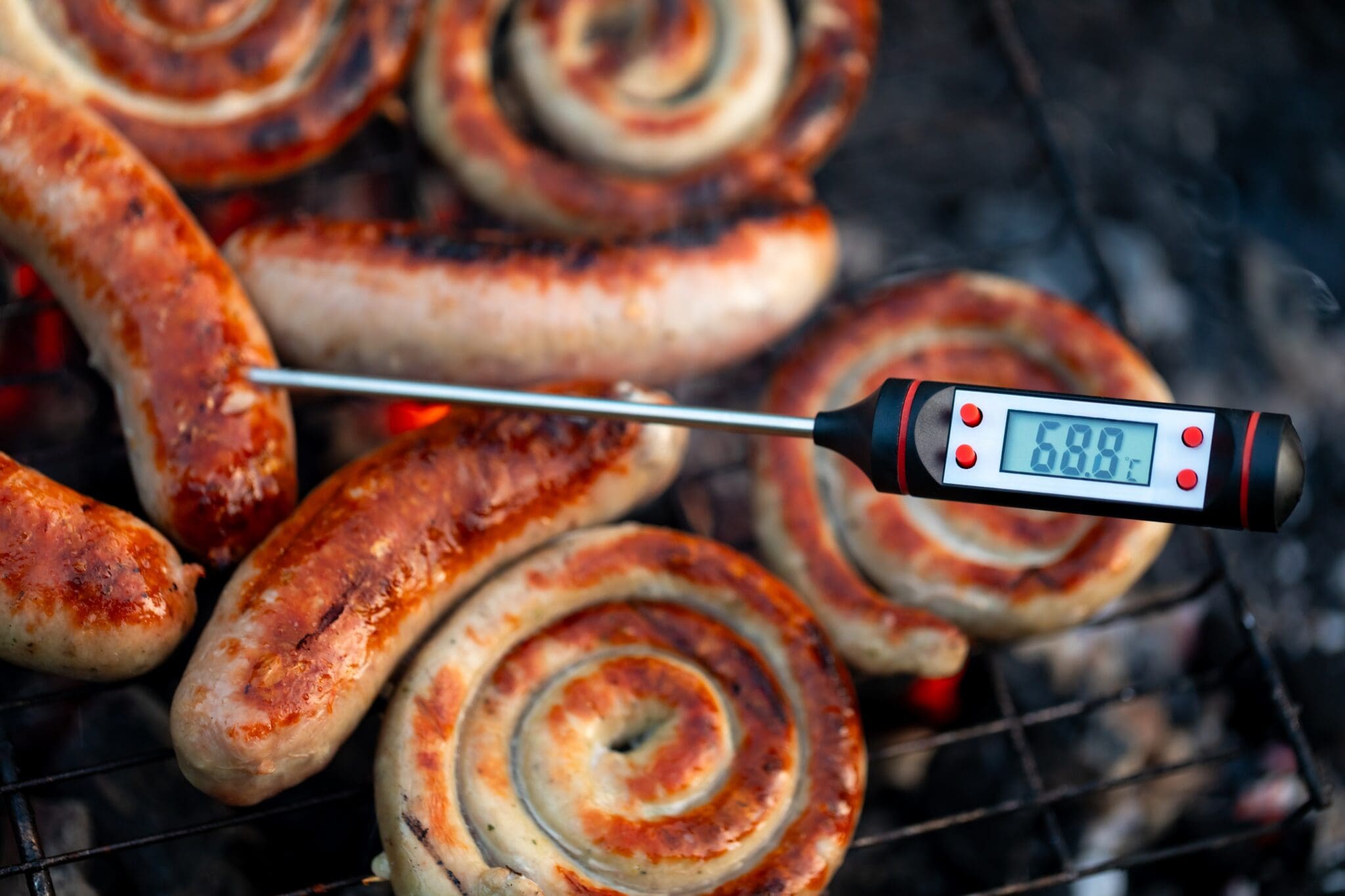
How to Use a Probe Thermometer Correctly
Probes give you evidence. However, they only help if staff use them correctly and hygienically. Poor probing technique creates false reassurance, which is worse than no reading at all.
A reliable probe method for cooling checks:
- Clean the probe
Use alcohol wipes or a suitable sanitiser wipe. Then allow it to dry or wipe with clean paper. - Stir if the food is liquid
Stir first so you measure the true bulk temperature, not a cooled edge. - Probe the thickest part
Insert into the centre of the thickest section. Avoid touching the tray, the pot bottom, or bones, because these can distort readings. - Wait for the temperature to stabilise
Hold the probe steady until the reading stops moving. - Take a second reading if needed
Check a second point for large trays or uneven foods, especially mixed dishes. - Record immediately
Record time, temperature, food batch, and initials. If you take corrective action, record that too. - Clean again
Clean the probe after use and store it in a clean holder.
Probe hygiene rules to reinforce:
- Use separate wipes and avoid dipping probes into shared water.
- Never probe raw meat and then probe cooling cooked food without cleaning.
- Store probes cleanly and protected.
Calibration matters too. Many businesses do simple periodic checks such as an ice point check. Even if you do not run a formal calibration programme, you should replace damaged probes and you should avoid ‘guessing’ if the probe seems inconsistent.
For HACCP-style record-keeping and monitoring examples, the FSA Safer food, better business diary pages provide a simple structure.
Cooling Temperature Record Sheet Template
Your record sheet should help staff do the right thing quickly. Therefore, keep it short, specific, and linked to actions. Inspectors generally prefer honest records with corrective actions over perfect records that never show a problem.
A practical cooling temperature record sheet template:
- Date
- Food item / batch
- Batch size
- Cooling method used (shallow trays, blast chiller, ice bath, cooling wand)
- Cooling start time
- Start temperature (optional if you always start hot, yet useful for large batches)
- Check 1 time
- Check 1 temperature
- Check 2 time
- Check 2 temperature
- Time placed into refrigeration
- Final chilled temperature check (if your system requires it)
- Corrective action (if targets not met)
- Initials
You can also add a simple ‘Pass or Action’ column. This prompts staff to act rather than only record.
Examples of corrective action entries:
- “Split into smaller trays and returned to blast chiller.”
- “Moved to ice bath and stirred, then rechecked after 20 minutes.”
- “Discarded due to exceeding cooling time limit.”
- “Fridge overloaded, moved batch to alternative fridge and reported to supervisor.”
Record sheets work best when they sit where cooling happens, not in an office. If you use digital forms, add QR codes at cooling stations so staff can complete records quickly.
To support due diligence expectations, link your records to your food safety management system, such as Safer food, better business, and store them in a way that makes retrieval easy during inspections.
Common Cooling Mistakes that Cause Illness
Most cooling failures come from predictable behaviour, especially during busy periods. If you can spot these patterns, you can redesign the process so staff do not rely on memory or good intentions.
Common mistakes:
- Leaving food in big pots – Large volumes cool slowly. Always portion into shallow containers.
- Covering too early – Tight lids trap heat. Use loose covers or wait until steam reduces.
- Putting very hot food into the fridge – This warms the fridge and still cools food slowly. Cool in steps first.
- Overloading blast chillers or fridges – Airflow matters. Overloading slows cooling and hides risk.
- Stacking trays while hot – Stacks trap heat. Space trays until they cool.
- Cooling near raw prep – Cooling food picks up contamination easily. Keep cooling zones separate.
- No time control – Without start times, staff cannot judge whether cooling stays within limits.
- Guessing instead of probing – Surface temperature can mislead. Probe the thickest part.
- Reheating as a rescue – Reheating does not undo toxins formed during slow cooling. Do not rely on reheating to fix poor cooling.
- Weak labelling – If staff cannot tell when a batch cooled and when it should be used, they will make unsafe decisions under pressure.
To prevent these mistakes, use process design:
- Set up a cooling station with trays, labels, probe wipes, and clear instructions.
- Train staff on one simple method, then reinforce it daily.
- Use small batch cooking where possible.
- Assign responsibility for cooling checks on each shift.
As a result, cooling becomes part of normal production rather than a risky afterthought.
Reheating After Cooling: Safe Steps
Cooling safely is only half of the story. If you cool food for later service, you must reheat it safely too. Otherwise, you can reintroduce risk through slow reheating or uneven heating.
Safe reheating steps:
- Reheat quickly
Use equipment that brings food up to temperature fast. Slow reheating keeps food in the danger zone longer. - Reheat to a safe core temperature
Many UK kitchens use 75°C as a practical target. Then they hot hold at 63°C or above or serve immediately. - Stir and mix
Stir soups, sauces and stews during reheating to remove cold spots. - Probe the thickest part
Check the centre. For large trays, check more than one point. - Avoid repeated reheat cycles
Reheat once. If food drops below safe holding and you cannot reheat properly within your rules, discard it. - Do not mix fresh and old
Avoid topping up a hot tray with newly reheated food, because it makes time and temperature control unclear. - Record critical checks
For high-risk foods, record reheating checks as part of your HACCP monitoring.
Reheating works best when you plan portions. If you reheat only what you expect to serve soon, you avoid long hot holding and repeated temperature drift.
For HACCP-based monitoring examples that cover cooling and reheating, the FSA Safer food, better business materials provide a practical baseline.
HACCP Cooling Critical Limits Example
Cooling often qualifies as a critical control point because failures can lead to rapid bacterial growth, and in some cases toxin production. Therefore, a clear HACCP critical limit and corrective action plan helps you manage risk consistently.
Here is a practical HACCP cooling critical limits example you can adapt:
Hazard
Bacterial growth and toxin formation during slow cooling of cooked food, especially high-risk foods (rice, poultry, sauces, cooked meats).
Critical limits
- Cool from 60°C to 20°C within 2 hours.
- Cool from 20°C to 5°C within 4 hours.
- Alternatively, if using a blast chiller, cool to 5°C within the validated cycle time for the load and container depth.
Monitoring
- Record cooling start time for each batch.
- Probe and record temperature at Stage 1 and Stage 2.
- Confirm food enters refrigeration by the planned time.
- Verify fridge temperature remains within range during cooling periods.
Corrective actions
- If Stage 1 target not met: Split into smaller, shallower containers, increase cooling method (ice bath, blast chiller), recheck within a short set time.
- If Stage 2 target not met: Discard, unless your HACCP plan defines a safe alternative that a competent person approves.
- If fridge temperature rises out of range due to hot loading: Move batches to alternative refrigeration, reduce loading, and arrange maintenance if needed.
Verification
- Weekly review of cooling records.
- Monthly probe check or calibration routine.
- Trend analysis of failures to identify root causes (equipment, workload, training, layout).
- Periodic internal audit and refresher training.
Records
- Cooling temperature logs.
- Probe cleaning and calibration records (where used).
- Equipment maintenance records for blast chillers and fridges.
- Training records for staff responsible for cooling.
This example keeps the system simple while still defensible. It also creates a learning loop. If you see repeated failures, you can adjust process, equipment, and staffing rather than blaming individuals.
If you want a straightforward HACCP-based structure that UK inspectors recognise, Safer food, better business provides templates and diary systems that can support cooling critical limits without complicated paperwork. For a global HACCP principles reference, you can explore the Codex HACCP overview, which underpins many food safety systems.
Conclusion
Safe cooling of cooked food protects customers, protects your reputation, and protects your margins. Slow cooling sits at the heart of many preventable food safety incidents because it happens quietly, during busy moments, and often without a clear owner. Therefore, your best defence is a repeatable process that staff can follow without guessing.
Cool food quickly by reducing depth and volume, using shallow trays and portioning as your default. Where possible, use blast chillers for consistent control. If you do not have them, use ice baths, stirring and good airflow to remove heat faster. Avoid putting large hot pots straight into fridges, because that slows cooling and warms other foods. Probe the thickest part, record key time-temperature points, and act quickly if cooling slips outside your targets. Finally, tie cooling and reheating into a simple HACCP plan with clear critical limits, corrective actions and verification.
When you make cooling easy to do right, you reduce food poisoning risk, cut waste and make inspections smoother. For UK-relevant support and practical templates, the Food Standards Agency business guidance and Safer food, better business resources can help you build a system that stays reliable even on the busiest days.