In this article
Supporting someone with a urinary catheter means paying attention to small details that can affect their comfort, dignity and safety. With consistent, high-quality care, catheters can be managed well across home care, residential care and healthcare settings. But problems can develop quickly when routines slip.
This is intended as a practical guide to support good day-to-day care. It’s for UK carers, healthcare assistants, nurses, home care staff and family members supporting someone with a urethral or suprapubic catheter. It focuses on everyday care, early signs that something may be wrong and how to escalate when concerns arise.
A quick reminder before we start: Always follow the person’s care plan, local policy and any instructions from the urology team. This guide supports everyday good practice, but it does not replace clinical judgement. If something feels wrong, escalate immediately.
Catheter care basics for carers
Catheter care works best when practice stays consistent between carers and shifts. In care homes and community care, problems often start when routines change, and risk rises over time.
There are five daily aims with catheter care:
- Keep urine draining freely.
- Keep the system as closed as possible.
- Keep the skin clean, dry and comfortable.
- Spot changes early.
- Record care and observations clearly.
A practical daily routine for carers usually includes:
- Checking the tubing and bag position at the start of the shift
- Helping with gentle hygiene once daily and after bowel motions if needed
- Encouraging fluids if appropriate and safe for the person
- Emptying the bag at safe intervals with clean technique
- Watching for pain, fever, confusion, new leakage, reduced output or strong-smelling cloudy urine with symptoms
- Documenting what you saw and what you did
Carers don’t need to be catheter experts – but they do need confidence in the basics. They also need to know when to escalate situations.
If you are supporting someone at home, it also helps to know who to contact: the district nursing team, continence service, GP, out-of-hours, or NHS 111.
Types of urinary catheter explained
Understanding the type of catheter being used helps you provide better care. It also helps you explain problems clearly when you call for advice, since each type works in a different way.
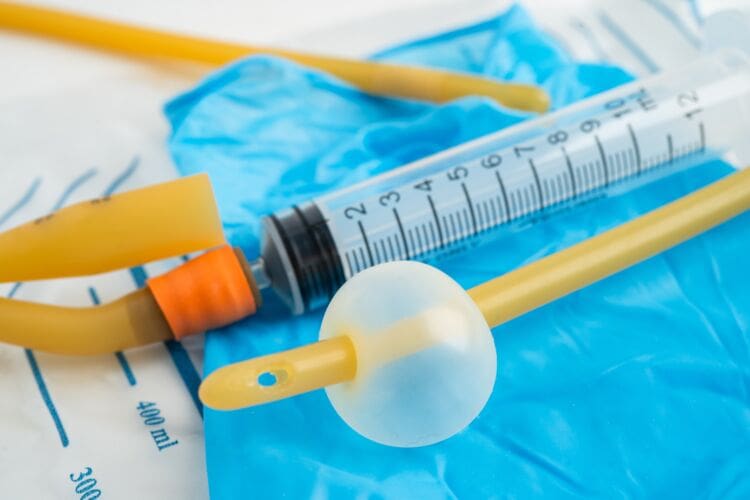
Urethral catheter
This catheter is the most common type.
It goes through the urethra into the bladder. It may connect to a leg bag during the day and a larger bag overnight.
Urethral catheters can cause urethral discomfort, bypassing leakage and, over time, urethral trauma if they pull.
Suprapubic catheter
This catheter goes into the bladder through a small opening in the lower abdomen.
Many people find it more comfortable long-term, and it can reduce the risk of some urethral problems. However, the insertion site needs gentle care and monitoring for redness, discharge, pain or over-granulation.
Intermittent catheterisation
Some people use a catheter only when needed to empty the bladder, and then it is removed. This guide focuses on indwelling urethral and suprapubic catheters, but the principles of clean technique and infection prevention still matter.
Common materials and coatings
Catheters can be latex-free, made from silicone or have coatings designed to reduce friction.
The clinical team usually selects the type best suited to the individual’s needs. Your role is to follow the care plan and report any problems. Issues like repeated blockages or discomfort can prompt a change in catheter type or size.
When calling for clinical advice
If you need to call for clinical advice, you will often be asked for a few basic details about the catheter. It helps to have this information ready:
- “Urethral or suprapubic?”
- “What size and balloon volume?”
- “When was it inserted or last changed?”
- “What is the current problem, and when did it start?”
That information speeds up safe decision-making.
Daily catheter hygiene – step-by-step
Daily hygiene helps keep the skin healthy and reduces irritation around the catheter. It also helps prevent infection.
Cleaning should be gentle and consistent. Aggressive washing and using strong soaps or antiseptics can irritate the skin and make soreness worse. Aim for simple daily care that keeps the area clean without causing friction or damage.
Privacy and dignity matter, so start by explaining to the patient what you will do. Then follow a consistent routine.
Step-by-step daily hygiene (urethral catheter)
- Wash hands and put on gloves if needed.
- Gather supplies – warm water, mild soap if used, clean cloths, towels, disposal bag and any prescribed barrier cream.
- Position the patient comfortably, with their legs and hips supported. Reduce pulling on the catheter.
- Clean gently once a day and after bowel motions. Use warm water or a mild soap (remember to rinse soap off).
- Clean from front to back.
- Clean around the urethral opening and the catheter itself near the body.
- Do not pull the catheter.
- Pat dry carefully. Moisture increases skin irritation and can worsen soreness.
- Check the skin. Look for redness, swelling, discharge, broken skin or signs of pain.
- Secure the catheter. Make sure the fixation device or strap reduces tugging.
- Wash or sanitise your hands.
Step-by-step daily hygiene (suprapubic catheter site)
- Wash hands and prepare supplies.
- Remove the old dressing only if the plan says a dressing is used. Some people do not need a dressing once the site is healed.
- Clean around the site with warm water or as advised.
- Pat dry.
- Check for redness, swelling, pain, discharge, odour or bleeding.
- Apply a fresh dressing only if prescribed.
- Secure the catheter to reduce pulling.
What to avoid:
- Using talc near the site
- Applying antiseptics routinely unless a clinician has advised them
- Twisting the catheter or moving it in and out
- Soaking in a bath unless the person’s plan says it’s safe – especially soon after a suprapubic catheter is placed
If someone has ongoing soreness, repeated infections or skin breakdown, ask for a review. Small changes, such as a different fixation method or barrier product, can make a big difference.
Keeping the drainage bag positioned safely
Bag positioning is one of the most important parts of catheter care. Poor positioning causes backflow, pulling, kinking and avoidable leaks. It also increases infection risk.
Best practices:
- Keep the bag below bladder level at all times.
- Keep tubing free of kinks.
- Keep the bag supported, not dangling.
- Keep the bag off the floor.
- Avoid tight loops of tubing that trap urine.
Practical positioning tips:
- Use a proper leg bag holder or straps.
- When the person sits down, check that the tubing does not catch on chair arms or wheels.
- When the person transfers, make sure the bag moves with them rather than pulling behind.
- At night, use a stand or hanger so the night bag stays below the bed and does not rest on the floor.
- In a wheelchair, ensure tubing runs safely and does not get trapped in brakes or footplates.
A common mistake is placing the bag on a bed or chair, even for a moment. Even a short time above bladder level can cause backflow, which increases risk of infection and discomfort. Get into the habit of checking the bag’s position every time you enter the room.
Emptying a catheter bag safely
Empty the bag using a clean technique to avoid contaminating the outlet tap or splashing urine.
Step-by-step process:
- Prepare the area – use a clean jug or container if needed, or empty directly into the toilet.
- Hand hygiene – wash your hands before touching the outlet.
- Gloves and apron if needed – if there is a risk of splashing, wear gloves and an apron.
- Open the outlet tap without touching the tip – avoid letting the outlet touch the toilet bowl or container rim.
- Drain fully without forcing – don’t squeeze the bag aggressively.
- Close the tap firmly – prevent leaks by checking the tap is properly closed.
- Wipe if policy advises – some services advise wiping the outlet with a clean tissue. Follow local guidance.
- Dispose of waste safely – flush urine, dispose of tissues, remove PPE safely.
- Hand hygiene again
- Record output if required – document output volume and colour, as well as any concerns such as blood, cloudiness with symptoms, or strong odour with symptoms.
When to empty the catheter bag:
- Empty a leg bag when it’s about half to two-thirds full. Overfilling increases pulling and the risk of leakage.
- Empty the night bag in the morning and as needed.
- If urine output appears low, check the tubing for kinks, review the person’s hydration status and confirm the bag sits below bladder level.
For family carers, it can help to use a simple measuring jug and record amounts for a few days if clinicians ask. Consistent information helps the GP or nurse assess the situation more accurately.
Leg bag care and changing straps
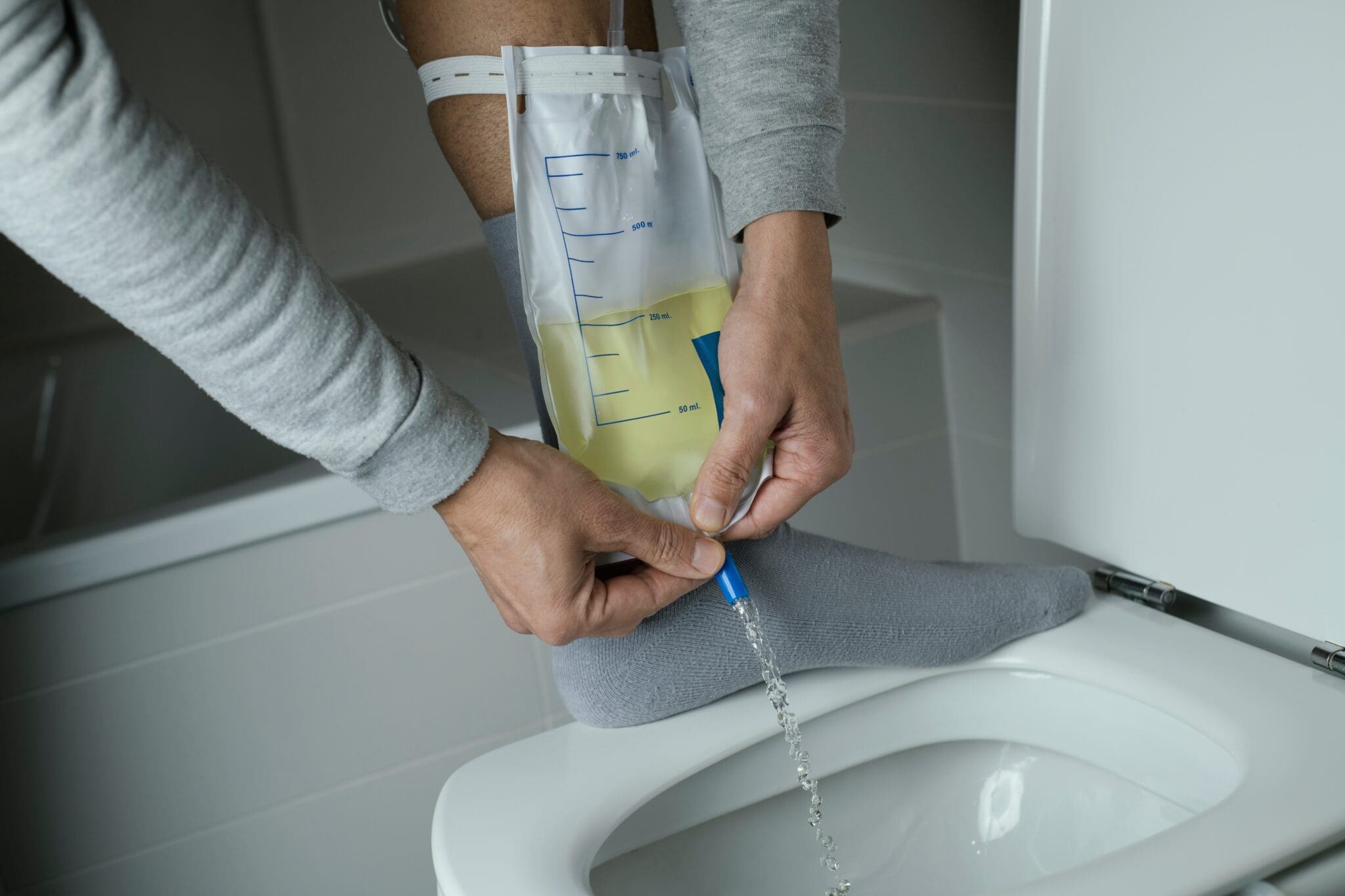
Leg bags help people stay mobile and maintain their dignity. However, straps can rub, heavy bags can pull on the catheter and poor hygiene can lead to skin irritation.
A good leg bag routine involves:
- Checking straps for tightness and comfort at least once per shift
- Moving the straps slightly to avoid constant pressure on one spot
- Inspecting the skin under the straps for signs of redness, blistering or broken skin
- Keeping the leg bag supported so it doesn’t pull on the catheter
Best practices for changing straps:
- Wash your hands.
- Support the bag with one hand so it does not pull on the catheter.
- Make sure the person is sitting or positioned comfortably.
- Replace one strap at a time so the bag stays supported.
- Check circulation and comfort. Straps should feel secure but not tight.
- Re-check the tubing, making sure that it still drains freely.
What to avoid:
- Taping tubing directly to the skin unless advised. Tape can cause skin tears in older people.
- Letting the leg bag dangle when walking.
- Leaving the straps unchanged when they look worn. Worn straps slip and cause pulling.
If the skin becomes sore, red or broken, report it early. Skin damage increases infection risk and can quickly become painful.
Connecting a night bag safely
Night bags hold more urine and reduce the need to empty the bag overnight. Try to keep the system closed as much as possible, because repeated connections and disconnections increase infection risk. Follow local policy on whether night bags are single-use.
Steps for connecting a night bag:
- Prepare the night set-up. Ensure that the night bag is ready, the stand or hanger is in place, and the bag will hang below bladder level.
- Wash your hands.
- Put on gloves if needed.
- Avoid touching the ends to keep the connection points clean.
- Attach the night bag to the leg bag outlet or connection point as designed.
- Open the leg bag outlet to allow flow, following the design of the system used.
- Position safely, ensuring there are no kinks and that tubing will not snag if the person turns.
- Remove the gloves and clean your hands.
- Check flow after 15 to 30 minutes. If there is no urine and the person normally produces urine overnight, check the tubing and bag position.
In the morning:
- Disconnect the night bag using the same clean approach.
- Empty the night bag safely.
- Record any concerns such as low output, blood or new debris.
- Make sure the leg bag outlet is closed correctly after disconnection.
If the patient wakes repeatedly with discomfort, check whether the tubing pulls when they turn and whether the bag set-up sits too close to the bed. Small positioning changes often solve the problem.
Preventing catheter-associated UTI
Catheter-associated urinary tract infection (CAUTI) occurs when bacteria enters and grows in the urinary tract due to the catheter. It’s not possible to prevent CAUTI entirely, but you can reduce risk with consistency and best practices.
Follow these everyday habits to support CAUTI prevention:
- Do not disconnect bags unless necessary.
- Do not take urine samples from the bag. Use the sampling port as trained.
- Keep the bag below the bladder and off the floor.
- Empty the bag before it becomes heavy and overfull.
- Clean hands before and after touching the catheter system.
- Secure the catheter to prevent tugging and urethral trauma.
- Prevent constipation where possible, because it can affect bladder emptying and comfort.
- Encourage fluids if safe and follow any fluid restriction plan.
A key point for carers and families: Cloudy or smelly urine alone doesn’t always mean there is an infection. Many catheter users have bacteria in their urine without symptoms. Symptoms, such as fever, new pain, shivering, new confusion or general deterioration, matter more. If you notice any of these signs, escalate the situation.
Signs of catheter blockage
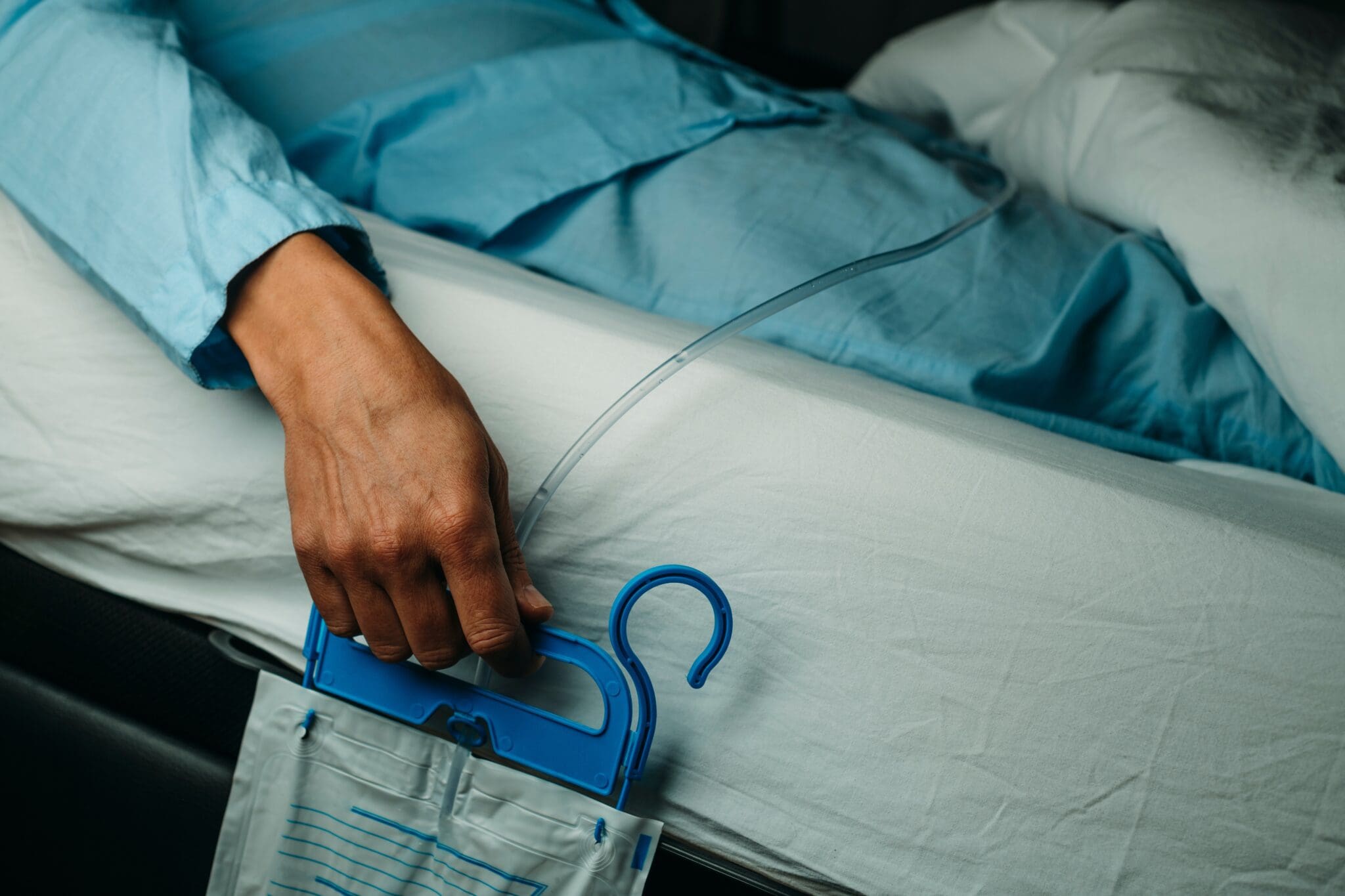
Blockage can become serious if it is not addressed. A blocked catheter may cause pain, bladder distension, leakage around the catheter and, in some cases, kidney problems. In some older adults, acute problems such as urinary retention can also present as agitation or sudden confusion.
Common signs include:
- Little or no urine draining despite the person usually producing urine
- Complaints of lower abdominal pain, pressure or a sense of needing to pass urine
- Bladder feeling firm or swollen
- Urine leaking around the catheter (bypassing)
- New restlessness, sweating or distress
- Sediment, debris or thick urine in the tubing
- Tubing repeatedly kinking due to poor positioning, causing intermittent flow
First checks you can do safely:
- Ensure the bag sits below bladder level.
- Check for kinks and loops, or the person lying on the tubing.
- Make sure the outlet tap is open if using a night bag connection system.
- Check whether the bag is full and needs emptying.
What you should not do:
- Flushing or irrigating unless you are trained and the care plan authorises it
- Pulling on the catheter to “get it flowing”
- Leaving the person in pain while you wait for the next shift
If flow does not resume quickly after position checks, escalate to the nurse in charge, the district nurse or urgent clinical support as per local policy.
What causes catheter leakage and bypassing?
Leakage around a catheter is often called bypassing. It can be distressing and can lead to skin breakdown and odour. Many people assume it means the catheter is too small, but that’s not often the case.
Common causes include:
- Partial or full blockage, including debris or encrustation
- Constipation putting pressure on the bladder
- Bladder spasms
- Catheter pulling or poor fixation
- Bag positioned too high, leading to backflow and poor drainage
- Incorrect balloon volume or catheter size for the person
- Infection or inflammation
Practical steps that often help:
- Check for kinks in the tubing and reposition so that it runs smoothly.
- Check the bag is positioned correctly and is not overfull.
- Ensure the fixation device reduces pulling.
- Check and manage constipation in line with the person’s care plan.
- Protect skin with barrier products if the area becomes sore.
When to escalate:
- If bypassing is new and persistent
- If the person has pain, fever, confusion or reduced urine output
- If the skin becomes red or broken
- If the catheter keeps blocking or the leakage keeps occurring
A clinical review may lead to changes such as a different catheter type or size, bladder spasm treatment, or a planned change schedule adjustment.
Blood in urine – when to escalate
Blood in the urine can sometimes occur with a catheter. Small streaks may appear after a catheter change or if the catheter has been pulled.
Any blood should be taken seriously, especially if it’s heavy or accompanied by other symptoms.
Common causes include:
- Recent catheter insertion or change
- Minor trauma if the catheter has been pulled
- Irritation linked to a blockage
Signs that need urgent review include:
- Large amounts of blood or clots
- Urine that suddenly becomes red or dark brown
- Pain in the bladder, back or abdomen
- Fever, shivering or feeling very unwell
- Reduced urine output, especially if clots are blocking flow
- Dizziness or signs of shock
Escalate urgently if you notice clots, heavy bleeding, severe pain, or general signs of illness.
Catheter removal and change schedule
Catheters should only remain in place for as long as they are needed. Removing a catheter when it’s no longer required reduces infection risk and often improves comfort.
Some people need long-term catheterisation. In these cases, the care plan should clearly explain the reason and confirm that regular reviews are taking place.
Catheter removal schedule
Removal should be planned and authorised by a clinician. Before removal, staff should check the care plan and confirm:
- Whether a trial without a catheter is planned
- What to monitor once the catheter is removed
- Whether bladder scanning or post-void residual checks are required
- What action to take if the person cannot pass urine
Family carers should not remove a catheter unless a clinician has provided clear instruction and training.
Catheter change schedule
The frequency of catheter changes depends on the catheter type, the person’s needs and clinical advice. Some catheters are changed every few weeks, while others remain in place for longer.
The planned schedule should be easy to find in the care record. It should include:
- The date the catheter was inserted or last changed
- The due date for the next change
- Catheter type, size and balloon volume
- Any known issues, such as encrustation or difficult changes
- Who is responsible for changing it and where this will happen
If the catheter blocks frequently, leaks persistently, or the person develops repeated infections, request a clinical review rather than simply shortening the change interval. A review may lead to changes in catheter material, size or the overall management plan.
When to call a GP, 111 or 999
The person’s care plan should always guide escalation when something goes wrong, but the points below provide a general guide for carers and care staff.
Contact the GP or district nurse team (same day) if:
- The person develops new discomfort, mild pain or increasing bladder spasms.
- Urine becomes cloudy or strong-smelling alongside mild symptoms.
- There is new leakage that doesn’t settle after checking catheter position and tubing.
- The catheter site looks red, irritated or sore.
- Urine output appears lower than usual and you have already checked for kinks and bag position.
- The catheter is due to be changed or documentation about the catheter is unclear.
Contact NHS 111 if:
- You need urgent advice outside normal service hours.
- You suspect a urinary tract infection and cannot contact the usual clinical team.
- The catheter may be blocked, and basic checks have not restored drainage, particularly if the person is uncomfortable.
- There is new or increasing blood in the urine, but the person otherwise appears stable.
NHS 111 can help decide which service should assess the person next.
Call 999 if:
- The person shows possible signs of sepsis, such as extreme shivering, mottled skin, confusion, very fast breathing or collapse.
- There is severe pain, and no urine is draining. The person appears acutely unwell.
- There is heavy bleeding or clots blocking the catheter, and the person becomes faint or unstable.
- The person has severe breathing difficulty or is not responding normally.
For staff training and family awareness, the NHS guidance on recognising sepsis provides useful information about serious infection warning signs.
Recording catheter care in notes
Clear documentation helps keep catheter care consistent across shifts. It also helps clinical teams understand what has been happening over time.
Records should describe what you checked, what you observed and any actions you took. Vague entries such as “catheter care done” provide very little useful information.
What to record each shift or each visit (as appropriate):
- Catheter type (urethral or suprapubic) and whether it’s still required
- Bag position and whether the catheter is securely fixed
- Urine output (if measured), or confirmation that the bag was emptied and the approximate volume
- Urine appearance – for example, pale, dark, concentrated, cloudy with symptoms, or blood present
- Any pain, bladder spasms, discomfort or agitation
- Skin condition around the urethra, under leg bag straps or around a suprapubic site
- Bowel status, if relevant, particularly constipation
- Whether fluids are encouraged or restricted, according to the care plan
- Any leakage or bypassing, and the checks you carried out
- Any escalation – who was contacted, when and what advice was given
- Date of the last catheter change and the planned date for the next change
Here are some examples of clear documentation:
- “Leg bag below bladder level and off the floor. Tubing free of kinks. Catheter secured with strap. No pulling observed.”
- “Urine 450 ml emptied at 14:00. Straw colour. No odour. Resident comfortable.”
- “No drainage noted since 09:30. Checked tubing and bag position with no improvement. Lower abdominal discomfort reported. District nurse contacted at 10:10.”
- “Suprapubic site clean and dry. Mild redness 1 cm around the site. No discharge. Reported to nurse in charge.”
If digital care notes are used, prompts in the template can help staff remember key checks. With paper records, keep charts in a consistent place and review them during handover.
Managers may also refer to CQC guidance for adult social care providers when developing documentation standards.
Summing up
Catheter care relies on consistent routines and careful observation. Small checks – such as ensuring the bag is positioned correctly, keeping the system closed and noticing early changes in urine output or comfort – can prevent many common problems. When concerns arise, early escalation and clear documentation help ensure the person receives the right support quickly.