
In this article
Sensory Processing Disorder (SPD) profoundly shapes how individuals perceive and interact with the world around them. When the nervous system struggles to make sense of sensory information, whether from sight, sound, touch, movement, or body awareness, the resulting over- or under-responsiveness can disrupt everyday activities, learning, and social engagement. Although often identified in childhood, SPD may persist into adulthood if unrecognised or unsupported.
In UK homes, schools, and healthcare settings, understanding SPD and implementing tailored strategies enables children and adults alike to thrive, rather than merely cope, in their environments. This article explores the nature of SPD, its assessment pathways and evidence-based interventions, guiding parents, educators and clinicians towards truly person-centred support.
Understanding Sensory Processing Disorder (SPD)
SPD describes a difficulty in the way the brain interprets and organises sensory input, leading to responses that are atypical in intensity or character. First conceptualised by occupational therapist A. Jean Ayres in the 1970s, SPD encompasses a spectrum of challenges in processing information from the five traditional senses (i.e., sight, sound, taste, smell, and touch), as well as from vestibular (movement/balance) and proprioceptive (body awareness) systems.
In individuals with SPD, the brain may register ordinary sensations as overwhelming (over-responsivity), fail to register them adequately (under-responsivity), or seek excessive sensory input (sensory-seeking). For example, the hum of a classroom fluorescent light may cause extreme agitation, or a gentle hug may go unnoticed. These differences in sensory gating and modulation affect behaviour, emotional regulation, and motor skills.
While SPD is not currently a standalone diagnosis in the DSM-5 or ICD-11 (diagnostic classification systems), it is recognised within UK paediatric and educational occupational therapy frameworks as a pattern of difficulties warranting intervention.
SPD often co-occurs with other neurodevelopmental conditions – particularly autism spectrum disorder (ASD) and attention-deficit/hyperactivity disorder (ADHD) – but can also present in isolation. Early recognition and support are crucial, as unaddressed sensory challenges can lead to anxiety, social isolation, and learning delays. A person-centred understanding of SPD shifts the focus from “misbehaviour” to “mis-sensory-perception,” reframing support strategies around the individual’s unique sensory profile rather than a one-size-fits-all approach.
How the Sensory System Works
At its core, sensory processing involves a hierarchical flow of information: sensory receptors in the body detect stimuli, nerve fibres transmit signals to the spinal cord and brainstem, and higher brain centres integrate and interpret these inputs to produce appropriate responses. Disruption at any point in this pathway can give rise to SPD.
Peripheral Detection and Transmission
Specialised sensory receptors in the body detect physical stimuli such as light, sound, pressure, and chemical signals. These receptors convert the stimuli into electrical impulses, which travel along sensory nerves to the spinal cord or directly to parts of the brain responsible for processing vision and hearing. This process allows the brain to interpret and respond to the world around us.
Central Integration
Once sensory signals reach the central nervous system, most travel to a part of the brain called the thalamus, which acts like a relay station; except for smell signals, which take a more direct route. From there, the brain sends each signal to the area best equipped to process it:
- The somatosensory cortex processes touch and body awareness.
- The auditory cortex decodes sounds.
- The visual cortex interprets patterns of light.
- The vestibular system, located in the brainstem and cerebellum, helps us maintain balance and understand our position in space.
This coordinated processing allows us to respond appropriately to the world around us – whether it’s catching a ball, recognising a voice, or walking steadily across uneven ground.
Modulation and Response
Higher-level areas of the brain bring together information from multiple senses, enabling us to make sense of complex experiences. These regions also filter out distractions, a process known as sensory gating, and help us focus on what’s important. They coordinate responses through movement and automatic body systems, such as heart rate or digestion.
When this system works efficiently, only the most relevant sensory signals grab our attention, helping prevent sensory overload. It also ensures that quick, protective reactions, such as pulling your hand away from a hot surface, happen without delay.
Dysfunction and Intervention
In SDP, the brain’s ability to regulate sensory input can be disrupted. The thalamus, often described as the brain’s “gatekeeper”, may let in too much or too little information. Inhibitory circuits that normally help calm or balance sensory signals may be underactive, and the connections between sensory areas and emotional regulation centres may work differently than expected.
These insights help explain why treatment often focuses on both ends of the system: calming or stimulating the body’s sensory receptors through specific activities, and supporting the brain’s ability to process input through gradual exposure and cognitive-behavioural approaches.
Types of SPD and Their Characteristics
SPD manifests in several subtypes, broadly categorised by how individuals respond to sensory input. Recognising these patterns guides targeted support.
Sensory Modulation Disorders
- Sensory Over-Responsivity (Hypersensitivity): Individuals react intensely to ordinary stimuli, such as loud noises, bright lights, and scratchy fabrics. Responses may include withdrawal, distress vocalisations, or “meltdowns.”
- Sensory Under-Responsivity (Hyposensitivity): Responses are muted; the individual may appear lethargic, fail to notice extreme temperatures or pain, and show delayed reactions.
- Sensory Seeking: Characterised by a craving for strong stimuli (e.g., spinning, crashing, loud music, or deep pressure) to self-regulate arousal levels.
Sensory Discrimination Disorders
Difficulties discerning the quality or intensity of stimuli lead to clumsy motor skills or misperception. For example, a child may struggle to differentiate between light and firm touches or fail to locate the source of a sound, which can affect fine-motor tasks, handwriting, and spatial awareness.
Sensory-Based Motor Disorders
- Dyspraxia (Developmental Co-ordination Disorder): Challenges in planning and executing motor tasks, often linked to impaired integration of vestibular and proprioceptive inputs (i.e., difficulties with balance, coordination, and sensing body position). Children may appear awkward, bump into objects, or avoid playground equipment.
- Postural Disorder: Impaired processing of proprioceptive and vestibular input can lead to poor muscle tone and reduced postural stability. This often results in slumped posture, low physical endurance, and difficulty maintaining seated positions for extended periods, such as during classroom or desk-based activities.
Most individuals exhibit a combination of these patterns – for instance, a child who is hyposensitive to touch yet hypersensitive to sound – underscoring the need for detailed profiling rather than broad labels.
Recognising Symptoms at Home and in School
Early identification hinges on observing how sensory differences impact daily routines and learning environments. Common home-based indicators include:
- Feeding Difficulties: Picky eating or refusal of certain textures due to oral-tactile hypersensitivity.
- Clothing Distress: Resistance to tags or seams, insistence on “soft” fabrics, refusal to wear new or certain seasonal attire.
- Sleep Disruption: Inability to settle due to sensitivity to bedding textures, room temperature, or ambient noise.
- Play Patterns: Excessive crashing, spinning, or spinning toys (sensory seeking) or avoidance of swings and slides (vestibular hypersensitivity).
In educational settings, staff may notice:
- Concentration Challenges: Easily distracted by distant noises or classroom visual clutter, leading to inattentiveness or disruptive behaviours.
- Motor Difficulties: Poor pencil grip, difficulty cutting with scissors, or awkward handwriting.
- Emotional Outbursts: Seemingly disproportionate meltdowns when the fire alarm sounds or during crowded assemblies.
- Avoidance Behaviours: Refusal to participate in tactile activities, such as painting and sand play, or reluctance to join in group games requiring physical coordination.
Crucially, these symptoms often fluctuate: a child may tolerate the same stimulus on some days but not on others, depending on overall arousal, fatigue, or stress, making consistent responses difficult to predict and highlighting the need for flexible, responsive support strategies. Maintaining a sensory diary that involves recording specific triggers, contexts, and responses helps families and teachers identify patterns and tailor supports accordingly.

Differentiating Sensory Processing from Behavioural Issues
Sensory processing challenges can masquerade as purely behavioural problems, leading to mislabelling and ineffective interventions. Key distinctions include:
- Trigger Specificity
Behavioural issues often occur across contexts (home, school, playground) in response to social or academic demands. Sensory-driven responses are tightly linked to particular stimuli, such as noise from a hand dryer or the feel of wet paint, and may not generalise. - Predictable Patterns
Sensory reactions follow consistent patterns (always distressed by certain textures), whereas behavioural issues may be more variable and contextually driven by peer dynamics or emotional factors. - Duration and Intensity
Sensory meltdowns may be intense but relatively brief – ceasing once the stimulus is removed. Whereas behavioural defiance can persist across tasks and time, reflecting different underlying motivations. - Physiological Signs
Over-responsivity often involves autonomic arousal, which may result in flushed skin, rapid breathing, and dilated pupils: indicative of a sensory “fight or flight” response, rather than deliberate oppositional conduct.
In practice, a child repeatedly refusing to hold a ruler may be seen as oppositional. However, tactile hypersensitivity to the smooth, cool plastic could be the underlying driver, highlighting the importance of looking beyond surface actions to understand underlying sensory challenges.
Collaborating with occupational therapists to conduct sensory assessments ensures that any support provided targets the root cause rather than merely managing surface behaviours through sanctions or rewards.
Impact on Learning, Behaviour, and Social Development
Unmanaged SPD can cast a long shadow over multiple developmental domains:
Academic Learning
Sensory distractors degrade cognitive resources. A child distracted by the hum of fluorescent lights or the feel of scratchy clothing has fewer attentional reserves for reading comprehension or mathematical problem-solving. Fine-motor challenges complicate writing tasks, leading to frustration and avoidance of written work.
Behavioural Regulation
Chronic sensory overwhelm heightens baseline anxiety, reducing tolerance for change and increasing the likelihood of “meltdowns.” Equally, under-responsivity may manifest as apparent apathy or inattentiveness, which is often misinterpreted as laziness or lack of motivation, obscuring genuine sensory needs.
Social Interaction
Sensory challenges can impede play. An over-responsive child may be reluctant to join group games involving loud noises or physical contact, leading to social isolation. Sensory-seeking peers may engage in rough-and-tumble play that alarms others. Such mismatches can hinder peer bonding and compromise social confidence.
Emotional Well-being
Persistent sensory stress contributes to low self-esteem and anxiety, particularly when children internalise messages of “wrongness” or feel at fault for being “difficult.” Over time, co-occurring mood disorders may emerge, compounding the original sensory challenges.
Understanding these multifaceted impacts underscores why early, holistic support (addressing sensory, emotional, and social needs in tandem) is essential to prevent a cascade of secondary difficulties.
Links to Autism, ADHD, and Other Conditions
While SPD can exist in isolation, its features frequently overlap with neurodevelopmental conditions:
- Autism Spectrum Disorder (ASD): Estimates suggest that up to 90 percent of autistic individuals experience sensory processing differences. Hypersensitivity to sound, light, or touch is now officially recognised in the DSM-5 as part of the diagnostic criteria.
- Attention-Deficit/Hyperactivity Disorder (ADHD): Similarities in distractibility and sensory regulation challenges can make diagnosis more complex. Children with ADHD may exhibit sensory seeking to self-regulate under-arousal or become easily overwhelmed by sensory clutter.
- Developmental Coordination Disorder (DCD/Dyspraxia): Difficulties with motor planning often occur alongside challenges in processing body position and balance, creating overlap between DCD and SPD in clinical presentations.
- Anxiety Disorders: Heightened sensory sensitivity can make everyday stimuli feel threatening, which may increase anxiety. In turn, anxiety raises overall arousal levels, intensifying sensory reactions – a cycle that reinforces both experiences.
Acknowledging these overlaps helps avoid fragmented approaches and promotes coordinated, holistic support planning. For instance, an autistic child with SPD benefits from sensory strategies embedded within an autism-specific education plan, rather than generic sensory interventions alone. Multidisciplinary teams that include paediatricians, psychologists, and occupational therapists can navigate these complexities to ensure comprehensive care.
Diagnosis and Assessment Pathways
In the UK, assessment for SPD typically begins with concerns raised by parents or educators, prompting a referral to a paediatrician, community paediatric service, or local children’s therapy team. While SPD itself is not a discrete NHS diagnosis, sensory processing concerns are evaluated within broader developmental assessments.
Referral Routes
- General Practitioner (GP): First port of call; may refer to a paediatrician or to an NHS occupational therapy service.
- School SENCO: A Special Educational Needs Co-ordinator can initiate an Education, Health and Care (EHC) needs assessment if sensory needs significantly impact learning.
- Early Years Settings: Portage home-visiting services may identify sensory differences in pre-school children and recommend therapy.
Assessment Tools
- Sensory Processing Measure (SPM): Standardised questionnaire for home and school environments, capturing modulatory patterns across sensory domains.
- Sensory Profile 2: Caregiver-reported tool analysing frequency of sensory behaviours and their impact on functional performance.
- Clinical Observations: Occupational therapists conduct structured play sessions, observing responses to tactile, proprioceptive, and vestibular challenges, and may use tools such as the Observation Checklist for Sensory Integration.
Multidisciplinary Evaluation
A comprehensive assessment synthesises caregiver and teacher reports, OT observations, developmental history, and co-occurring conditions. Where necessary, referrals to audiology, ophthalmology, or speech and language therapy are made to rule out primary sensory organ issues or communication barriers. The resulting sensory profile forms the basis of individualised goals and interventions.
Working with Occupational Therapists and Creating Sensory Profiles
Occupational therapists (OTs) specialising in sensory integration apply a dynamic, evidence-based framework to support individuals with SPD. Their role encompasses:
- Detailed Intake
Gathering medical, developmental, and environmental histories, as well as direct caregiver and teacher feedback on sensory-related challenges. - Sensory Profiling
Using standardised tools (SPM, Sensory Profile) and informal checklists to map patterns of over-, under-, or seeking behaviours across sensory systems. - Goal-Setting
Collaboratively establishing functional objectives – such as improved attention on tasks, reduced self-stimulatory behaviours, or enhanced tolerance of clothing textures. - Intervention Planning
Designing tailored sensory diets (structured activity schedules), recommending environmental modifications, and training caregivers in supportive techniques. - Progress Monitoring
Regularly reviewing responses to interventions – adjusting sensory diet components, refining equipment choices, and liaising with schools to ensure consistency.
OTs may also employ Ayres Sensory Integration therapy: an approach involving play-based, child-led activities that challenge multiple senses simultaneously. While evidence remains mixed, many UK OTs report positive outcomes when integrating principles of sensory modulation (graded exposure, deep pressure, vestibular input) within broader educational or therapeutic programmes.
Sensory Diets and Environmental Adjustments
A “sensory diet” is a personalised schedule of activities that provides the specific sensory input an individual needs to maintain optimal arousal and attention levels throughout the day. Key components include:
- Proprioceptive Activities: Heavy work tasks – carrying weighted backpacks, pushing loaded trolleys or animal walks (bear, crab) – to enhance body awareness and reduce seeking behaviours.
- Vestibular Input: Controlled swinging, spinning on a platform or balance-board exercises to support equilibrium and postural control, with careful grading to avoid overstimulation.
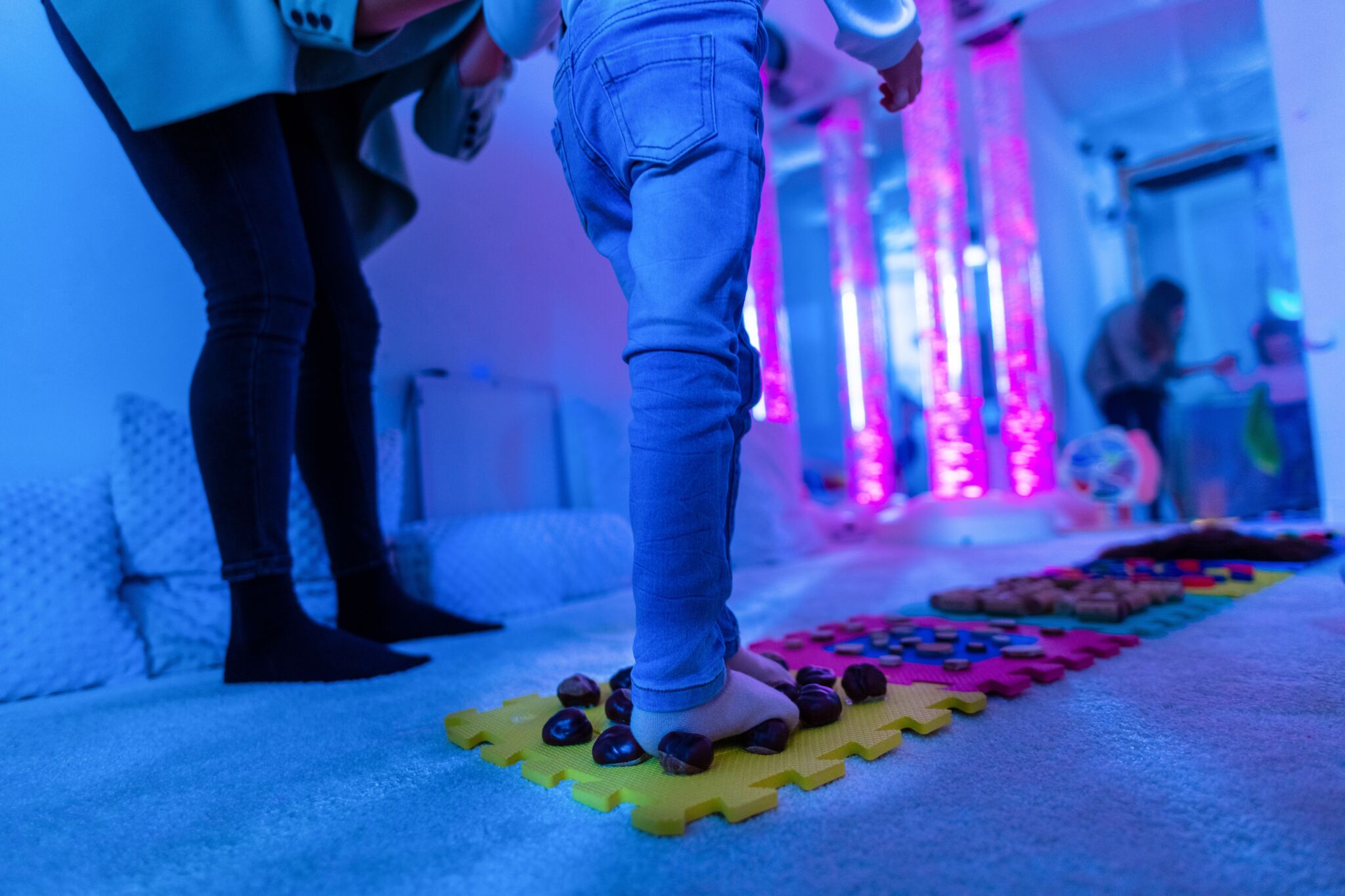
- Tactile Strategies: Brushing protocols (with OT guidance), textured materials exploration, or safe “muck play” (sand, water) to desensitise hypersensitive individuals.
- Auditory and Visual Supports: Scheduled listening sessions with filtered music (e.g., the Safety-Net Protocol) or use of visual timetables and low-arousal lighting to reduce sensory clutter.
Environmental adjustments complement sensory diets by modifying settings to minimise distress and maximise engagement:
- Acoustic Treatments: Installing carpet tiles, acoustic panels, and quiet zones to dampen noise; providing noise-cancelling headphones for corridor transitions.
- Lighting Controls: Switching to full-spectrum bulbs, installing dimmer switches, or utilising natural light to minimise glare and reduce flicker sensitivity.
- Spatial Organisation: Creating defined workstations with clear boundaries, minimising visual distractions through neutral wall colours and uncluttered surfaces.
- Flexible Uniform Policies: Allowing choice of comfortable clothing, sensory-friendly footwear, and removal of tags to accommodate tactile preferences.
By systematically incorporating sensory supportive measures into daily routines and physical spaces, caregivers and educators create environments where sensory needs are proactively met, reducing crises and enhancing participation.
Using Sensory Tools and Equipment Effectively
A wide array of specialist tools assists individuals with SPD, but efficacy depends on judicious selection, fit, and usage guidelines:
Weighted Products
Weighted blankets, lap pads, and shoulder wraps deliver deep pressure input, which can have a calming and organising effect on the nervous system. Weight must be calibrated, typically around 5–10 percent of body weight, to avoid fatigue or discomfort, and usage should be time-limited (e.g., 15–20 minutes during transitions).
Fidget and Chew Toys
Fidget spinners, tactile stress balls, or chewable jewellery offer oral-motor and tactile stimulation that supports focus in under-responsive individuals. To promote safety and hygiene, chew items should be medical-grade, easily sanitised, and used under supervision for young children.
Movement Apparatus
Therapy swings, wobble cushions, and therapy balls provide vestibular and proprioceptive challenges. Clear risk assessments and equipment checks, aligned with manufacturer guidelines, ensure safe use and reduce the likelihood of accidents. Short, scheduled sessions (for instance, five minutes before seated tasks) optimise alertness without causing overstimulation.
Auditory and Visual Supports
Noise-cancelling headphones and ear defenders help individuals with sensory sensitivities tolerate busy environments. Visual timers and cue cards support smoother transitions and help ease anxiety during unexpected changes. Apps such as Ready, Set, Visual Supports offer portable, customisable visual aids for routine schedules and social stories.
Effective implementation hinges on training for families and staff, which covers understanding when and how to introduce tools, recognising signs of overuse, and integrating them within a holistic sensory plan rather than relying on them in isolation.
Supporting Parents, Teachers, and SENCOs
Sustainable progress arises from collaborative partnerships among caregivers, educators, and specialist staff. Key strategies include:
- Joint Training Workshops: Delivered by occupational therapists or educational psychologists, covering the basics of sensory processing, practical strategies, and case discussions.
- Regular Communication Channels: Shared digital journals or brief daily handovers between home and school to report emerging challenges and successes, ensuring consistency of approach.
- Role of the SENCO: In UK schools, the Special Educational Needs Co-ordinator facilitates EHC plans where sensory needs significantly impact access to education, ensures reasonable adjustments, and liaises with therapists for termly reviews.
- Parent Support Groups: Peer networks, such as SPD UK support forums, provide spaces to share experiences, exchange practical tips, and reduce feelings of isolation.
Embedding sensory understanding within whole-school practices (through staff briefings, sensory-friendly classroom checklists, and designated calm zones) ensures that support extends beyond individual plans, fostering inclusive environments where all pupils can succeed.

UK Resources, Charities, and Ongoing Management
Families and professionals in the UK can draw on a rich array of resources:
- SPD Foundation UK: Offers training courses, support groups, and resources for sensory professionals and families.
- National Autistic Society: Provides guidance on sensory differences in autism, local support groups, and educational webinars.
- Sense: Charity supporting individuals with complex disabilities, including sensory impairments, through innovative technology and community services.
- Royal College of Occupational Therapists (RCOT): Publishes best-practice guidelines on sensory integration and professional development materials.
- Local Authority Children’s Therapy Teams: Deliver paediatric OT services via the NHS, often providing clinic-based and school-based interventions.
Ongoing management of SPD involves periodic reassessment as sensory needs evolve with age, context, and co-occurring conditions. A cyclical process of profile review, goal adjustment, and environmental audit ensures that supportive measures remain effective in supporting functional skills, emotional regulation, and engagement in daily routines. Celebrating progress, whether a child tolerates hair brushing for the first time or an adult successfully navigates a busy supermarket, reinforces confidence and motivation.
By weaving together person-centred assessment, evidence-informed interventions, cross-sector collaboration, and robust UK frameworks, carers and professionals can transform sensory challenges into opportunities for growth, enabling individuals with SPD to engage fully in learning, play, and community life.
Conclusion
Sensory Processing Disorder is a complex and deeply individualised condition that affects how people interpret and respond to the world around them. By understanding the sensory system and recognising the diverse presentations of SPD, we can begin to differentiate sensory-driven behaviours from those rooted in emotional or cognitive challenges. This clarity is essential – not only for accurate diagnosis and intervention, but for fostering empathy and support across home, school, and community settings.
As we’ve explored, SPD often intersects with neurodevelopmental conditions like autism and ADHD, requiring a nuanced, multidisciplinary approach. Occupational therapists play a pivotal role in crafting sensory profiles and guiding the use of tools and strategies that promote regulation, engagement, and learning. For educators, parents, and SENCOs, collaboration and ongoing education are key to creating inclusive environments where sensory needs are acknowledged and accommodated.
Ultimately, managing SPD is not a one-time fix but a dynamic and evolving process. With access to UK-based resources, charities, and professional support, families and practitioners can navigate this journey with confidence. By embracing a cyclical model of reassessment and adaptation, we ensure that sensory-informed practices remain relevant, empowering individuals with SPD to thrive in every stage of life.