In this article
Cross-contamination is one of the most common food safety risks in kitchens. Raw meat, fish, allergens and ready-to-eat foods all need to be kept separate during preparation to reduce the risk of foodborne illness and allergic reactions.
But in busy kitchens, people don’t have endless time to think through every cross-contamination risk. Instead, they reach for what’s closest – and what keeps the line moving.
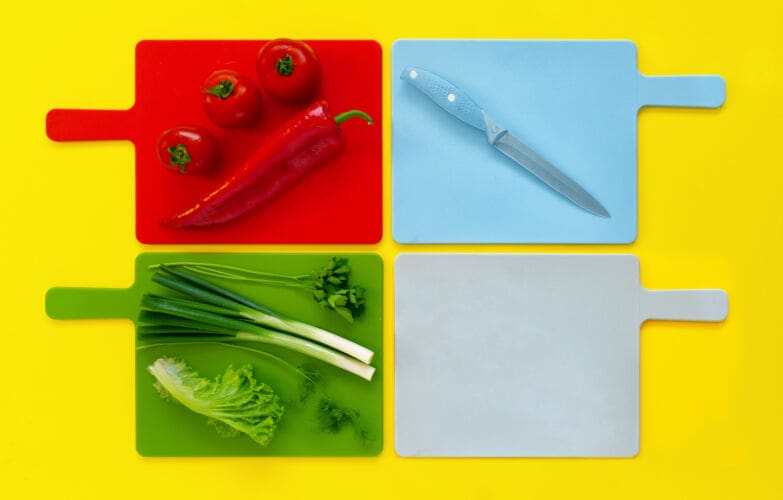
Colour-coded chopping boards provide a simple way to keep food prep safe. By assigning different boards to different food types, kitchens can create clear visual rules that help staff prepare food safely and consistently.
This guide is designed for UK food businesses, caterers and home cooks who want a simple and practical system. It explains common board colour meanings, how to set up board stations and how to clean and replace boards before they become a hygiene risk.
Colour-coded chopping boards explained
Colour-coded chopping boards are a segregation tool. They help you keep different food types physically separated during prep, so bacteria and allergens don’t move from one ingredient to another.
Instead of asking, “Is this board clean enough?” staff ask, “Is this the right board to use?” That difference matters. Even a clean-looking chopping board can carry residues, often in knife grooves or under the handle. If the board is only being reused for the same food type, such as raw chicken, those residues are less likely to create a cross-contamination risk. So, a system that prevents the wrong board being used is often stronger than a system that relies on someone noticing contamination after the fact.
In practice, colour coding supports three key kitchen controls:
- Segregation – raw, cooked and ready-to-eat foods stay separate.
- Consistency – staff across shifts follow the same rules, so safety doesn’t depend on who is working.
- Speed – staff make correct decisions faster, especially during busy service.
Colour coding does not replace cleaning and sanitising procedures. It works alongside them. Combining colour segregation with proper cleaning routines helps reduce cross-contamination risk while keeping kitchen workflows efficient.
Chopping board colours and meanings
Many kitchens use a well-known colour scheme:
- Red – raw meat
- Blue – raw fish
- Yellow – cooked meat
- Green – salad and fruit (ready-to-eat produce)
- Brown – vegetables (often unwashed or for prep that will be cooked)
- White – bakery and dairy (and sometimes cooked foods or general use, depending on the site)
Some kitchens also introduce purple – allergen-free prep (or gluten-free prep), used as an extra segregation layer.
Your kitchen might not need to use every colour. Small kitchens often use fewer boards; for example, a small cafe might use red for raw meat, blue for fish, green for ready-to-eat salad prep, and a dedicated allergen board for allergy orders. That can be safer than owning every colour yet using them inconsistently.
Practical tip: Post your colour key at every prep station and at the dish area. People forget when they’re in a rush. A visible reminder can help reduce mistakes.
Can chopping board colours vary?
Yes. While many UK kitchens follow a widely recognised colour-coding system, there is no single mandatory national standard that every workplace uses identically.
What matters most is consistency within your kitchen. Staff should understand the colour system clearly and apply it the same way across all prep areas and shifts.
Red board: raw meat
Red boards are typically used for raw meat prep because raw meat carries bacteria that can cause food poisoning. The goal is to stop raw juices and residues from touching foods that will not be cooked again.
Use the red board for tasks such as:
- Portioning raw beef, lamb, pork and game
- Prepping raw burgers and sausages
- Cutting raw bacon and raw cured meats before cooking
- Trimming fat or skin from raw meat
- Opening raw meat packaging if juice may leak
A red board system only protects you if you keep the whole tool set aligned. So, pair it with the right knives and utensils. A common failure is using the correct board but using a knife that then moves straight to salad prep.
Here’s a simple “red zone” habit that works:
- Keep a red board, a red-handled knife and red tongs together.
- Keep a dedicated bin or tray for red-zone tools.
- Clean and sanitise the full set together, not one item at a time.
Consider where you use red chopping boards. Meat prep should take place away from ready-to-eat assembly areas where possible, since cross-contamination can still occur via splashes, hands or shared surfaces.
Blue board: raw fish
Blue boards are typically used for raw fish and seafood prep. Fish can carry pathogens, and fish juices can contaminate other foods. Fish also has strong odours that can transfer to ready-to-eat foods if you prep it on shared surfaces without proper controls.
Use a blue board for tasks such as:
- Filleting fish
- Portioning raw fish for frying, baking or grilling
- Preparing raw prawns, crab or other crustaceans
- Cleaning squid and other molluscs
- Prepping sushi-grade fish where your process requires raw handling
Fish prep often creates wet surfaces, increasing slip and drip risk on counters, boards and trays. It’s best to keep fish prep contained. Use a rimmed tray beneath the board where possible, or use absorbent disposable paper to catch drips – then clean and sanitise properly.
Also, remember that fish and crustaceans are allergens. So, even when you control bacteria risk, you must also control allergen cross-contact. If you prep fish on a board and then prep a “no fish” dish on the same surface without correct cleaning and sanitising, allergens may be transferred.
Yellow board: cooked meat
Yellow boards are often used for cooked meat, which can pick up contamination easily.
Using a specific board for cooked meat helps prevent a common mistake: placing cooked food back onto a surface that held raw meat earlier. That “raw to cooked” transfer is a classic cause of food poisoning incidents, especially during BBQ service, carveries and busy grill operations.
Use yellow boards for tasks such as:
- Slicing cooked chicken, turkey, ham or roast meats
- Carving joints after cooking
- Portioning cooked burgers or sausages if you slice them for service
- Cutting cooked meats for salads, wraps or sandwich fillings
A strong yellow-board routine includes:
- Storing the yellow board separately from raw boards
- A dedicated clean knife for cooked meat slicing
- A clear rule that yellow boards never enter raw prep zones
Placing a dedicated yellow board near carving or plating stations can reduce the risk of cooked foods being handled on surfaces used for raw meat preparation.
Green board: salad and fruit
Green boards are typically used for salad, fruit and other ready-to-eat produce. Because these foods are not cooked, there’s no “kill step” to fall back on.
Use green boards for tasks such as:
- Cutting lettuce, tomatoes, cucumber, peppers and herbs
- Slicing fruit for desserts, breakfast pots or garnish
- Prepping ready-to-eat items like lemon wedges or salad toppings
- Building sandwich salad components when they will not be cooked
Even when produce seems “clean”, it can still carry contamination picked up from soil, handling or storage. So, good green-board control sits alongside safe produce washing routines where appropriate, plus clean hands and clean utensils.
Green-board mistakes often happen due to the workflow. For example, someone slices a cooked chicken breast on the green board “just quickly”. Or someone uses a green-board knife to open raw packaging, then goes back to salad. To prevent errors, keep green boards away from raw areas and keep green knives and utensils separate.
If your kitchen is small, it could help to set a “ready-to-eat station” that contains only green tools, salad containers and clean cloths. Set up a “raw station” elsewhere. Physical distance reduces accidental crossover.
Brown board: vegetables
Brown boards are often used for vegetables, especially those that may carry soil, grit or contamination from packaging.
Many kitchens use brown for veg prep that will be cooked later, while green is for ready-to-eat salad and fruit. That separation makes sense because both foods have different risk profiles.
Use brown boards for tasks such as:
- Peeling and chopping root vegetables
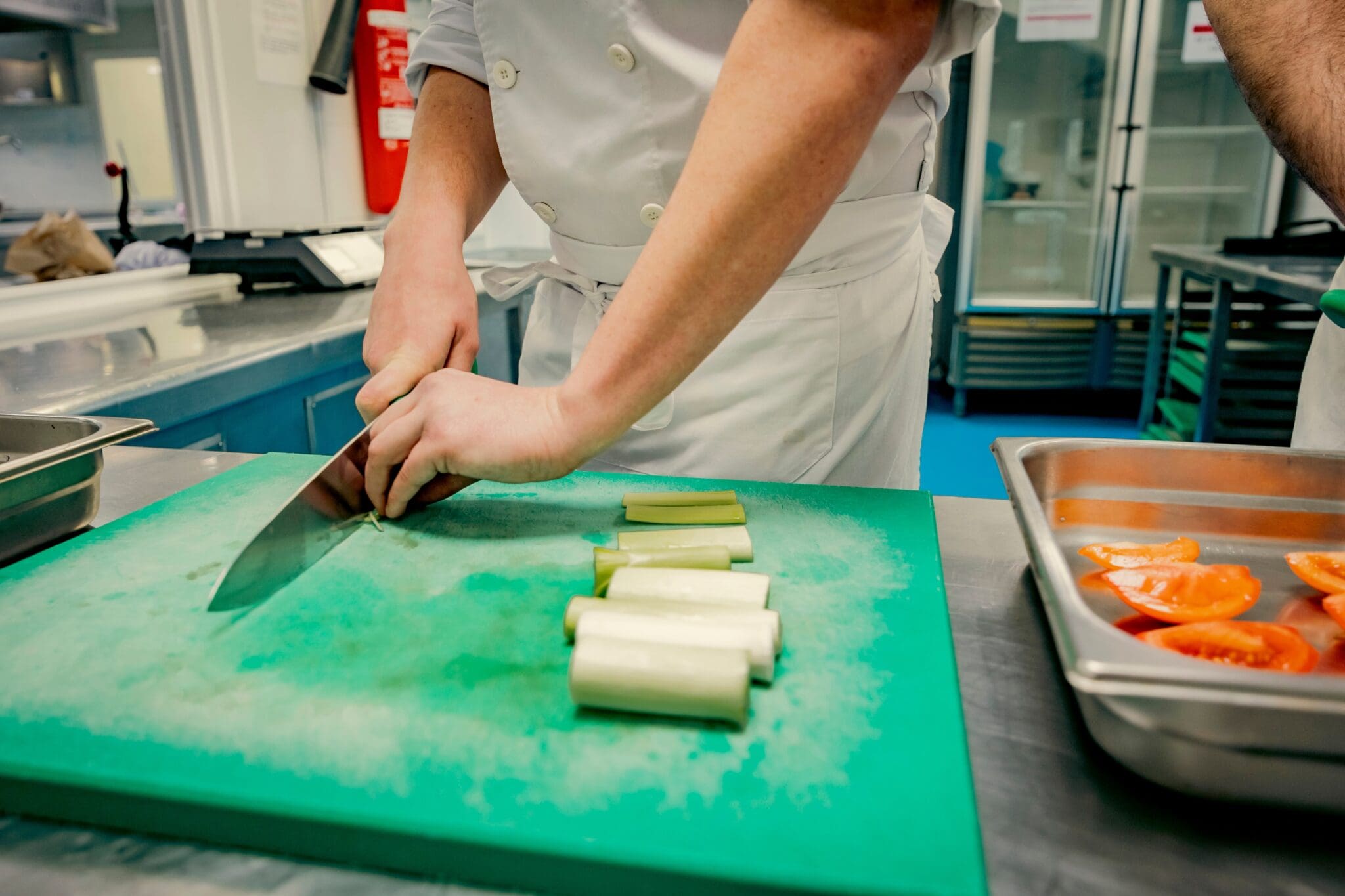
- Prepping onions, garlic and leeks for cooked dishes
- Chopping veg for soups, stews and sauces
- Preparing mushrooms and other items where you want to keep soil residues away from ready-to-eat areas
Kitchen staff should avoid switching between brown and green chopping boards, even when preparing the same type of food. The key distinction is whether the produce will be cooked or eaten raw. For example, a cucumber prepared for a salad should usually be cut on a green board because it won’t be cooked. Root vegetables prepared for a soup or stew may be prepared on a brown board because they will be cooked later. So, define your local rule clearly:
- Brown = veg for cooking
- Green = ready-to-eat produce
White board: bakery and dairy
White boards are often used for bakery and dairy prep, although some kitchens also use white as a general “ready-to-eat” board.
There are two risks: bacteria and allergens. Milk is one of the 14 regulated allergens, and bakery prep often involves cereals containing gluten. So, white-board use should be clear and controlled.
Common white-board uses include:
- Slicing bread and rolls
- Cutting cakes, traybakes and desserts
- Prepping cheese and dairy-based toppings
- Portioning butter, cream-based fillings or dairy desserts
Because white boards sometimes become “the default board”, they can introduce a cross-contamination risk. Staff may use the white board for tasks they assume are clean or low-risk, then someone uses it for cooked meat or salad. That blurs the system.
So, set a specific meaning for white in your kitchen and stick to it. For example: “white = bakery and dairy only” OR “white = ready-to-eat only, excluding raw and excluding allergens that are segregated”.
If you handle allergy orders regularly, consider using purple boards for allergen-sensitive prep instead of relying on white. That way, your white board can keep its bakery and dairy function without confusing staff.
Colour coding for allergens checklist
Colour-coded chopping boards can help reduce allergen cross-contact. However, allergen control often needs an extra layer beyond raw and ready-to-eat separation. That is because allergens can transfer in tiny amounts through shared utensils, surfaces and even condiment stations.
Good allergen colour-coding practices include:
- Assign a dedicated allergen-prep board (often purple) for allergy orders.
- Assign dedicated knives and utensils to match that board.
- Store allergen tools separately so staff don’t grab them accidentally.
- Clean and sanitise surfaces before allergy prep, even if they look clean.
- Prepare allergy orders first where possible, before allergen-heavy prep begins.
- Avoid shared garnishes for allergy orders unless you control them carefully.
- Clearly label allergy orders so kitchen staff follow the correct allergen-control procedures throughout preparation.
Also, be realistic about what your kitchen can safely provide. If you cannot control allergen cross-contact reliably, avoid describing dishes as “free from” or guaranteed allergen-free.
Instead, train staff to communicate clearly about how food is prepared, where cross-contact risks may exist, and which menu options may be safer. Honest communication helps customers make informed decisions and reduces the risk of serious allergic reactions.
Where to store chopping boards
Where you store chopping boards affects whether staff actually use the colour-coding system correctly. If boards are stacked together or stored out of sight, staff are more likely to grab the wrong one during busy service.
Keeping boards visible, separated and close to the relevant prep area makes correct use faster and easier. A practical placement approach is to create stations:
- Raw station – red board, red knife, raw trays, nearby handwash access
- Fish station – blue board, blue knife, fish trays, separate from salad prep
- Ready-to-eat station – green board, green knife, salad containers, clean cloths
- Cooked station – yellow board, slicing knife, carving fork, pass-side location
- Veg station – brown board, peeler, veg crates, waste bin nearby
- Bakery and dairy station – white board, bread knife, clean surface, away from raw prep
Vertical storage could help if your kitchen has limited space. A wall rack above the prep bench keeps boards visible and separated. You can also label the wall positions so boards are placed in the same spot every time.
Try to establish a dirty to clean flow. Place raw handling areas farther from ready-to-eat assembly areas. Then place handwash sinks where staff can reach them without needing to cross the whole kitchen. A well-thought-out layout reduces the chance that someone carries raw juices past salad pots.
Board placement still matters when cooking at home. Keep one board for raw meat and one board for ready-to-eat prep, and store them separately.
How to clean and sanitise boards correctly
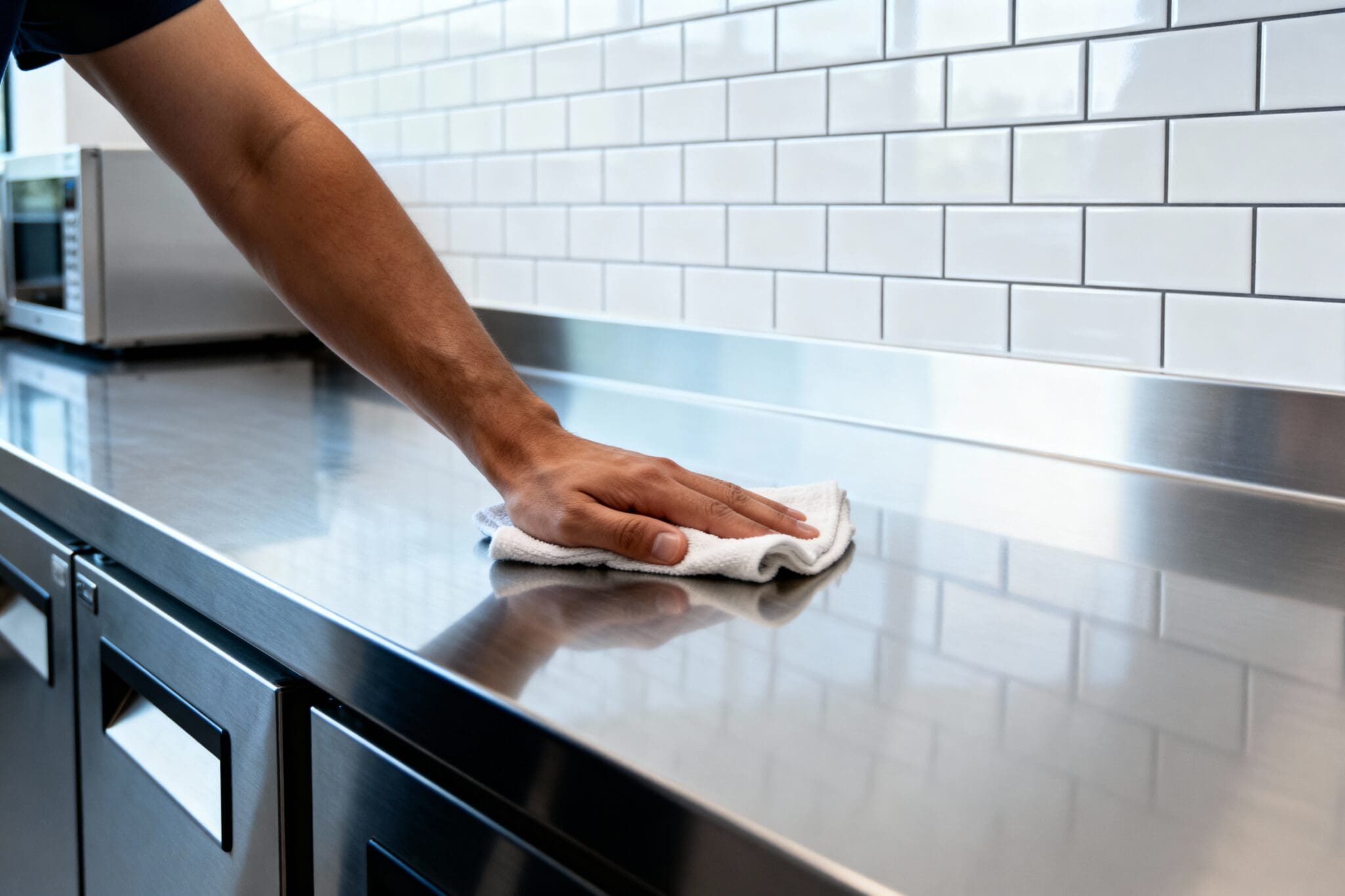
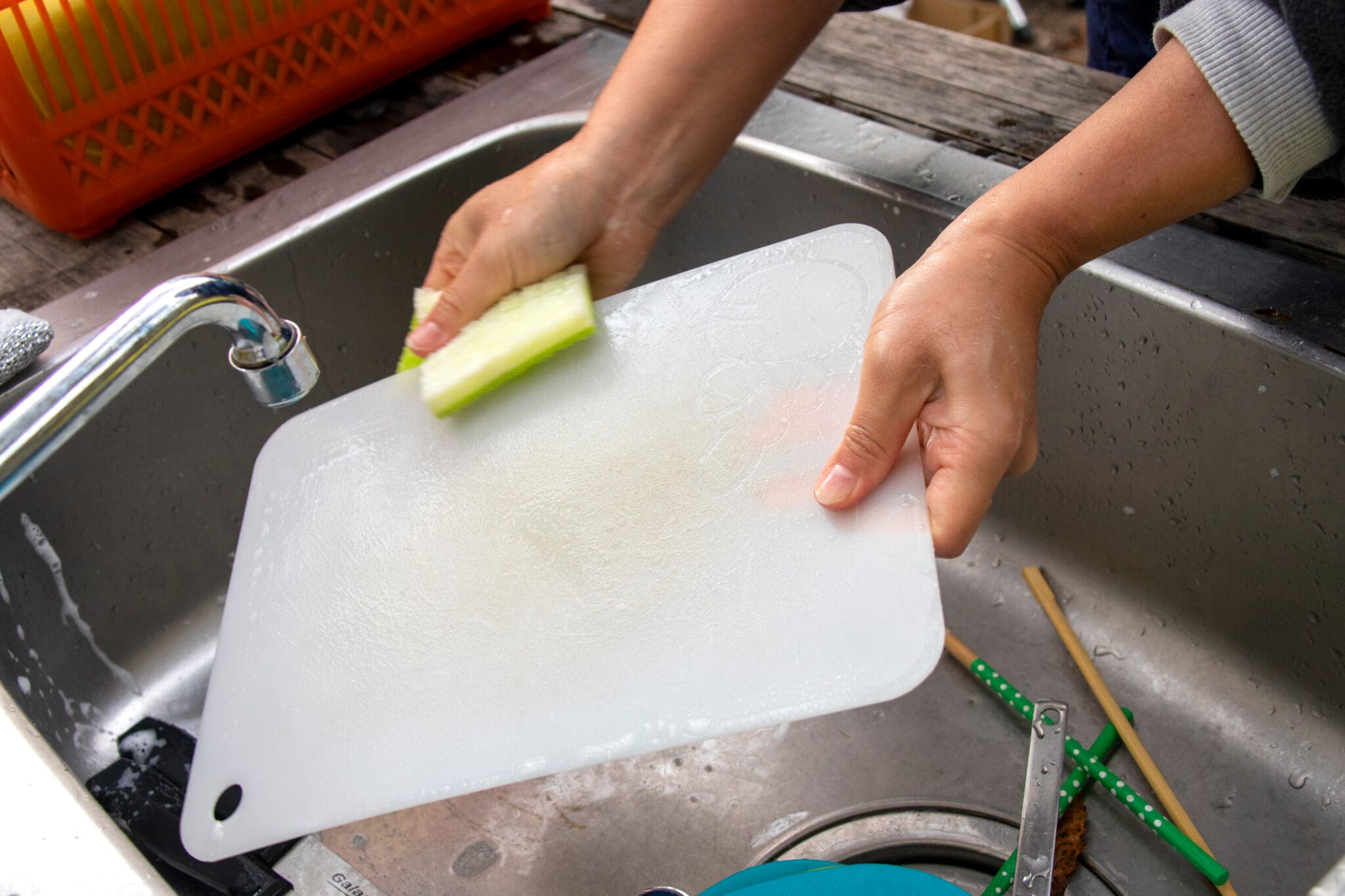
Cleaning boards correctly involves removing contamination and reducing bacteria to a safe level. That requires the right sequence: clean first, then sanitise.
- Scrape and rinse to remove food debris.
- Wash with detergent and hot water to lift grease and dirt.
- Rinse to remove detergent residue.
- Sanitise using a food-safe sanitiser at the correct dilution.
- Allow correct contact time so the sanitiser works properly.
- Air dry where possible, because storing damp boards encourages bacterial growth.
A common mistake is doing a quick rinse, then wiping the board with a cloth. That technique is insufficient, especially after contact with raw meat. Another common mistake is spraying sanitiser on a dirty board. Dirt can shield bacteria, preventing sanitisers from working effectively.
Also, consider how you dry boards. Using the same drying towel repeatedly can recontaminate them. Air drying on a clean rack often reduces that risk.
For consistency, many kitchens build chopping board cleaning into existing service routines. During busy periods, staff may swap to a clean board rather than quickly washing and reusing one. At the end of service, boards should be fully cleaned, sanitised, checked for damage and stored correctly.
When to replace chopping boards
Chopping boards don’t last forever, and damage makes cleaning less reliable. Replace boards when you see:
- Deep grooves you cannot clean effectively
- Warping that prevents stable use and creates cleaning gaps underneath
- Cracks or splits where moisture can sit
- Staining that does not come out after proper cleaning (a sign of material breakdown)
- Rough edges that trap debris
- Persistent odour, especially after fish or raw meat prep
Kitchens should check boards regularly for damage and remove any cracked or deeply gouged boards from use immediately. Many sites also keep a clearly marked “out of use” area so damaged boards don’t accidentally return to service. Planning for regular replacement can help prevent staff feeling pressured to continue using boards that are no longer safe or easy to clean.
At home, chopping board replacement is often overlooked because boards can appear usable long after they have become difficult to clean properly. Investing in durable, easy-to-clean boards and replacing damaged ones promptly can make everyday food preparation safer.
Best chopping boards for commercial kitchens
For most UK commercial kitchens, durable plastic chopping boards remain the standard choice because they are compatible with commercial sanitising routines and are easy to clean and colour code.
When choosing boards, focus on practicality rather than premium materials. Boards should:
- Resist deep scoring
- Stay stable during use
- Dry quickly after cleaning
- Fit the preparation task comfortably
- Withstand frequent washing and sanitising
Wooden boards may still be used in some bakery or low-risk prep areas, but they require more careful maintenance and are less common in mixed-food commercial environments.
It’s also important to buy enough boards for busy service. When staff can’t quickly access the correct board, they might reach for the one of the wrong colour, increasing cross-contamination risk.
Common chopping board mistakes in kitchens
Many chopping board mistakes happen during busy service, especially when systems are unclear or inconsistently followed. Common problems include:
- Using the wrong board during rushed prep
- Reusing boards without properly cleaning and sanitising them
- Using the correct board with contaminated knives or utensils
- Storing boards while still wet
- Allowing damaged boards to remain in use
- Storing raw and ready-to-eat boards too closely together
- Failing to separate allergen preparation properly
- Expecting new or temporary staff to memorise the colour system without clear signage
In most kitchens, the biggest improvements come when teams prioritise consistent routines. Clear storage, proper cleaning procedures, visible colour guides and regular replacement of damaged boards usually prevent most cross-contamination problems before they happen.
Final thoughts
Colour-coded chopping boards help kitchens prevent cross-contamination by turning good hygiene into a fast, repeatable habit.
When you assign boards to specific food types, place them where staff actually do their work, pair them with matching knives and utensils, clean and sanitise them properly, and know when to replace them, you can reduce food poisoning risk and strengthen allergen management at the same time. You also improve speed under pressure, because staff stop guessing and start following a clear system.
To make colour coding work, focus on consistency rather than complexity. Define your colour meanings, post the key somewhere that it’s easy for everyone to see, set up board stations that match your workflow, and train staff to reset hands and tools when switching tasks. Back all this up with strong cleaning routines and timely board replacement.
When you get board control right, you protect customers, reduce food waste, cut complaints, and create a calmer kitchen where “safe” and “fast” can both be true.
Further guidance: