In this article
Portable appliance testing (PAT) is the systematic checking of electrical appliances to make sure they are safe for use in workplaces and public settings.
It usually starts with a visual inspection to look for damage, loose cables or signs of wear. Where needed, electrical tests are carried out with specialised equipment to check earth continuity, insulation resistance and sometimes polarity and functionality. This process helps identify faults before they cause accidents or downtime.
Electrical faults are a leading cause of fires and workplace accidents. A damaged cable, loose connection or worn insulation can allow current to leak, creating a shock hazard or igniting combustible materials.
Besides lowering the risk of injury, regular PAT testing protects equipment, extending the life of appliances by flagging issues before they cause lasting damage. It also shows an employer’s commitment to safety. Insurers often see a documented PAT programme as evidence of risk management, which can support lower premiums.
For duty holders, PAT provides clear records of testing dates, results and remedial actions taken. These records are useful during audits, investigations or insurance claims, as they show that reasonable steps were taken.
In short, PAT testing plays a key role in protecting people, property and organisational reputation.
Legal overview: UK regulations and HSE guidance
In the UK, there is no law that says all portable appliances must be tested every year. The duty instead comes from the Health and Safety at Work etc. Act 1974 (HASAWA), which requires employers to protect the health and safety of employees and others affected by work.
Under HASAWA, the Management of Health and Safety at Work Regulations 1999 require employers to assess and manage workplace risks. The Provision and Use of Work Equipment Regulations 1998 (PUWER) also require that equipment provided for use at work is kept in a safe condition.
PAT testing is not written directly into these laws. However, the Health and Safety Executive (HSE) recognises it as a proven way to maintain electrical safety. The HSE has issued guidance on testing intervals, visual inspections and record-keeping, and advises a risk-based approach. This means the frequency of testing depends on the type of equipment, how it is used and the environment it is in. Appliances on construction sites or in commercial kitchens usually need more frequent checks than equipment in low-risk office settings.
More information can be found on the HSE website under “PAT FAQs” and “Electrical safety”.
Failing to maintain safe equipment can lead to enforcement action under PUWER. Inspectors can issue improvement notices or prosecute for non-compliance. Penalties may include large fines and, in serious cases, imprisonment for those responsible.
Insurers may also refuse a claim if an accident is linked to neglected testing or poor maintenance. So, while PAT testing is not legally compulsory, it sits within a wider framework that places clear duties on employers to manage electrical risks.
Who is responsible for identifying test needs?
Under UK health and safety law, the duty holder – usually the employer, landlord or principal contractor – is responsible for ensuring electrical equipment is safe. They must appoint competent people to carry out PAT or formal inspections. Competence can be shown through formal qualifications such as City & Guilds 2377, relevant experience and a sound understanding of electrical safety regulations.
End users also play an important role. Staff should carry out user checks before each use and report any faults. Facilities or estates teams are typically responsible for coordinating inspection and testing schedules, often working with external PAT service providers. For leased or shared equipment, the duty holder must make clear whether the supplier or the hirer is accountable for PAT.
In smaller organisations, owners may take on PAT themselves, provided they have the right competence and equipment. In larger workplaces, health and safety officers or dedicated facilities teams manage the programme.
Record-keeping and labelling requirements
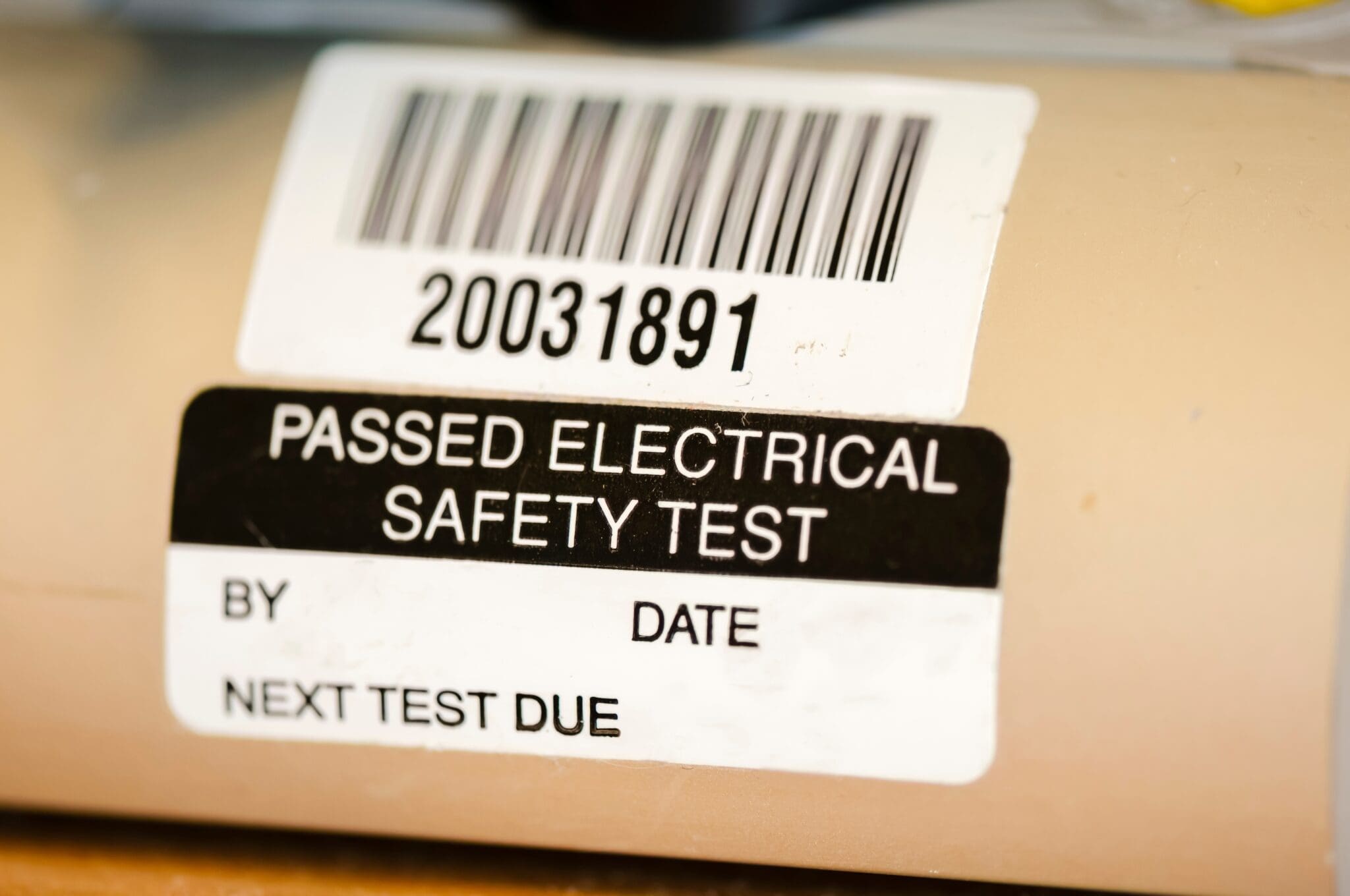
Accurate record-keeping is central to any PAT programme. After each test, the competent person should record the appliance ID, location, test date, next due date and the results for each test carried out. These records prove compliance and create an audit trail for health and safety inspections. Digital systems or spreadsheets are useful here, as they allow quick retrieval and can generate reminders for upcoming tests.
Each appliance should display a durable label showing the test date, the tester’s initials or ID, and the retest due date. Colour-coding can help show the interval – for example, green for annual tests, yellow for six-monthly, red for quarterly. Labels must withstand conditions such as heat in kitchens or moisture outdoors, so they remain legible until the next test.
Where an appliance fails, the record should note the fault and the remedial action taken (e.g., repair or removal from service). Unsafe equipment must be clearly marked with a “do not use” tag so that staff don’t unknowingly use it before it has been repaired or decommissioned.
Classes of electrical appliances explained
Electrical appliances fall into three classes. Each class protects users from electric shock differently, and this directly shapes how PAT testing is carried out.
Class I appliances
Class I appliances rely on basic insulation and an earth connection. Accessible metallic parts could become live if insulation fails, so the earth connection provides a safe route for current to flow. This prevents electric shock.
Examples relevant to workplaces include kettles, desktop computers and some printers. These items often have exposed metal housings or components, so grounding is essential.
PAT testing steps:
- User checks – look for obvious damage such as frayed cables, cracked plugs or scorch marks.
- Visual inspection – a trained person should check for more subtle faults, including poor cable terminations or signs of overheating.
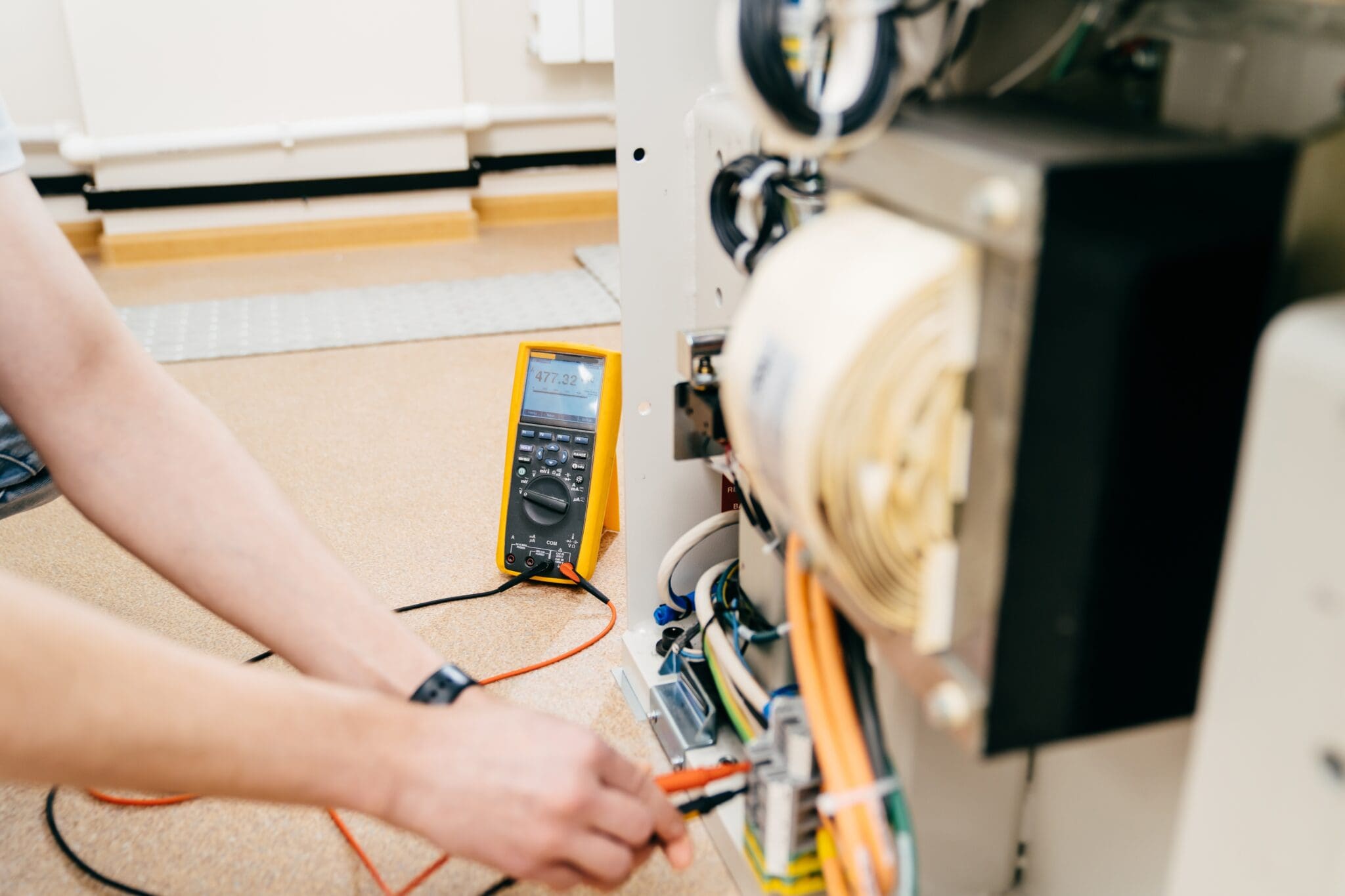
- Electrical tests – earth continuity (below 0.1 Ω) and insulation resistance (minimum 1 MΩ).
- Testing frequency – high-use equipment like kettles in office kitchens may need testing every 6–12 months, while desktop computers in low-risk office environments can often be tested every 2–4 years.
Class II appliances
Class II appliances, marked with a square-within-a-square symbol, do not rely on earth connections. Instead, they use reinforced or double insulation to keep users safe, even if one layer fails.
Office examples include many desk lamps, phone chargers, hairdryers in workplace gyms, and portable power tools. Their design removes the need for an earth conductor, but they must still be inspected carefully for damage.
PAT testing steps:
- User checks – watch for cracked casings, exposed wires or burn marks.
- Visual inspection – focus on cable entry points, plugs and the appliance housing.
- Electrical tests – insulation resistance only (no earth test).
- Testing frequency – depends on risk: hand-held tools in workshops may need testing every 3–6 months, whereas low-risk office devices may only need inspection every 2–4 years.
Class III appliances
Class III appliances operate at extra-low voltage (below 50 V AC or 120 V DC). The low voltage itself reduces shock risk, so these items are inherently safer.
Examples include battery-powered devices such as laptops, phones and tablets. The appliances themselves do not usually require PAT testing, but their chargers often fall into Class I or II and must be tested accordingly.
PAT testing steps:
- User checks – check for damage to charging cables, connectors and power supplies.
- Visual inspection – inspect the integrity of leads and plugs on chargers.
- Electrical tests – typically not required for the appliance itself. Chargers follow Class I or II requirements.
- Testing frequency – appliances may not need testing beyond user checks, but chargers should be tested every 1–2 years, depending on usage.
Low-risk vs. high-risk environments
PAT testing must adapt to the environment’s risk profile.
In low-risk settings – such as offices, classrooms and retail outlets – appliances are unlikely to be damaged by frequent movement or harsh conditions. Annual visual inspections are usually sufficient, with electrical tests carried out every 12–24 months. This minimises disruption and cost while still addressing safety requirements.
In high-risk environments – including construction sites, industrial workshops, catering kitchens and outdoor events – appliances are affected by abrasion, moisture, heat and heavy use. In these cases, testing needs to be more rigorous: visual checks before each use and electrical tests every 3–6 months. A site generator exposed to dust and damp, for example, should be tested quarterly. Catering equipment in constant use may require monthly visual checks and six-monthly tests.
Risk assessments help determine the right approach. They consider factors such as how often the equipment is used, the hazards it faces, access to competent testers and how critical it is to operations. Aligning test intervals with real-world risks keeps people safe while avoiding unnecessary cost or downtime.
Appliances that may not require PAT testing
Not every electrical appliance requires PAT testing. Some equipment falls under other safety regimes or is covered by separate maintenance arrangements.
- Fixed wiring (ring mains) – circuits are tested under fixed electrical installation regulations rather than PAT. Fixed wiring inspections, carried out to BS 7671 standards, ensure that sockets and internal wiring remain safe.
- Life-support medical equipment – devices such as ventilators and dialysis machines follow strict medical maintenance and calibration schedules. These already include electrical safety checks, so separate PAT is unnecessary.
- Appliances under warranty or service agreements – equipment covered by manufacturer service contracts may already undergo regular inspections. Duty holders should confirm that these checks meet all safety requirements and keep full records.
- Company-issued mobiles and tablets – these operate at low voltages and are normally supported by routine IT maintenance and charging procedures. Many organisations exclude them from PAT programmes, provided risks are managed in other ways.
Even where formal testing is not required, simple user checks are valuable. Spotting damaged cables, loose plugs or overheating can flag risks early and alert the responsible person. Clear policies on which items are exempt help organisations focus resources on higher-risk equipment without overlooking potential hazards.
New vs. second-hand equipment
Duty holders must account for differences between new, second-hand and leased items.
New appliances
Equipment from reputable suppliers usually arrives with a certificate of conformity or CE/UKCA marking, demonstrating that it complies with safety standards. These items are assumed safe for first use, but the HSE advises a baseline check before they are put into service. A visual inspection should confirm that plugs, cables and housings are intact, and compliance documentation should be kept on file.
Second-hand or refurbished equipment
Pre-owned items carry more uncertainty, as they may have been repaired or handled roughly. Best practice is to carry out a full PAT inspection – both visual and electrical – before use. Any previous test evidence should be noted, but the appliance should be given a new baseline test date and entered into the organisation’s schedule as if it were new.
Leased equipment
For leased items, the duty holder should confirm whether the lease includes PAT testing. If the leasing company provides certificates, their frequency must align with the organisation’s own risk assessments. Where agreements fall short of HSE and PUWER standards, in-house PAT inspections close the gap.
How often should appliances be tested?
Determining PAT testing intervals should be based on a structured risk assessment. This takes into account the type of appliance, how often it’s used, the environment and manufacturer recommendations.
General guidelines include:
- User checks and routine inspections – users should look over appliances before each use to spot signs of damage or faults. This is especially important for high-risk items like power tools and catering equipment.
- Formal visual inspections – a competent person carries out a closer inspection. Frequencies vary: monthly in high-risk settings, quarterly in moderate-risk environments and annually for low-risk office equipment.
- Full PAT testing – electrical tests (earth continuity, insulation resistance, polarity and functionality) are scheduled according to risk:
- High-risk environments (construction, catering) – every 3–6 months
- Medium-risk environments (schools, workshops) – every 6–12 months
- Low-risk environments (offices, ICT suites) – every 12–24 months
These intervals are just starting points. A duty holder’s risk assessment should override blanket rules where appropriate. For example, a rarely used microwave in a quiet office may not need frequent testing, whereas emergency lighting packs in corridors require regular checks to guarantee they will still work in the event of a power outage.
Visual inspections vs. full electrical tests
PAT has two complementary parts.
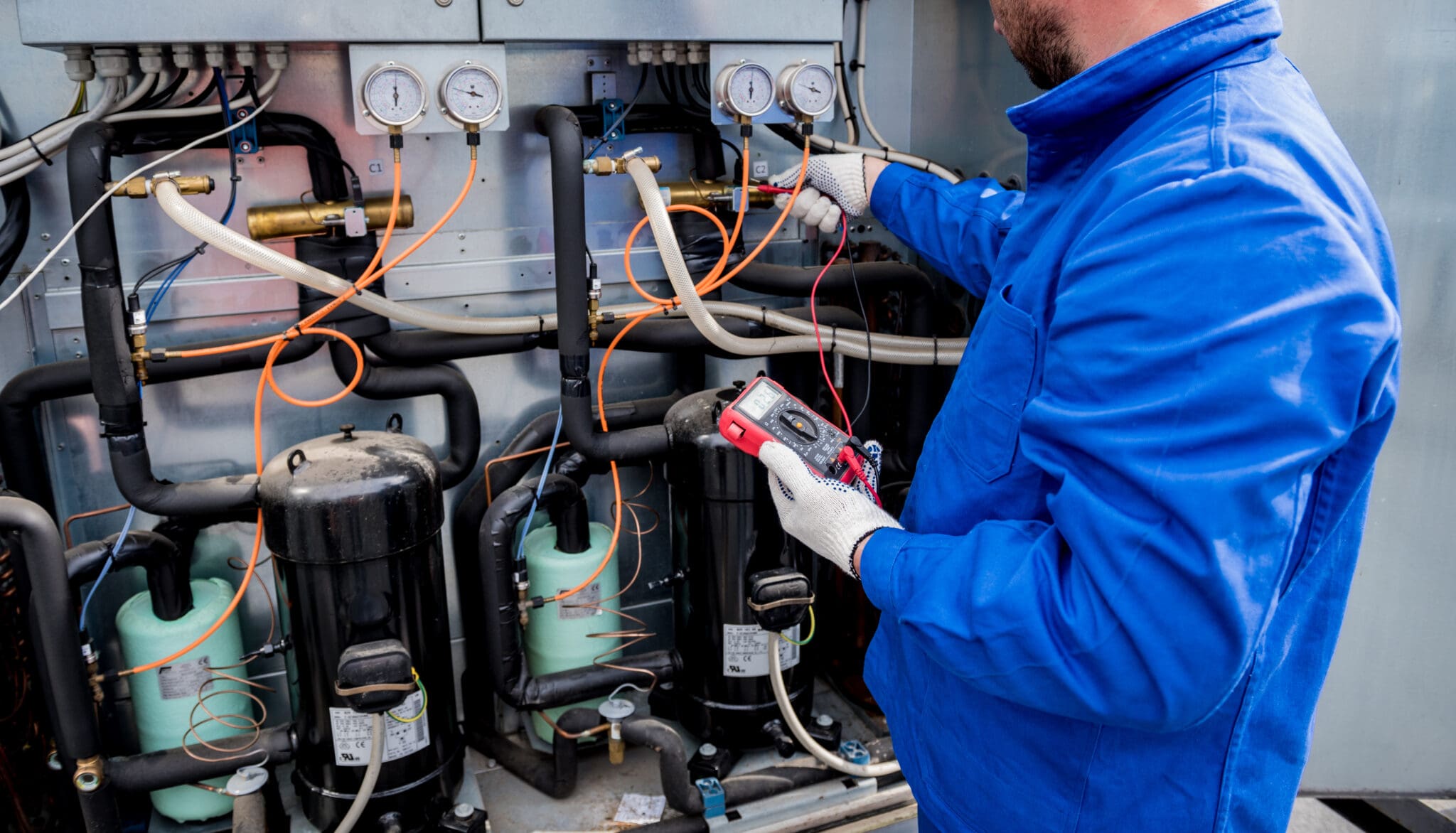
Visual inspections are the frontline defence. They involve checking cables, plugs, enclosures and controls for signs of wear or damage. A competent person verifies that insulation, strain relief and polarity remain intact. These inspections are quick to carry out and often pick up obvious faults that would cause an appliance to fail a test.
Full electrical tests use a PAT tester to confirm deeper integrity. These include:
- Earth continuity – verifies that the protective earth conductor can carry fault current safely
- Insulation resistance – checks that insulation is sound and prevents leakage
- Polarity – ensures live, neutral and earth wires are correctly connected
- Functional checks – confirm switches, indicators and load-bearing parts operate correctly
The balance between inspections and full tests depends on risk. In high-risk settings, a quick visual check should be done before each use, backed up by electrical tests every three months. In lower-risk environments, such as offices, a yearly visual inspection is often enough, with electrical tests carried out less often. This mix of frequent checks and periodic tests keeps people safe without adding unnecessary work.
When to decommission or replace faulty appliances
Decommissioning is the final stage in the PAT lifecycle. If an appliance fails a visual or electrical test, it must be taken out of service immediately. The appliance should be labelled clearly to prevent use, and the fault must be recorded. Where appropriate, a qualified electrician can repair the item – for example, by replacing a plug, cable or damaged component. In this case, the item should be retested to confirm it’s safe to use.
Some faults are just too expensive to fix. Examples include a failed motherboard in a computer or severe casing damage in a power tool. In these cases, the appliance should be disposed of responsibly under the Waste Electrical and Electronic Equipment (WEEE) Regulations. Any replacement should meet the same safety standards as the original and be added to the PAT schedule with a baseline test.
Clear decommissioning procedures prevent unsafe appliances from being stored away and mistakenly returned to service.