In this article
Maintaining a well-stocked and regularly inspected first aid kit is a vital safeguard in any environment where accidents or sudden illness may occur. A comprehensive kit, kept up to date and organised, can mean the difference between prompt, effective treatment and delayed intervention that exacerbates injury.
In the UK, accidents are a common occurrence not only in workplaces but also in domestic settings. The Health and Safety Executive (HSE) reported over 600,000 self-reported non-fatal injuries at work in 2023/24, with more than 4 million working days lost as a result. Meanwhile, NHS data shows that thousands of people are treated each year for injuries sustained at home, from kitchen burns and falls to DIY mishaps. These figures highlight the importance of having accessible, well-maintained first aid kits wherever people live and work – preparedness isn’t just a professional responsibility, but a personal one.
This guide explains the importance of routine maintenance of first aid kits, outlines UK regulations and standards, and provides step-by-step advice on inspection schedules, restocking procedures, and recordkeeping. Implementing these practices ensures readiness and supports the well-being of everyone in your workplace or home.
Why First Aid Kit Maintenance Matters
First aid kits are not static; their contents can deteriorate, expire, or become inadequate for evolving risks. Over time, sterile dressings may lose their integrity, adhesive tapes can dry out, and antiseptic wipes or solutions may degrade or lose effectiveness. If an emergency arises and the necessary items are missing or unusable, critical minutes are lost in locating replacements. Regular maintenance reduces this risk, ensuring that when an injury or sudden illness occurs (be it a cut, burn, allergic reaction, or cardiac arrest), responders have immediate access to functional, appropriate supplies.
Beyond the practical benefits, a visible commitment to first aid preparedness bolsters organisational culture. Staff and household members gain confidence knowing that potential emergencies have been anticipated and that appropriate measures are in place to respond effectively. In workplaces, well-maintained kits demonstrate compliance and conscientious safety management, reinforcing trust among employees, visitors, and inspectors. In domestic settings – particularly those caring for elderly, vulnerable, or young children – routine checks offer reassurance that caregivers are ready to act swiftly.
Proactive maintenance also reduces waste and avoids unnecessary expenditure. By tracking expiry dates and replacing only what is needed, organisations and individuals avoid the cost of wholesale kit replacement. Finally, systematic upkeep underpins training and drills, allowing appointed first-aiders to practise with the exact equipment they will use in real incidents, thereby improving familiarity and response times.
Legal Requirements and Standards in the UK
In the UK, employers must provide “adequate and appropriate” first aid arrangements under Regulation 3 of the Health and Safety (First-Aid) Regulations 1981. This includes suitable first aid equipment, facilities, and personnel trained to administer first aid. The Health and Safety Executive (HSE) provides comprehensive advice on best practice in its first aid guidance and recommends that employers conduct a first aid needs assessment to determine the appropriate contents of their kits and the number of trained responders required.
For most low-risk workplaces, such as offices, the HSE suggests a minimum of one stocked first aid kit, with additional kits for higher-risk areas or large sites. British Standard BS 8599-1:2019 specifies the minimum contents for workplace first aid kits and recommends guidance on stock levels, storage, and maintenance. Many organisations choose to purchase BS 8599-1 compliant kits or tailor their own packs to match the standard’s recommendations, thereby demonstrating alignment with recognised norms.
Although there is no statutory obligation to follow BS 8599-1, adherence offers legal and practical advantages: it provides a clear benchmark for inspections, helps justify expenditure on supplies, and supports insurers’ expectations. Domestic settings, although not legally bound by workplace regulations, benefit equally from following these standards and adapting kit size and contents based on household composition, presence of children or elderly residents, and any specific health conditions.
Essential Contents of a First Aid Kit
A first aid kit’s contents should reflect the types of injuries most likely to occur in the given environment. BS 8599-1 provides two workplace kit categories: Type A for low-risk settings and Type B for higher-risk premises, each with a defined list of items and quantities. Core articles include:
- Sterile dressings and plasters of various sizes to manage cuts, grazes, and lacerations.
- Sterile eye pads and eye wash sachets for ocular injuries and contaminants.
- Bandages (triangular and conforming) to support fractures, apply pressure, or secure dressings.
- Disposable gloves and aprons to protect responders and prevent cross-contamination.
- Adhesive tape, safety pins, and scissors for securing dressings and cutting clothing away from wounds.
- Resuscitation face shield or pocket mask to provide barrier protection during CPR.
- Burn dressings or burn gel sachets to soothe and protect thermal injuries.
- Foil blanket to prevent hypothermia in shock victims or those with exposure injuries.
- First aid guidance leaflet to support decision-making, especially for less experienced responders.
Organisations caring for individuals with specific medical needs should supplement standard first aid kits with additional items tailored to those risks. Examples include adrenaline auto-injectors for severe allergic reactions, glucose gel for diabetic emergencies, or malaria treatment kits in travel clinics. However, these items should only be included where clinically justified, securely stored, and accessible solely to trained personnel or the individuals who have a prescription to use them. They are not appropriate for general access and must be managed in accordance with medical guidance and safeguarding protocols.
Conducting a review of specific risks, such as chemical exposure, sports-related injuries, or remote working, will guide the addition of specialised items.
Standard vs. Specialised Kits for Different Settings
While standard kits cover common injuries, certain environments demand tailored supplies. In construction sites, where hand injuries and fractures are more frequent, kits often include larger trauma dressings, haemostatic gauze, and splints. Hospitality venues might prioritise burn treatments and use high-visibility signage to clearly direct patrons to designated first aid stations. In schools and nurseries, child-friendly items, such as junior plasters, cool packs, and age-appropriate guidance, ensure effective care for younger users.
Healthcare settings require more extensive kits, including sharps disposal containers, antiseptic wipes, and oxygen resuscitation equipment, that are aligned with clinical governance protocols. Community centres or sports clubs may combine first aid kits with defibrillator cabinets, eyewash stations, and epinephrine auto-injectors stored in secure, temperature-controlled units.
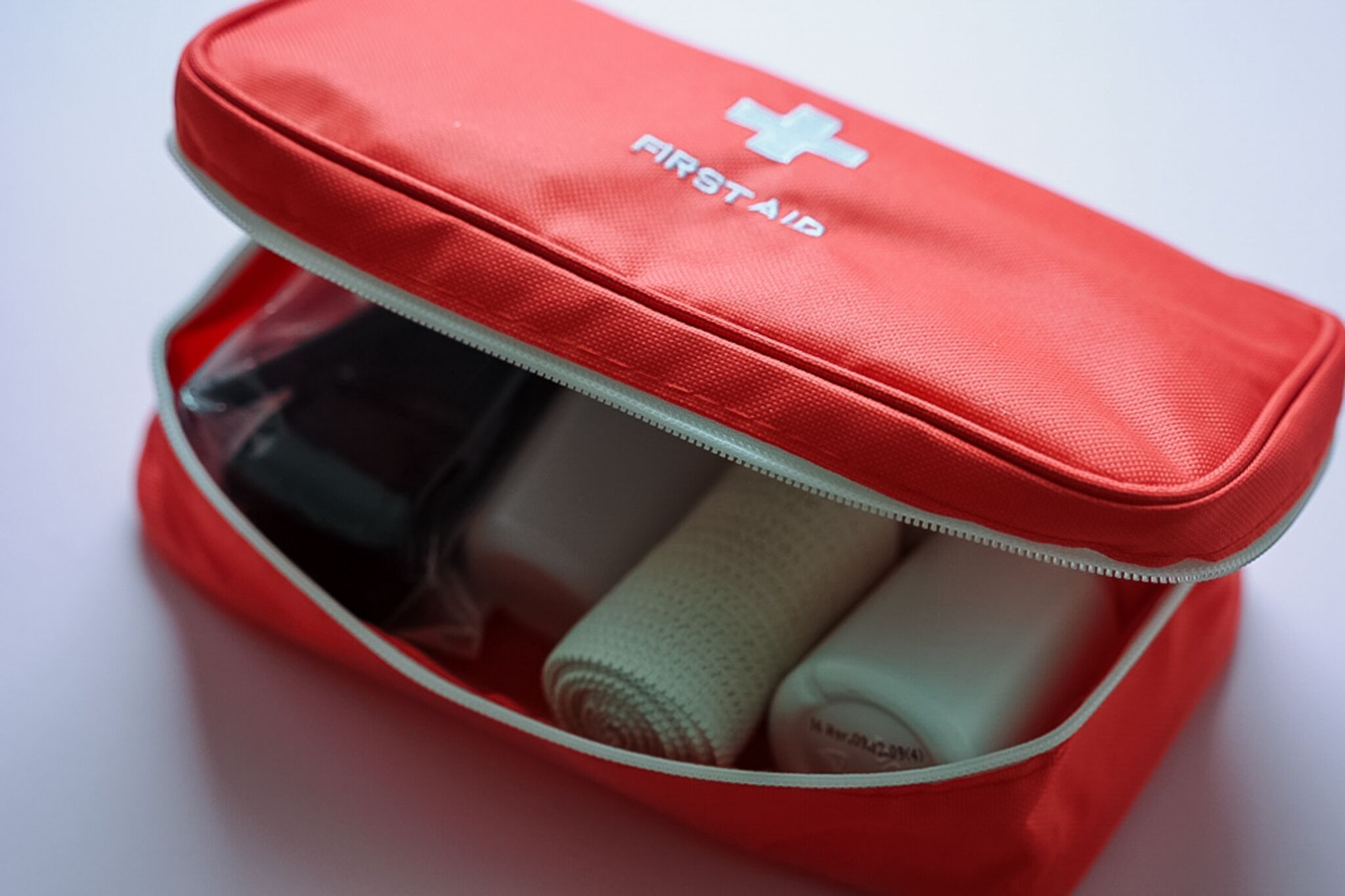
In domestic environments, first aid kits should reflect everyday risks (such as minor cuts, burns, sprains, and allergic reactions). A well-organised home kit might include sterile dressings, adhesive plasters, antiseptic wipes, tweezers, and a digital thermometer, stored in a clearly labelled container that’s easy to access but out of reach of young children. Households with specific health needs, such as severe allergies or chronic conditions, may require additional items, which should be stored separately and securely.
Customising kits also extends to portability and accessibility. Vehicles used for fieldwork or home visits benefit from compact, lightweight packs that can be rapidly deployed. Conversely, fixed locations might opt for wall-mounted cabinets with transparent fronts and lockable mechanisms to prevent tampering while ensuring visibility.
Creating and Using a Maintenance Checklist
Using a structured checklist improves the efficiency of first aid kit inspections and supports consistent outcomes. A well-designed checklist lists every required item, its ideal quantity, storage location, and expiry date. During each inspection, the appointed first aider or safety officer verifies the presence and condition of each component, ticks them off, and notes any replacements needed.
To create an effective checklist:
- Add a reference to relevant standards such as BS 8599-1 or HSE’s guidelines to compile the definitive list of contents.
- Include item codes or descriptions that match supplier catalogs, simplifying restocking.
- Designate columns for “Quantity on hand,” “Expiry date,” and “Action required.”
- Incorporate dates and signatures to document accountability and track inspection frequency.
- Print laminated copies and store them alongside kits, with digital versions archived centrally for audit purposes.
By using the same checklist across all locations, organisations can collate data on kit maintenance performance, identify recurrent shortages, and ensure that inspections never rely solely on memory.
While workplaces often require formal documentation and centralised oversight, households benefit from adopting simplified versions of the same checklist principles. A home first aid checklist can be tailored to reflect common domestic risks, such as kitchen burns, minor cuts, or allergic reactions, and should still include expiry dates, quantities, and a regular review schedule. Whether managed by a safety officer or a family member, using a consistent format across environments promotes accountability, reduces the chance of missing critical items, and ensures that kits are ready when needed most.
Inspection Frequency and Restocking Procedures
Inspection frequency should align with the first aid needs assessment and the environment’s risk profile. For most workplaces, monthly inspections are recommended, whereas high-risk areas or first aid kits in intensive use may warrant weekly checks. In domestic or low-traffic settings, quarterly reviews coupled with annual stocktakes may suffice.
Restocking protocols must allow swift replenishment. Organisations often appoint designated suppliers or maintain an internal pool of spare items. When an inspection identifies missing or expired goods, the checker records the requirement and submits a restock request – either via an electronic procurement system or a simple email to the responsible department. Lead times should be monitored to ensure that items are restocked before kits fall below minimum levels.
Automated reminders, which can be integrated with calendar tools or facilities-management software, can prompt inspections and restock orders. Colour-coded labels on kit shelves, indicating “Inspect on” dates, also provide visual cues to responders, preventing unwitting use of kits past their review dates.
Proper Storage, Labelling, and Organisation
The location and organisation of first aid kits influence response times and user confidence. Kits should be positioned in visible, easily accessible areas, i.e., near workstations, communal spaces, or signage-marked points. Wall-mounted cabinets at eye level, opened by pull handles rather than locks, ensure rapid access while protecting contents from dust and damp.
Label each kit clearly with:
- A distinctive first aid symbol (the white cross on green background) compliant with ISO 7010.
- Identification details such as kit type (e.g., “Type A Office Kit”), location, and date of last inspection.
- Emergency contact numbers for appointed first aiders and local emergency services.
Inside the kit, use compartments or internal trays to segregate item types (e.g., dressings in one section, and tools, such as scissors and tweezers, in another), reducing search times during stressful situations.
In homes, first aid kits should be stored in a dry, easily accessible location known to all household members, such as a kitchen cupboard, hallway cabinet, or utility drawer. While wall-mounted units may suit larger households, compact containers with labelled compartments are often sufficient. Clear labelling remains essential: include a visible first aid symbol, a list of contents, and the date of last review. Store any specialised supplies, such as allergy treatments or asthma inhalers, in separate, secure containers.
Transparent pouches with item names printed reinforce clarity, while removable pockets allow responders to carry essentials to the casualty without removing the entire kit.
Managing Expired, Damaged, or Missing Items
Expired or damaged items must be removed immediately upon detection. Common culprits include antiseptic wipes that have dried out, crepe bandages that have become brittle, and dressings with dried or ineffective adhesive. A strict “first out, first in” (FIFO) rotation prevents older stock from languishing unnoticed at the back of a drawer.
Where medications are required for individual use and stored separately from the first aid kit, their disposal must follow local pharmacy or environmental health requirements. Unused dressings and gloves can be discarded as clinical waste if contaminated, or in general waste if unused and non-hazardous. Damaged or missing items identified during inspections should trigger prompt replacement requests, with follow-up to confirm completion.
To streamline traceability, record each removal or replacement on the maintenance checklist, noting the reason and replacement dates. Trends of recurrent shortages, such as frequent use of burn dressings, may indicate the need to adjust kit contents or provide additional training on incident prevention.
Role and Responsibilities of the First Aider
An appointed person is designated to take charge of first aid arrangements when a trained first aider is not required. Their duties may include calling emergency services, maintaining first aid kits, and keeping records, but they are not trained to provide first aid treatment. In contrast, a first aider bears responsibilities that extend beyond immediate care. They are qualified to administer first aid, inspect and restock kits, log incidents, and ensure that first aid provisions remain operational and ready for use. According to HSE guidance, employers should have adequate coverage of trained first aiders based on workforce size and risk profile, and ensure that their roles are clearly defined in job descriptions.
First aiders receive training compliant with the HSE’s First Aid at Work standards, typically a three-day certificate course, and they are required to attend refresher sessions every three years. Regarding first aid kits, their responsibilities include:
- Regular inspection of all first aid kits and associated equipment.
- Completing maintenance checklists and escalating shortages or faults.
- Recording incidents in the first aid logbook, including details of treatment and any referrals to medical services.
- Advising management on enhancements to first aid provision, e.g., additional kits or training needs.
- Ensuring kits are stocked to relevant standards, such as BS 8599-1 or HSE guidance.
- Monitoring expiry dates and rotating stock (using FIFO).
- Checking kit integrity, ensuring containers are clean, dry, and undamaged.
- Verifying accessibility, confirming kits are in visible, unobstructed locations with appropriate signage.
- Labelling kits clearly, including kit type, inspection date, and emergency contact details.
- Documenting inspections, including date, findings, and actions taken.
- Coordinating restock requests, either via procurement systems or designated contacts.
- Ensuring specialised kits (e.g., burns, travel, paediatric) are maintained separately and appropriately.
By integrating kit maintenance into the first aider’s remit, organisations ensure that readiness is not overlooked and that first aid forms an integral part of overall health and safety management.
In domestic environments where no trained first aider is present, a household member should take informal responsibility for checking the kit regularly.
Documenting and Reporting Inspections
Comprehensive documentation underpins accountability and continuous improvement. Each inspection should be recorded in a central log, either paper-based or digital, capturing the dates, findings, and actions taken. First aid logbooks, separate from maintenance checklists, track every instance of kit usage, noting patient details (where appropriate), injury type, and outcome. This dual-record approach provides insights into incident patterns, guiding both prevention and resource allocation.
Reporting deficiencies or trends, such as repeated use of eye wash sachets, enables proactive measures, from targeted training to additional procurement. Organisations may integrate inspection and incident data into health and safety dashboards, which are reviewed periodically by management or safety committees. These reports can form part of annual health and safety reviews, demonstrating due diligence to regulators and insurers.
In the home, formal documentation may not be necessary, but it’s still helpful to note when the kit is used or restocked. A simple checklist or notebook can support household readiness and highlight frequently used items that may need replenishing.
Training Staff and Promoting Awareness
While first aiders carry out the technical maintenance tasks, all staff benefit from basic awareness of first aid provisions. Short briefing sessions or inductions should cover kit locations, how to summon a first aider, and basic content knowledge, such as recognising a resuscitation shield or using a foil blanket. Regular reminders, via noticeboards, email newsletters, or toolbox talks, reinforce familiarity and destigmatise first aid interventions.
Simulation drills, where staff locate kits and practise retrieving specific items under time pressure, enhance readiness. These exercises can reveal access issues, such as locked cupboards or missing signage, and help refine storage practices to ensure swift access during real emergencies. Engaging non-clinical teams in these activities fosters collective responsibility for safety.
While formal training isn’t required at home, learning basic first aid can make a real difference in emergencies. Households are encouraged to consider certified first aid courses to build confidence and preparedness.

Supplementary Equipment (AEDs, Eyewash Stations, etc.)
First aid kit maintenance should be included in a broader emergency equipment programme that ensures all life-saving resources are functional, accessible, and compliant. Automated external defibrillators (AEDs) require monthly battery and pad checks, with consumables replaced immediately after use or upon expiry. Eyewash stations, commonly found in laboratories and industrial settings, must be flushed weekly to prevent contamination with microbes. Sterile solutions should be monitored for expiry dates and replaced as needed. Oxygen cylinders used for resuscitation require regular pressure checks and hydrostatic testing at intervals defined by the manufacturer or regulatory body.
Other items may include burn kits, trauma packs, spill response kits, and emergency signage, each with its own inspection criteria. Integrating these components into the same maintenance cycle as first aid kits streamlines responsibilities, reduces oversight gaps, and supports a proactive safety culture. A centralised checklist or digital tracking system can encompass AED battery status, eyewash station integrity, oxygen cylinder replacement, and kit restocking, ensuring that all frontline emergency equipment is serviceable when needed.
Useful Resources and Digital Management Tools
Organisations can leverage a range of resources and digital platforms to support first aid kit maintenance:
- HSE’s First Aid Guidance provides training requirements and case studies.
- British Standard BS 8599-1 offers detailed kit content specifications tailored to different environments.
- British Red Cross Guidance outlines recommended contents and usage scenarios for various settings.
- St John Ambulance Advice supports first aid arrangements in community and workplace contexts.
- NHS and Resuscitation Council UK resources provide guidance on emergency equipment, such as AEDs and oxygen supplies, helping align kit maintenance with broader clinical standards.
- Training providers may offer refresher modules or downloadable inspection guides as part of their certification packages.
- QR-coded inventory systems allow quick scanning of kits to verify contents and log inspections efficiently.
- Digital maintenance platforms such as dedicated facilities-management software or mobile apps enable real-time tracking of inspections, automated expiry alerts, and centralised reporting.
Cloud-based solutions allow remote monitoring across multiple sites, generate compliance reports for auditors, and integrate with procurement systems for seamless restocking. By harnessing these tools alongside established best practices, organisations reduce administrative burden, ensure transparency, and maintain the highest standards of readiness.
In domestic settings, formal platforms may not be necessary, but households can still benefit from simple tools, such as printed checklists, calendar reminders, or mobile apps to track expiry dates and restocking needs. Free resources from the British Red Cross, NHS, and St John Ambulance offer practical guidance on kit contents and basic first aid, helping families stay prepared without requiring formal systems.
Conclusion
Maintaining first aid kits is a continuous commitment that underpins swift and effective response to injuries and medical emergencies. By adhering to UK regulations, following recognised standards, implementing systematic checklists, and embracing training and digital solutions, workplaces and households can safeguard their people, limit harm, and demonstrate a proactive approach to health and safety.
This commitment goes beyond compliance – it reflects a culture of care, preparedness, and accountability. Whether in a high-risk industrial site or a family home, well-maintained kits ensure that help is close when it’s needed most. Integrating kit maintenance into broader emergency planning, engaging staff or household members in awareness activities, and leveraging trusted resources all contribute to resilience and readiness.
Ultimately, first aid kits are not just boxes of supplies – they are frontline tools of protection. Their upkeep signals an organisation’s or household’s dedication to well-being, and their presence can turn a moment of crisis into a moment of control. With all aspects of first aid kit management covered, the path forward is clear: maintain consistently, educate continuously, and respond confidently.