In this article
Freezer burn is one of those problems that feels like a mystery until you know what you’re looking at. You pull out a chicken breast, and it has chalky white patches. You open a bag of chips, and they smell a bit stale. You cut into a frozen loaf, and the outside looks dry and grey. It doesn’t look like a health hazard, but it certainly doesn’t look appetising.
Freezer burn can ruin food’s texture and flavour, and it can push people to throw away items that are often still safe to eat. For households, that means wasted money and wasted time. For food businesses, it can mean customer complaints, poor consistency and margins that erode one freezer-burnt portion at a time.
The good news is that freezer burn is largely preventable. When you understand why it happens, you can fix it with simple habits: better packaging, smaller portions, faster freezing, stable freezer temperatures, and a basic stock rotation routine.
This guide explains what freezer burn is, how to spot it, why it happens and how to prevent it in both home and commercial settings. It also explains what you can do when you find it.
What is freezer burn?
Freezer burn damages frozen food when air reaches the surface. In simple terms, moisture leaves the surface of the food and the surface dries out. At the same time, oxygen reacts with fats and pigments, which can cause off flavours, colour changes and a “stale freezer” smell.
Think of it as two processes working together:
- Dehydration – the food loses water from its surface, which makes it dry and tough.
- Oxidation – oxygen reacts with fats and other compounds, changing the flavour and aroma.
Freezing slows chemical changes, but it doesn’t stop them entirely. Therefore, the longer food sits in the freezer and the more air that touches it, the more opportunity freezer burn has to develop.
Freezer burn shows up most clearly on foods with a large surface area and not much protective fat. That includes lean meats, fish fillets, sliced bread, frozen berries and pre-cooked foods you cooled and froze without a tight seal. However, it can affect almost anything if the packaging lets air in.
It also helps to separate freezer burn from food that has thawed and refrozen due to temperature problems. Food that thaws and refreezes can develop large ice crystals and a mushy texture, but importantly, freezer burn can happen without thawing. That said, temperature swings often worsen freezer burn because they move moisture around inside the freezer.
Is it safe to eat food with freezer burn?
In most cases, freezer burn affects food quality rather than safety. If food stays frozen and you handle it safely before freezing, freezer-burnt food is usually safe to eat. It may taste bland, dry or slightly “off”, but it’s not necessarily dangerous.
Safety depends on the same basics that apply to all frozen food:
- You froze it before it spoiled.
- You kept it frozen at a safe, stable temperature.
- You thawed it safely, when needed.
- You cooked it properly.
However, you still need to use your senses and common checks. Discard food if you notice signs of spoilage or poor temperature control, such as:
- A sour, rotten or strongly unpleasant smell after thawing
- Slimy texture on raw meat or fish
- Signs the food has thawed fully and refrozen, such as a solid block with leaked juices frozen around it
- Packaging that has burst, leaked or looks heavily damaged
- Unknown history (particularly relevant in shared freezers)
Customer expectations and brand protection are key considerations in food businesses. Even if a freezer-burnt item is safe, it might not be acceptable to serve. A safe yet poor-quality dish can still lead to a complaint, bad review or a request for a refund. Therefore, businesses often set stricter quality rules than households.
A useful middle ground is to separate “safe to use for staff meals or recipes” from “safe to serve to customers”. That approach reduces waste while protecting standards and reputation.
What freezer-burnt food looks like
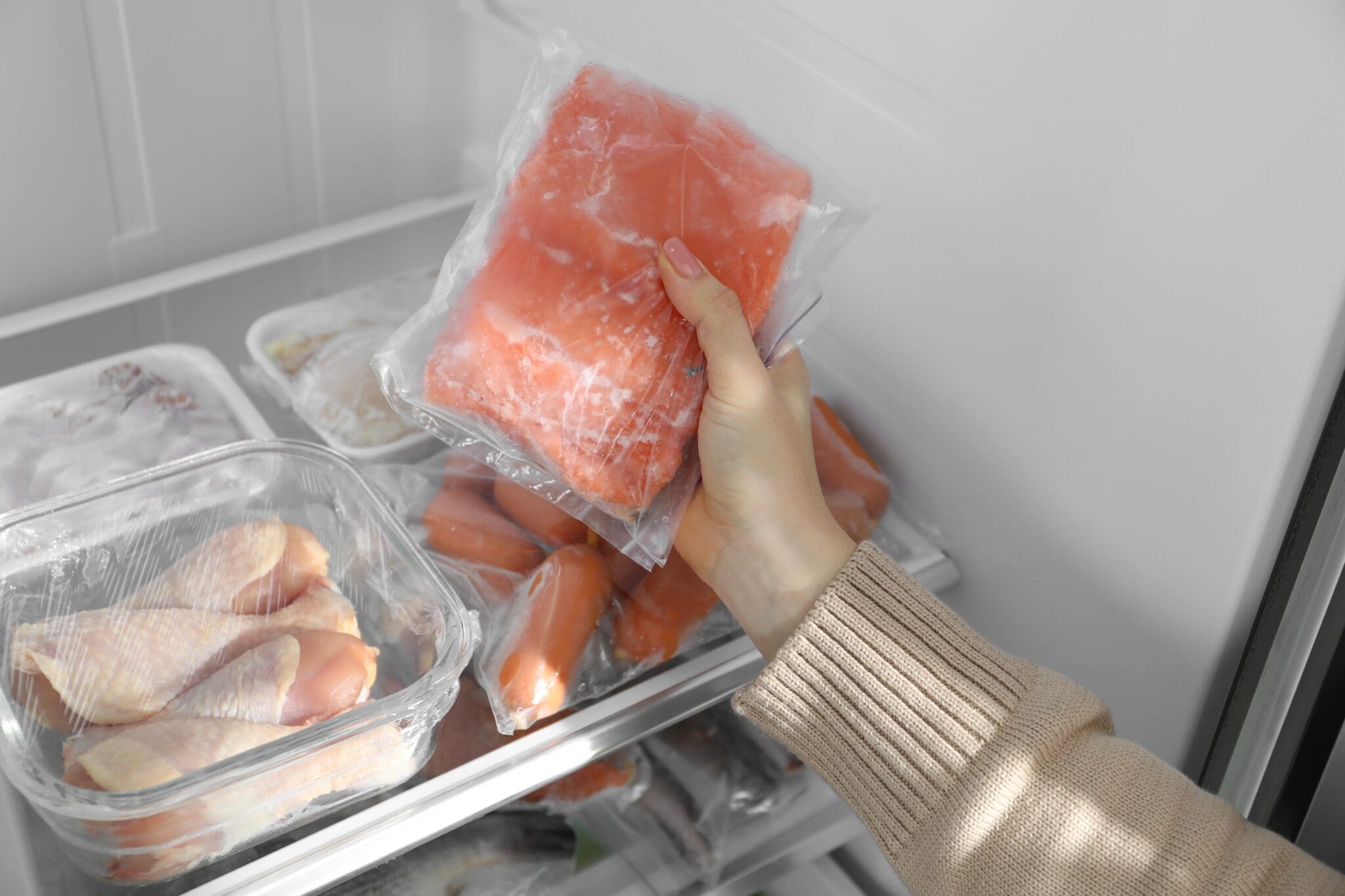
People often search for pictures because freezer burn can look like several different problems. While images help, you can learn to spot it quickly with a few common visual cues.
Typical freezer burn signs include:
- Dry, pale or grey patches on meat and fish
- White, chalky spots or streaks on the surface
- Shrunken or leathery edges, especially on steaks and chicken breasts
- Frost inside the packaging, especially if the food looks dry underneath
- Ice crystals on the food surface, not just loose ice in the bag
- Dull colour, for example, berries that look faded rather than vibrant
Texture changes matter too. When you thaw freezer-burnt food, you may notice:
- Dry or tough surface layers
- Crumbly or brittle texture in baked items
- Grainy texture in some sauces or dairy-rich dishes
- A watery drip loss as the damaged surface releases moisture
Smell can be a strong indicator of freezer burn. Freezer burn itself can create a stale, cardboard-like aroma, especially on fatty foods. That smell comes from the oxidation of fats and flavour compounds. It’s not always “bad” in the spoilage sense, but it can make food less enjoyable and limits what you can serve paying customers.
In food businesses, staff should be trained to spot freezer burn during picking and portioning. It is much easier to remove a slightly damaged surface before cooking than to discover it in a finished dish. It might be helpful to put up a sign in the kitchen with a visual guide to freezer burn to keep it front of mind.
What causes freezer burn in food?
Freezer burn happens when air reaches the food surface and the freezer environment pulls moisture out. Several common causes create that perfect setup.
Air exposure from poor packaging (the biggest driver) – if packaging is not airtight, air moves in and out. Each movement can pull moisture from the food surface. This is more likely with thin supermarket film wrap, bags that are only loosely closed and damaged seals.
Headspace in containers and bags – even if the bag is sealed, a big pocket of air inside gives oxygen room to work. That headspace also allows moisture to migrate and form ice crystals elsewhere.
Temperature fluctuations – a freezer that runs warm, or a door that opens constantly, encourages tiny melt and refreeze cycles on the food surface. Those cycles move moisture around, allowing ice crystals to form in the packaging while the food dries out. Frost-free freezers can also contribute because they use cycles that reduce frost, which shifts moisture within the freezer.
Slow freezing – when food freezes slowly, larger ice crystals form, which can damage cell structure and increase drip loss when you thaw. That does not always cause freezer burn directly, but it often makes the food surface more vulnerable and dry.
Long storage time – even perfect packaging cannot pause time. Over months, tiny leaks, permeable materials and repeated handling can let small amounts of air in. This makes freezer burn more likely, especially in foods with lower fat content, which dry out more easily.
Repeated opening and handling – every time you open a bag and remove a portion, you let warm air in. Then the freezer cools it again, which can create frost. If you do this repeatedly, you slowly build a freezer burn environment. That is why “family bags” of food often have freezer burn around the edges.
Overcrowded freezers with poor airflow – airflow helps the freezer maintain a stable temperature. When you cram it full, cold air cannot circulate properly. Some areas run warmer than others, and that increases moisture movement and temperature swing.
Defrosting problems and ice build-up – in a non-frost-free freezer, heavy ice build-up can affect temperature and airflow. In a frost-free freezer, blocked vents can also cause uneven cooling. Both situations can lead to localised burn.
Importantly, when you control air exposure and temperature stability, you remove the main conditions that cause freezer burn.
How to prevent freezer burn
Prevention is much easier than rescue. A few simple habits can reduce freezer burn dramatically.
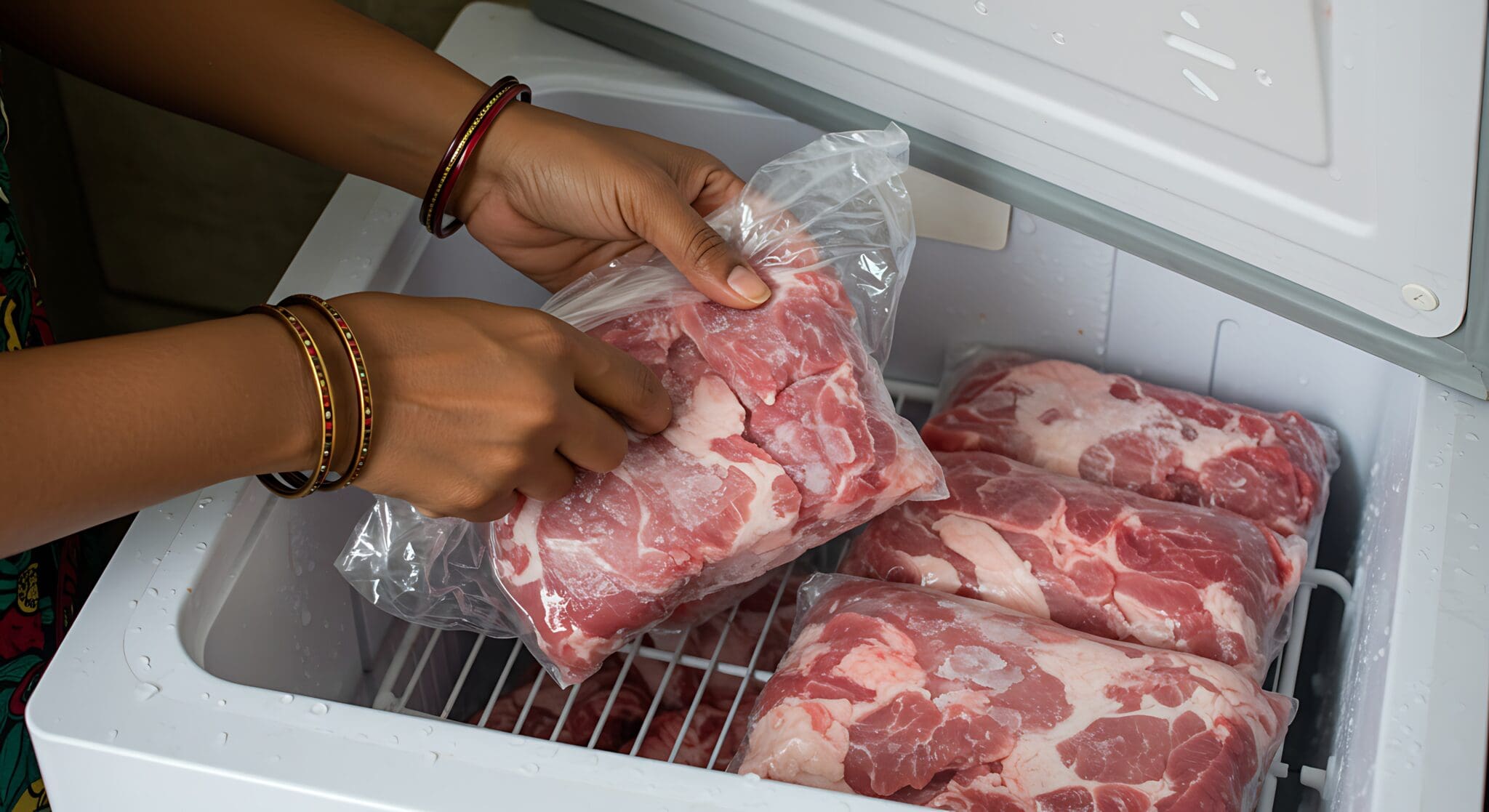
1. Remove air – the first prevention step is to remove as much air as you can from packaging. Press air out of freezer bags, use the water-displacement method for zipper bags, and wrap food tightly with minimal gaps. Fill containers to reduce headspace, while still leaving room for expansion where needed.
2. Use freezer-suitable packaging – not all packaging performs well at freezer temperatures. Use freezer bags with stronger seals that don’t tear. Use thicker wraps or double wrap items. Use airtight containers that are designed for freezing. If you batch-freeze often, invest in packaging you trust.
3. Freeze quickly – quick freezing reduces the size of ice crystals and protects texture. Spread items out on a tray so air can circulate around them. Avoid stacking warm containers, as this slows freezing. Businesses should blast-freeze food or arrange stock so that cold air reaches all sides.
4. Keep the freezer cold and stable – aim for a steady −18°C in most settings. Stability matters as much as the number. Avoid frequent long door openings. Check door seals. Do not overload vents. Chest freezers often hold temperature better because cold air falls rather than spills out when you open the lid.
5. Portion before freezing – portioning means you don’t have to repeatedly open the freezer to go through large packs. It also reduces thaw waste because you can defrost only what you need. Portioning is one of the easiest ways to reduce freezer burn on bulk items.
6. Label and rotate – stock rotation prevents food from being stored for a long time. Label packages with the date and the food name. Use a “first in, first out” system. Put older items in the front. This is essential in food businesses.
7. Protect fragile foods – bread, cakes and berries dry out quickly if exposed. For these, double wrap or use a container inside a bag. The extra layer makes a noticeable difference.
8. Avoid part thawing – do not leave food out while you decide what to cook. Do not let bags sit on the counter and then go back in. Those small temperature swings can increase frost and moisture movement.
If you combine these habits, you will prevent most freezer burn without needing specialist equipment.
Best packaging for freezing food
Your choice of food packaging determines how much air reaches the food and how well the package survives freezer conditions.
A good package does three jobs:
- Blocks air and moisture exchange
- Prevents physical damage and crushing
- Limits freezer odours from transferring into food
Here are practical options and where they shine.
Freezer bags – good freezer bags work well for most foods because they are flexible and easy to squeeze air out of.
For best results:
- Choose bags that are labelled “freezer-safe”.
- Fill them so you can flatten the contents.
- Press out air before sealing.
- Freeze flat for faster freezing and easy stacking.
Cling film + foil – cling film alone can be too thin and can let air in over time. However, combining cling film with foil wrap works well for awkward shapes like joints and cakes. The film clings tightly to the surface, while foil adds a stronger barrier and reduces tearing.
Freezer paper – freezer paper can work well for meat because it wraps tightly and protects the surface. However, it requires good wrapping technique and tight seals.
Rigid airtight containers – containers work well for soups, sauces, stews and cooked dishes. They also prevent food from being crushed. However, headspace matters, so choose a container that fits the portion. If you freeze a small portion in a large container, you trap a lot of air.
Vacuum bags – vacuum packaging provides strong protection by removing air. It can reduce freezer burn significantly, especially for meat and fish.
Reusable silicone bags – these can work well if they seal properly and you can remove air. They are often bulkier than freezer bags, so they can reduce freezer space efficiency. Still, they can suit households trying to reduce waste.
Practical packaging rule: Choose the simplest option that creates a tight seal with minimal air. Then add a second layer for long storage or delicate foods.
Vacuum sealing vs freezer bags
Vacuum sealing and freezer bags both help, but they suit different situations.
Vacuum sealing
Advantages – vacuum sealing removes most of the air, which directly reduces dehydration and oxidation. It also compresses the package around the food, which reduces headspace. As a result, it often gives the best protection against freezer burn, especially for:
- Steaks, chops and poultry portions
- Fish fillets
- Cheese and cooked meats
- Long-term storage for batch cooks
Vacuum packs stack neatly, supporting tidy organisation. For businesses, using them can improve portion control and reduce waste.
Drawbacks – vacuum sealing requires equipment, bags and time. Some foods don’t vacuum-seal well. Examples include:
- Soft berries that crush easily
- Soups and liquids, unless you pre-freeze them
- Items with sharp bones that can puncture bags
- Bread and cakes that compress
Using vacuum packs doesn’t solve every quality problem. If you freeze food late, or if you refreeze after thawing, vacuum sealing can’t undo that.
Freezer bags
Advantages – freezer bags are quick and cheap. They work well for most household freezing and many business uses, especially when you:
- Press the air out carefully.
- Freeze items flat.
- Use double bagging for long storage or delicate items.
They are also versatile for irregular shapes and partial portions.
Drawbacks – bags can tear or fail to seal properly, which allows air in. They can also trap air pockets and, over longer storage, let in freezer odours. As a result, they rely on careful handling and sealing.
Which should you choose?
If you freeze occasionally and use food within a reasonable time, freezer bags work well. If you freeze a lot, store for months, or manage expensive proteins, vacuum sealing often pays for itself by reducing waste and improving quality.
A hybrid approach works well too. Use freezer bags for short-term storage and vacuum seal for long-term storage or high-value items.
Freezer temperature – what are the best settings?
In the UK, many guides and labels use −18°C as a practical benchmark for freezers. The exact setting depends on your appliance.
At home, set your freezer to around −18°C. Since built-in displays can be inaccurate, it’s best to confirm the temperature with a thermometer.
Food businesses should typically set freezers to maintain a temperature at or below −18°C, then monitor routinely as part of your HACCP checks. If you run a busy kitchen, temperature stability matters even more than the exact setpoint. A freezer that stays at −16°C with almost no swing may protect quality better than a freezer that swings between −12°C and −20°C due to heavy use.
Here are some practical temperature steps that reduce freezer burn:
- Keep a freezer thermometer in the warmest likely area, often near the door.
- Check and record temperatures at a routine time.
- Avoid opening the door often and for long periods, especially during restocking.
- Keep vents clear and avoid blocking airflow.
- Defrost when ice build-up affects airflow if you use a manual defrost freezer.
- Check door seals and replace them if they leak.
If you see frost building rapidly, this often means warm air is entering. That warm air carries moisture, which can drive freezer burn – so treat frost as a warning.
For how long can food be frozen?
Freezing can keep food safe for a long time, but quality will decline gradually. Therefore, it’s often more helpful to ask how long the food will taste good for rather than how long it will be safe for.
Different foods hold quality differently. Lean meats dry out sooner than fatty meats. Bread can pick up freezer smells. Some cooked dishes become watery after long storage.
Here’s a simple quality guide for households:
- Use lean meat and poultry portions sooner rather than later for the best texture.
- Fatty meats often hold flavour longer.
- Fish should be used relatively quickly because flavour can change.
- Use bread and baked goods within a reasonable window to avoid dryness and stale notes.
- Cooked soups and sauces often hold well if packaged tightly.
- Blanched vegetables hold better than raw vegetables.
Businesses should define internal frozen shelf-life limits based on menu quality expectations and supplier guidance. You can also use a simple labelling system:
- Freeze date
- Product name
- Portion size
- Use-by date for quality
When you plan to store food for longer, choose high-quality, reliable packaging and reduce air exposure. Long storage is where vacuum sealing and double wrapping make the biggest difference.
Freezer burn on meat – what to do
If you find freezer burn on meat, you might feel like throwing it out. But you still have options depending on how deep the damage goes and what you plan to cook.
Step 1: Assess the damage. Look for:
- Surface patches that look pale or grey
- Dry edges and tough areas
- Strong freezer smell
If the freezer burn is light and mostly on the surface, you can often salvage the meat.
Step 2: Trim where it makes sense to remove the driest, most oxidised surface. This works best for:
- Steaks and chops with surface patches
- Chicken breasts with dried edges
- Roasts with a thin surface layer affected
Use a clean knife and remove the visibly dry area. Then cook with a method that adds moisture.
Step 3: Choose a cooking method that helps. Dry heat can make freezer burn more obvious, so choose moist or mixed methods, such as:
- Braising and stewing
- Slow cooking with sauce
- Pressure cooking
- Stir-frying after marinating
Marinades help by adding flavour and moisture. They cannot rebuild damaged texture completely, but they can improve the eating experience.
Step 4: Use it in the right dish. Even if you cannot make a perfect steak, you can often make a good chilli, curry, casserole or shredded meat filling. This is where households and businesses can save money and reduce waste.
Step 5: Know when to discard. If a large portion of the meat is freezer-burnt, the texture can become unpleasant even after slow cooking. In that case, you may choose to discard it, especially if you would not feel confident serving it to others.
Businesses should set a clear rule: do not serve freezer-burnt meat as a centre-of-plate item. Use strict visual checks in prep and portioning, and redirect borderline items into dishes where quality is less affected, if safe and appropriate.
Freezer burn on bread and cakes
Bread and cakes can develop freezer burn quickly because they have lots of surface area and they dry out easily. They also pick up freezer odours, which can make them taste stale even when they look fine.
How freezer burn shows up on bread and cakes:
- Dry, hard outer edges
- Pale, dusty patches
- Loss of softness after thawing
- A slightly stale smell, sometimes described as “freezer taste”
Prevention matters most here. For bread and cakes, use:
- Double wrapping – a tight inner wrap and a second barrier
- Airtight containers – best for delicate cakes
- Portioning – slice bread before freezing so you don’t keep reopening the bag
- Fast freezing – freeze slices flat first, then bag them
When you find freezer burn on bread, you can often still use it in the following ways:
- Toasting can hide dryness and improve flavour.
- Drier bread makes good breadcrumbs.
- Use it for bread pudding or stuffing with added moisture.
- Use it for croutons.
For cakes, you can often salvage lightly freezer-burnt edges by trimming. Then you can serve or use the cake in desserts where you add moisture, such as trifle, cake pops or layered puddings. However, for delicate sponge textures, freezer burn can make the crumb feel dry.
In food businesses, protect baked goods with strong packaging and clear rotation. Desserts often carry high customer expectations. A dry slice of cake can damage trust quickly, even if it’s technically safe to consume.
Can you refreeze freezer-burnt food?
Whether or not you can refreeze freezer-burnt food is a question with two parts:
- Can you keep food frozen and repackage it to slow further freezer burn?
- Can you refreeze food after you thaw it?
If the food stays frozen and you simply move it into better packaging, you can keep it frozen and continue storing it. You are not “refreezing” in the risky sense. You are improving storage to slow further quality loss.
However, if you thaw food and then refreeze it, you increase risk and you often reduce quality. Each thaw and refreeze cycle changes texture and increases drip loss. More importantly, thawing can allow bacteria to grow if the food warms into the danger zone. That’s why it’s best to avoid refreezing thawed food unless you can confirm you handled it safely and you have a clear reason.
The simplest safe approach for households is to thaw only what you will use. In general, thaw in the fridge, use food promptly and avoid leaving food out at room temperature.
Food businesses should set clear rules in their Hazard Analysis and Critical Control Point (HACCP) plan for:
- Whether you allow thawing and refreezing of any items
- How you label thawed stock
- How you control time and temperature during thawing
- What you do with leftover thawed portions
In many catering settings, businesses choose to avoid refreezing after thawing to keep controls simple and reduce risk. That decision also reduces freezer burn because it encourages better portioning.
Frost-free freezers and freezer burn
Frost-free freezers are designed to stop ice from building up inside the freezer, so you don’t have to manually defrost it (i.e. switch it off and let the ice melt away).
They work by cycling air and removing moisture from the freezer. While this prevents ice from forming on walls and shelves, it also creates a drier environment. That dry air can pull moisture out of exposed food more quickly.
As a result, poorly wrapped food is more likely to dry out and develop freezer burn.
You may notice:
- Faster drying of edges in meat
- More frost inside loose bags as moisture migrates
- More noticeable texture change in baked goods
To reduce freezer burn in a frost-free freezer:
- Use airtight packaging and remove air pockets.
- Double wrap items you plan to store longer.
- Portion foods to reduce repeated opening.
- Avoid leaving items uncovered, even briefly.
- Keep the freezer reasonably full, but not packed tight. A fuller freezer reduces warm air exchange when you open the door.
A chest freezer often holds temperature more steadily and exposes food to less dry airflow. That can reduce freezer burn risk. However, organisation can be harder, so you need good labelling and rotation.
Reducing freezer burn in bulk storage
Bulk storage brings two common problems that increase freezer burn risk: repeated handling and long storage times. Whether you manage a household freezer full of batch cooking or a business freezer for service stock, the solutions are similar.
1. Standardise portion sizes. Portioning is the simplest way to reduce repeated opening and air exposure. When you portion, you open a bag once, package portions, and then leave them sealed until use. That beats opening the same bulk bag every day.
2. Freeze fast and flat. Flat packs freeze faster and stack better. They also reduce air pockets because food spreads evenly. For sauces, chill first, then pour into freezer bags and freeze flat on a tray.
3. Use a two-layer barrier for high-value items. For example: inner wrap tight to the food surface and add an outer bag or foil wrap to add a stronger barrier. This method works well for meat, fish and baked goods that you store for longer.
4. Control picking and replenishment. Businesses should train staff not to rummage through a fridge with the doors open. Instead, they should select food quickly, close the door and portion and label in a controlled prep area.
Also avoid leaving items on the bench while staff decide what they need. Those small delays add temperature swing and moisture movement.
5. Run a simple rotation system. Rotation prevents the “forgotten item at the back” problem. Use clear labels and a simple layout:
- New stock goes behind.
- Older stock moves forward.
- Weekly review removes anything past your internal quality window.
Some businesses also use coloured date labels. Households can use a marker pen and masking tape.
6. Monitor freezer temperature and door seals. In bulk storage, a slightly warm freezer can cause significant quality loss over time. Use a thermometer, check temperature routinely and fix problems early. Door seals are a common hidden issue. A seal that leaks introduces warm, moist air, which drives frost and freezer burn.
7. Avoid overpacking air vents. Freezers need airflow to hold temperature, and overpacking creates warm zones that encourage moisture migration. So, leave some space for air to circulate, especially around vents.
8. Decide quality thresholds in advance. Waste often comes from uncertainty, so set a clear quality policy that lets you act quickly. For example:
- “If freezer burn covers more than one-third of the surface, we don’t serve it.”
- “If freezer-burnt baked goods have a strong freezer smell, we discard or use them for crumbs only.”
- “If we find surface burn on meat, we trim and use it in sauces, not as a main portion.”
Summing up
Freezer burn comes down to a few practical factors: air exposure, temperature stability and time. When those are controlled, it becomes much less of a problem. Most issues trace back to small gaps, such as loose packaging, repeated handling or food sitting too long without rotation.
Consistent habits make a big difference. If you package food properly, keep the freezer stable and use stock in a reasonable timeframe, you’ll avoid most quality loss. And when freezer burn does show up, you can decide quickly whether to trim it, use it in another dish or discard it.