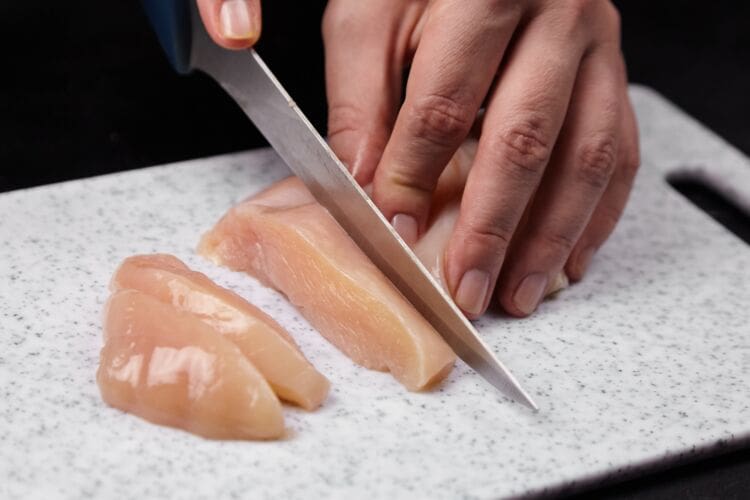
In this article
Campylobacter is a frustrating kind of food poisoning because it often starts with everyday routines that feel harmless. You buy chicken, unpack it, prep it fast, wipe the counter and move on. Then a couple of days later, someone in the house (or a customer, in a business) gets hit with diarrhoea and stomach cramps.
In the UK, this bacteria causes a huge amount of illness each year, and raw poultry is right at the centre of the story. In England alone, more than 70,000 laboratory-confirmed Campylobacter cases were reported in 2024, the highest level recorded in the past decade.
The reassuring part is that you can prevent most cases with simple habits that work even when you are busy. There’s no need for complicated rules or expensive equipment.
For businesses, the same ideas sit within HACCP and due diligence checks – especially when you build them into training and daily supervision.
This guide explains where Campylobacter comes from, how it spreads in homes and food settings, and what steps make the biggest difference.
What is Campylobacter food poisoning?
Campylobacter food poisoning happens when you ingest Campylobacter bacteria and it irritates and infects the gut.
Many people know the symptoms – diarrhoea, cramps, fever, and fatigue – but fewer people realise how little bacteria it can take to cause illness. Symptoms can also include stomach pain, nausea and vomiting, and they usually begin 2–5 days after exposure. Most people recover within about a week, although some cases can be more severe.
The low “infectious dose” explains why a tiny smear of raw chicken juice on a chopping board can be enough to cause a problem if it reaches ready-to-eat food.
The bacteria lives in the intestines of animals and birds. That means raw meat and raw poultry can carry it even when the product looks clean and smells fine. Unlike “off” food, Campylobacter contamination is not visually obvious. You cannot spot it by eye.
Two details matter in day-to-day prevention:
- Campylobacter dies when food is cooked properly.
- Campylobacter spreads easily when raw juices move from raw meat or poultry onto ready-to-eat foods, hands, cloths or surfaces.
That is why cooking and cross-contamination control are the big levers. If you cook poultry thoroughly and you stop raw juices from travelling, you can remove most of the risk.
Most people recover at home with rest and fluids, but dehydration can become serious, especially in young children, older adults and vulnerable people. In some cases, symptoms can become severe enough to require medical attention.
Campylobacter sources in the UK
In the UK, Campylobacter commonly comes from animals, particularly poultry. However, Campylobacter can also appear in other raw meats, unpasteurised milk, untreated water and some environmental sources.
Common sources include:
- Raw poultry (whole birds, portions, mince and offal)
- Raw meat (especially if handled carelessly)
- Unpasteurised milk and some unpasteurised dairy products
- Contaminated water (including some private water supplies or untreated sources)
- Contact with infected animals or their faeces (including some pets)
It’s best to focus on the pathway rather than the source itself. Campylobacter causes illness when it reaches the mouth. It gets there via the hands, utensils, chopping boards and foods that do not get cooked.
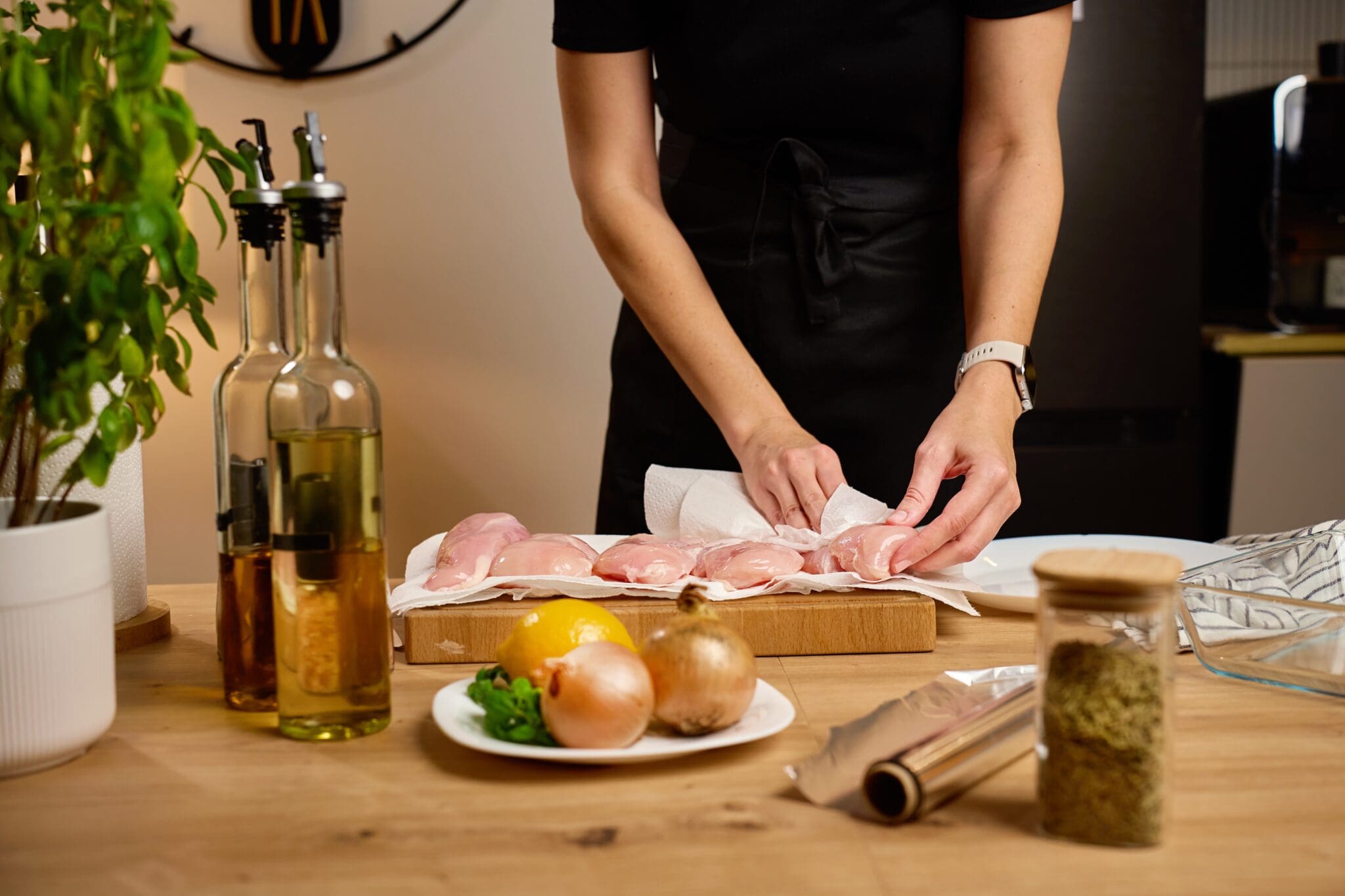
Raw chicken – the biggest risk explained
Raw chicken creates the biggest risk for two simple reasons.
- Chicken often carries Campylobacter at some point in the supply chain.
- Raw chicken produces juices that spread easily, especially during unpacking, prep and cleaning.
Chicken risk spikes during these common kitchen moments:
- Unwrapping and draining packs over sinks or near other foods
- Using the same board or knife for chicken and salad “just for a second”
- Touching cupboard handles, taps, fridge doors, phones or bin lids with contaminated hands
- Wiping raw chicken juice with a cloth that later wipes a “clean” surface
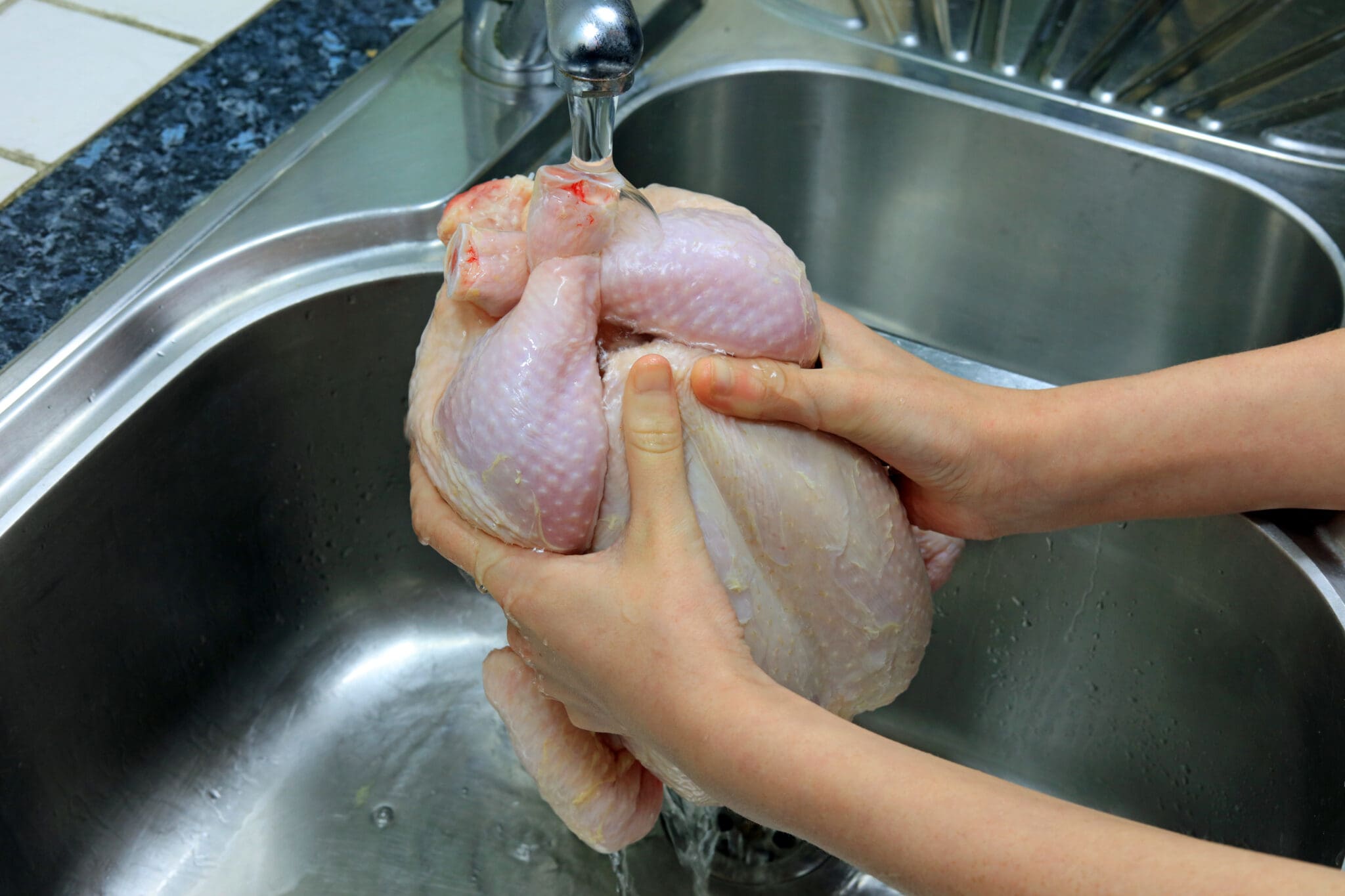
- Rinsing chicken in the sink (which splashes bacteria around the kitchen)
Think of raw chicken like wet paint. If you touch it, you carry it. If you brush past it, you spread it. This mental model helps people remember why strict separation and controls matter.
Rules that help cut risk immediately
- Always keep raw chicken away from ready-to-eat foods.
- Always wash hands with soap and warm water after touching raw chicken or packaging.
- Always clean and disinfect surfaces that raw chicken has touched.
- Always cook chicken to the point where the juices run clear and the thickest parts reach a safe temperature. Using a clean temperature probe is the most reliable way to check this.
Can pets spread Campylobacter?
Dogs and cats can carry Campylobacter bacteria, even when they appear healthy. Puppies are closely linked to transmission because they are more likely to carry diarrhoeal illnesses, have accidents indoors and come into close contact with people through play and handling.
Campylobacter spreads mainly through contact with contaminated faeces, surfaces, food bowls, bedding or hands after handling animals. Risk can increase in households where pets eat raw meat diets or where hygiene around accidents and feeding areas is inconsistent.
Practical hygiene controls include:
- Washing hands thoroughly after handling pets, pet food, bowls or faeces
- Cleaning up vomit, diarrhoea or accidents promptly and disinfecting the area
- Keeping pets away from food preparation surfaces and dining areas
- Avoiding contact between pets and open wounds, faces or ready-to-eat foods
- Seeking veterinary advice if a pet develops diarrhoea or ongoing stomach symptoms
Young children should also be supervised around pets and supported with handwashing, particularly after play and feeding.
How Campylobacter spreads in kitchens
Campylobacter spreads through cross-contamination. In plain terms, it moves from raw sources (especially raw chicken) to mouths via hands, surfaces, utensils and ready-to-eat foods. Kitchens create risk because they involve fast switching between tasks.
The most common spread routes look like this:
- Raw chicken to hands – handling raw chicken or packaging transfers bacteria onto hands.
- Hands to kitchen touchpoints – contaminated hands touch taps, fridge handles, towels, phones or cupboard doors.
- Touchpoints to other people or clean hands – bacteria spreads when someone else touches the same surfaces.
- Contaminated hands to ready-to-eat food – bacteria reaches sandwiches, salads, fruit or cooked foods that will not be reheated.
People often assume chopping boards are the route for most bacteria in the kitchen, but they shouldn’t forget the tap handle they touched before they washed hands, or the spice jar lid, or the fridge handle. In busy kitchens, those touchpoints can spread contamination quickly.
Cross-contamination mistakes to avoid
Most Campylobacter cases come from the same repeat mistakes, especially during rushed prep, cleaning or task switching. The good news is that these risks are usually preventable once people recognise where contamination spreads.
Common mistakes include:
- Using the same chopping board or knife for raw and ready-to-eat foods without proper cleaning and disinfection
- Putting cooked food back onto plates or trays that previously held raw meat
- Touching taps, fridge handles, phones, cloths or packaging with contaminated hands
- Storing raw meat above ready-to-eat foods where leaks or drips can spread bacteria
- Using the same cloth for multiple tasks, especially across raw and clean areas
- Switching between raw prep and ready-to-eat prep too quickly without handwashing or cleaning
- Relying on a quick wipe instead of proper cleaning and disinfection
- Using damaged boards or utensils that are harder to clean effectively
In professional kitchens, colour-coded equipment, designated prep areas and clear cleaning routines can help reduce these mistakes during busy service. At home, simple sequencing also helps. Preparing ready-to-eat foods first, then handling raw meat last, reduces the number of contamination points that need managing afterwards.
How to store chicken safely
Storage can create risk before you even start cooking. If raw chicken leaks in the fridge, it can contaminate shelves, drawers and ready-to-eat items. Safe storage is about preventing drips and keeping chicken cold.
Home storage rules
- Store raw chicken on the bottom shelf, in a tray or container that can catch leaks.
- Keep it in its original packaging until you need it, or rewrap it securely.
- Keep raw chicken away from ready-to-eat foods like salads, cooked meats, cheese and fruit.
- Keep your fridge cold and consistent, ideally within the 0-5°C range.
- Use chicken by its use-by date and do not push it “because it smells fine”.
Storage rules for food businesses
Food businesses should apply the same core controls, alongside clear stock management and separation systems:
- Label opened packs clearly with opening and discard dates.
- Separate raw and ready-to-eat storage zones in fridges and cold rooms.
- Store raw poultry below ready-to-eat foods to prevent leaks and drips.
- Monitor and record fridge temperatures and act quickly if temperatures drift outside safe ranges.
- Use sealed or covered containers for products that could leak during storage or defrosting.
Should you wash raw chicken?
Some people still wash raw chicken because they believe it makes the meat cleaner. However, washing increases risk because it spreads bacteria around the sink area through splashes and droplets.
Here are some better habits instead of washing:
- Keep chicken in the pack until you are ready to prep.
- Open packs carefully and avoid tipping juices around.
- Use dedicated utensils and boards.
- Wash hands after touching packaging.
- Clean and disinfect the sink and surrounding area if juices spill.
- Cook thoroughly.
Cooking temperatures that kill Campylobacter
Campylobacter is destroyed by thorough cooking. Problems usually happen when people don’t check whether the centre of the food has actually reached a safe temperature.
Risk increases with:
- Thick chicken breasts or whole birds
- Uneven cooking on grills or barbecues
- Crowded pans or trays
- Rushed service during busy periods
- Large portions that cook differently from standard timings
Colour alone is not a reliable safety check. Chicken can look cooked on the outside while remaining undercooked near the bone or in the thickest part. Cooking times can also vary depending on portion size, oven performance and starting temperature.
A probe thermometer is the most reliable control because it measures the actual core temperature rather than appearance. Many UK food safety resources use 75°C as a practical benchmark for poultry and reheated foods.
Practical cooking controls that reduce risk include:
- Cooking chicken until it is piping hot throughout
- Checking the thickest part reaches a safe core temperature using a probe
- Paying extra attention to bone-in, stuffed or rolled poultry, because the centre heats more slowly
- Avoiding putting too much in pans or trays, as this can cause food to be steamed rather than cooked properly
- Allowing even cooking, especially when working with large batches or mixed portion sizes
- Treating clear juices and lack of pinkness as secondary checks rather than primary controls
In food businesses, cooking temperatures also form part of due diligence and HACCP controls. If a complaint, illness allegation or inspection happens later, temperature records may become important evidence that food was cooked safely.
Using probe thermometers correctly
A probe thermometer is one of the most useful food safety tools in kitchens, but it only works properly when staff use it consistently and hygienically.
A common problem in kitchens is that probes exist but are avoided because people think they slow service down or are only needed for “special situations”. In reality, reliable probing often prevents wasted batches and uncertainty during service.
Good probe use involves more than taking a quick reading. Staff need to know where to place the probe, how deep to insert it, how long to wait, and how to avoid contaminating other foods.
A practical method looks like this:
- Clean and disinfect the probe before use using an alcohol wipe or the kitchen’s approved sanitising method.
- Insert the probe into the thickest part of the food rather than near the surface.
- Avoid touching bone, because bone can affect the reading.
- Wait for the temperature to stabilise before recording the result.
- Clean and disinfect the probe again after use to avoid spreading contamination.
Extra care is often needed with:
- Stuffed poultry
- Rolled meats
- Mixed-size batches
- Products cooked from chilled storage
- Large-volume catering trays
In these situations, it’s often sensible to check more than one item.
For businesses, probe use should become part of the normal kitchen workflow. Many kitchens support this by:
- Keeping probes easily accessible
- Storing wipes next to the probe station
- Training staff using real products and cooking scenarios
- Assigning responsibility for temperature checks during service
- Replacing damaged or inaccurate probes promptly
Cleaning and disinfecting after handling raw poultry
Cleaning after raw poultry involves two stages:
- Cleaning to remove dirt and juices
- Disinfecting to kill remaining bacteria
Many people do the first step and skip the second. Others disinfect without cleaning, which reduces effectiveness because grease and food residue block disinfectants from working properly.
Here’s a simple yet effective routine:
- Remove visible contamination with hot soapy water and disposable paper towels.
- Disinfect with a suitable kitchen disinfectant.
- Allow the disinfectant to sit for its stated contact time.
- Air dry if possible or use fresh disposable towels.
Focus on these often forgotten areas:
- Sink and draining board
- Tap handles
- Worktop edges
- Fridge handle
- Bin lid or pedal
- Spice jars and oil bottles used during raw prep
- Chopping board grips and knife handles
Cloth control is a key part of preventing cross-contamination. Reusable cloths can spread bacteria if people use them for many different tasks. In high-risk moments (like after handling raw chicken), disposable paper towels often reduce risk because they remove the temptation to reuse a contaminated cloth. If you use reusable cloths:
- Use separate cloths for raw areas and ready-to-eat areas.
- Launder cloths at high temperatures.
- Replace worn cloths that hold odours or stains.
For businesses, intelligent workspace design can make cleaning easier.
- Store ready-to-eat utensils away from raw prep zones.
- Keep disinfectant and disposable towels within reach.
- Use simple cleaning checklists that match service rhythms.
Handwashing steps for Campylobacter prevention
Handwashing is the single most effective prevention step because hands are the main transport route for Campylobacter.
Here’s a simple handwashing method:
- Wet your hands with warm water.
- Apply soap.
- Rub palms together.
- Rub the backs of your hands and between the fingers.
- Clean your thumbs, fingertips, and nails.
- Rinse thoroughly.
- Dry with a clean disposable towel (or a clean towel at home that you change regularly).
When to wash your hands when handling poultry:
- After touching raw chicken or its packaging
- After touching anything in the raw prep area
- After cleaning up raw juices
- After taking out rubbish or touching the bin
- Before touching ready-to-eat foods
- Before plating cooked food
A practical way to improve compliance is to teach “task change handwashing”. If you switch from raw work to clean work, wash your hands. If you switch from cleaning to food prep, wash your hands. If you switch from handling waste to anything else, wash your hands.
Further guidance: How to wash your hands, NHS
Campylobacter symptoms
Campylobacter symptoms often appear a couple of days after exposure, which can make it hard to link the illness back to a specific meal. Many people assume “it must have been last night’s takeaway”, when the risky exposure could have been the Sunday roast you enjoyed with the family at home two or three days earlier.
Common symptoms include:
- Diarrhoea (sometimes severe)
- Stomach cramps and pain
- Fever
- Nausea and sometimes vomiting
- Fatigue and body aches
When to seek help or stay off work
Incubation (the time between infection and symptoms) commonly sits in the range of around 2–5 days, although it can vary. People can also remain unwell for about a week, and some feel tired for longer.
Most people recover from Campylobacter without medical treatment, but some symptoms should not be ignored. Medical advice is important if someone develops dehydration, persistent high fever, severe stomach pain, blood in their stool, symptoms that are not improving after several days or signs of illness in someone who is more vulnerable to complications, such as a young child, older adult, pregnant person or someone with a weakened immune system.
People with diarrhoea or vomiting should also stay away from work or education settings until at least 48 hours after symptoms stop. This is especially important for food handlers, care workers, healthcare staff and people working closely with children or vulnerable groups, because the infection can spread easily.
If someone becomes unwell in a food business or catering setting:
- Send them home promptly.
- Increase cleaning and disinfection of toilets and high-touch points.
- Review whether ready-to-eat foods or shared areas could have been contaminated.
- Record the incident and actions taken as part of food safety and due diligence procedures.
Returning too early because symptoms seem “mostly better” increases the risk of spreading infection to other people.
Final thoughts
Campylobacter prevention is mostly about controlling the risk of raw poultry juices travelling to people’s mouths via hands, surfaces and ready-to-eat foods. Chicken remains the biggest source.
Most Campylobacter cases are preventable. The biggest difference in homes and professional kitchens alike usually comes from small, consistent habits: separating raw and ready-to-eat foods, washing hands properly, cleaning thoroughly and cooking poultry all the way through.
Further guidance: